
Dar es Salaam. When David Beckham first announced in 2013 that he planned to build a Major League Soccer franchise in Miami, the reaction was one of curiosity more than belief.
Few visualised how significantly the American football landscape was about to shift.
After negotiating a clause during his LA Galaxy playing days, Beckham purchased the franchise for £15.6m a remarkable bargain for an MLS seat.
Inter Miami officially launched in 2018 and stepped into the league in March 2020, still young, unsure, and in search of identity.
The club grew steadily, but it was the arrival of Lionel Messi in 2023 that rewrote the script.
Signing the world’s greatest footballer was more than a transfer; it was a cultural moment.
This season they reached their pinnacle MLS Cup champions, defeating Thomas Müller’s Vancouver Whitecaps.
For Beckham, it marked the validation of a dream many thought too ambitious. “Freedom to Dream,” emblazoned on their shirts, felt like prophecy delivered.
Messi’s signing triggered an eruption of interest unseen in MLS history.
Stadiums filled overnight, merchandise exploded, social media multiplied, and matches involving Miami became global viewing events.
Average MLS attendances rose by 20 percent after Messi’s debut, while streaming numbers doubled within weeks.
A league once overlooked suddenly became necessary viewing for football audiences across continents.
Ticket prices soared from roughly £40 to between £150 and £200, yet everything still sold out.
Clubs even switched stadiums to NFL-sized venues to cope with demand and still they reached capacity.
Inter Miami’s revenue rocketed from £41m in 2022 to roughly £160m by 2024.
League-wide, the Messi effect created an extra £63m in ticket sales, while merchandise jumped by 41 percent with Messi’s No.10 shirt the undisputed bestseller.
But the momentum was not built on Messi alone.
Beckham helped craft an identity unique to Miami bold, pastel pink, neon-lit and instantly recognisable.
Criticism came early, but the colour is now part of global football culture.
The club also became a magnet for celebrities and icons.
Kim Kardashian, Serena Williams, Tom Brady, Ronaldinho, Will Smith and LeBron James have all graced the stands, giving Miami a Hollywood aura unmatched in North American football.
On the pitch, Messi reunited with Sergio Busquets, Jordi Alba, Luis Suárez and Coach Gerardo Martino a Barcelona flavoured core that brought history, chemistry and pedigree.
Messi has since extended his contract to 2028, reportedly earning £37m -£45m per year plus major commercial bonuses.
Next, Inter Miami move toward a new era with the Miami Freedom Park Stadium, set to host most home fixtures in 2026.
With increased capacity, hospitality, and commercial power, the financial ceiling is set to climb much higher.
“We are five years old and already living history,” said chief business officer Xavi Asensi perhaps the best summation of the journey.
What began as Beckham’s bold idea has become a thriving football empire.
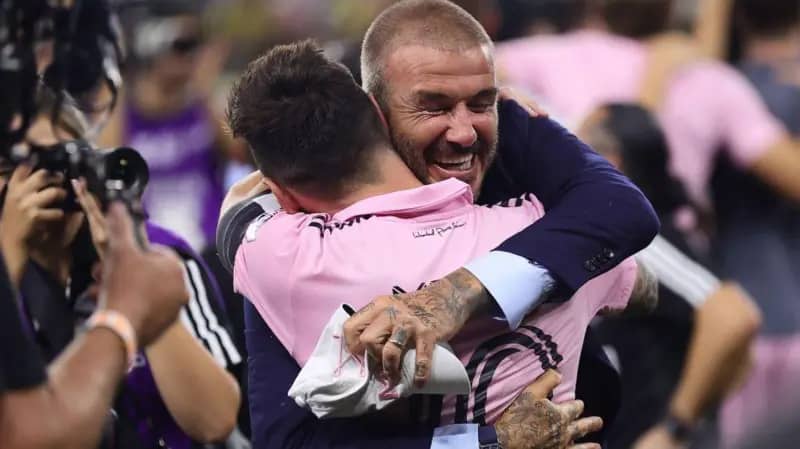
Messi lit the match. Beckham built the platform.
Together they turned Miami from a hopeful project into football’s most captivating American powerhouse a miracle forged in belief, ambition and relentless vision.