
Dar es Salaam. After eight years of complex legal, administrative and organisational restructuring, Simba SC have reached the final stage of a far-reaching governance reform process—an achievement that could redefine the club’s future and mark the dawn of a new era.
The reform journey, which began in 2017, represents one of the most ambitious institutional transformations ever undertaken by a Tanzanian football club.
It involved the introduction of a new governance and ownership model designed to strengthen transparency, accountability and long-term sustainability.
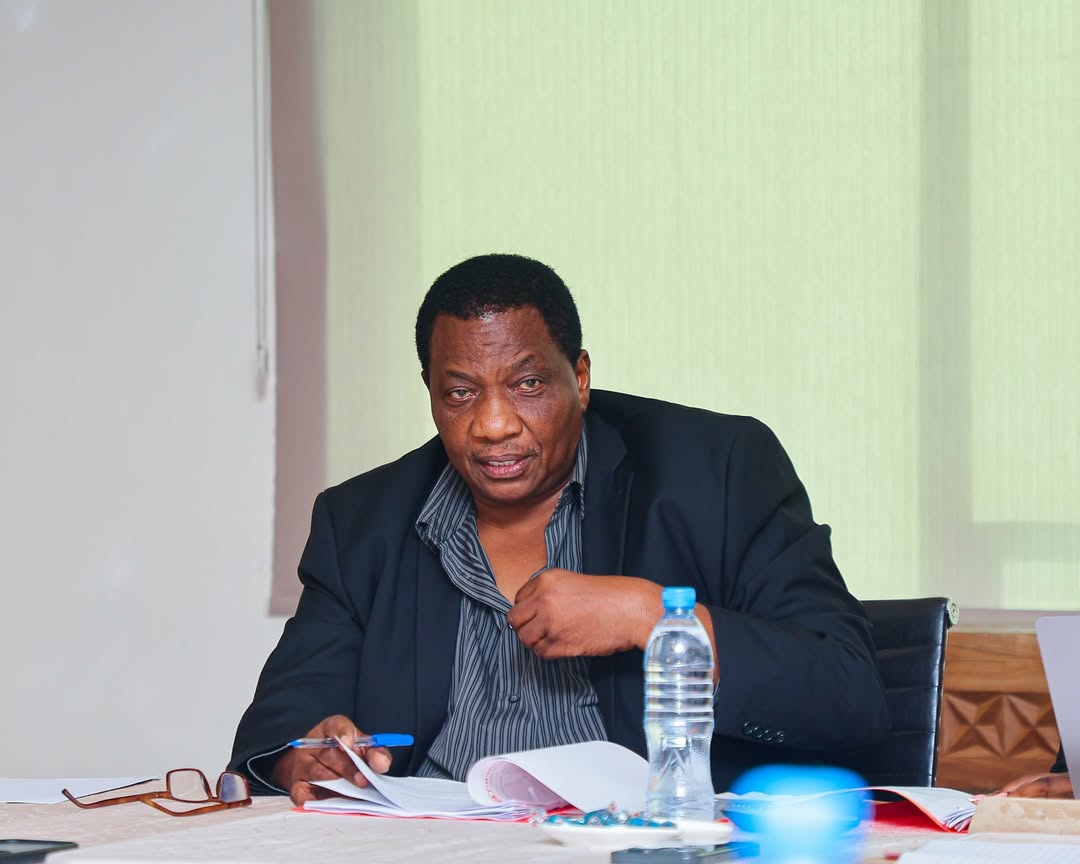
Chairman of Simba SC’s Board of Directors, Crescentius Magori, said over the weekend that the process was particularly demanding because it required the adoption of a management system inspired by governance models commonly used in countries such as Germany—an approach largely unfamiliar within African football structures.
“Implementing such a system was never going to be easy,” Magori said.
He added: “It required us to rethink how the club is managed, its ownership structure, and the relationship between members and investors.”
Under the new model, ownership is shared between members and investors, a structure intended to promote efficiency and accountability.
However, Magori acknowledged that the system initially posed significant legal and administrative hurdles.
“Honestly, these past eight years have been full of highs and lows,” he said.
“There were moments when we initiated processes only to stall because we failed to meet certain regulatory requirements. At times, we were even fined and had to make payments before proceeding.”
Throughout the reform period, Simba SC engaged with several regulatory and government institutions, including the National Sports Council and the Prime Minister’s Office, before the matter was eventually presented to the Attorney General.
Magori noted that navigating these channels required patience, resilience and a collaborative approach.
Following extensive consultations and guidance from legal and governance experts, Simba SC and BMT were advised to reconcile outstanding differences—an intervention Magori described as pivotal in unlocking progress and paving the way for the club’s next phase.
The final milestone, he said, was the approval of the club’s new constitution by its members.
The document is now in the final stages of official registration.
“This constitution—if not today, then tomorrow or the day after—will be officially registered,” Magori said.
“It is a historic moment for Simba SC. It marks the formal beginning of a new era and lays the foundation for sustainable governance.”
Once registration is completed, the roles and commitments of investors will become fully visible, including planned investments in infrastructure, facilities and long-term development projects aimed at improving both player performance and the overall fan experience.
Magori also revealed that the club had earlier suspended the issuance of membership cards as part of the reform process, but is now ready to relaunch the programme with improved systems.
“We are going to issue membership cards again, and I am confident Simba SC will become the club with the largest membership—not only in Tanzania but potentially in the region,” he said.
Crucially, members will not merely hold symbolic status but will become shareholders in the club, giving them a formal role in key decision-making processes, from strategic planning to leadership appointments.
Modern membership cards, offering a range of benefits, are also being developed to strengthen engagement and loyalty.
Magori further emphasised that Simba SC is uniquely positioned because its investor is also a club member—a scenario he described as rare in African football.
“This alignment ensures decisions are made with financial discipline while remaining rooted in the club’s culture and values,” he said.
After an eight-year journey of reform, Simba SC now stand on the threshold of a transformative chapter—one defined by stronger governance, empowered membership and strategic investment.
Whether this truly becomes a golden era will unfold on and off the pitch, but the foundations, for the first time, appear firmly in place.