
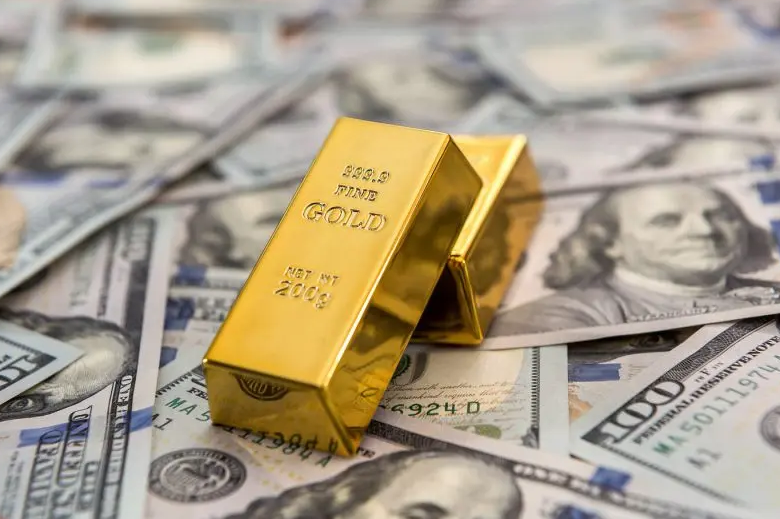
Beijing. The BRICS bloc is increasingly turning away from dollar-denominated assets in favour of gold, with the alliance now accounting for roughly 50 percent of global gold production through the combined output of member and aligned countries.
Russia and China have led this accumulation drive across major emerging economies, as both nations continue to diversify their reserves away from the US dollar.
China produced an estimated 380 tonnes of gold in 2024, while Russia contributed about 340 tonnes, reflecting sustained efforts by the two countries to strengthen their holdings of physical assets.
Data from the World Gold Council shows that central banks collectively purchased more than 1,000 tonnes of gold annually between 2022 and 2024, marking the longest uninterrupted period of central bank buying in modern history.
This trend points to a broader shift in global monetary strategy.
Combined gold production from BRICS members and aligned nations, including China, Russia, Brazil, South Africa, Kazakhstan, Iran and Uzbekistan, accounts for approximately half of global output.
Over the period from 2020 to 2024, these countries also represented more than 50 per cent of total central bank gold purchases.
Analysts say this development is gradually shifting financial influence away from traditional Western reserves towards Asia and Eurasia, with notable implications for global precious metals markets.
Collectively, BRICS gold reserves now exceed 6,000 tonnes.
Russia holds the largest share, with about 2,336 tonnes, followed closely by China with 2,298 tonnes, while India’s reserves stand at roughly 880 tonnes.
These substantial holdings have enhanced the bloc’s influence over the physical gold market.
Brazil added 16 metric tonnes to its reserves in September 2025, its first such purchase since 2021, bringing its total holdings to about 145.1 tonnes.
Market participants continue to monitor the bloc’s strategy closely.
Speaking at the Precious Metals Summit in Beaver Creek, Colorado, Canadian mining investor Frank Giustra commented on the broader implications of the trend.
“Now, believe it or not, we are in the era of hard money. If you own paper gold, you do not own real gold. When the crisis comes, it will not be there,” he said.
Building alternative systems
The shift towards gold forms part of a wider de-dollarisation strategy aimed at developing independent pricing mechanisms and settlement systems.
As part of this effort, BRICS has launched a prototype of the so-called “Unit”, a proposed gold-backed instrument comprising 40 per cent physical gold and 60 per cent national currencies of member states.
Under a pilot programme launched on October 31, 100 Units were issued, each pegged to one gram of gold.
Concerns over the reliability of the US dollar and exposure to sanctions have been key drivers of these initiatives.
Speaking to Russian media on December 13, economist Yevgeny Biryukov said the measures were intended to reduce vulnerability to external financial pressures.
Russia and China now conduct nearly all bilateral trade in roubles and yuan, a shift that has significantly altered trade flows in several strategic sectors.
Within the Eurasian Economic Union, member currencies are used for most transactions.
The pace of de-dollarisation intensified after Western sanctions were imposed on Russia following the invasion of Ukraine in February 2022.
Growing market influence
BRICS gold reserves have continued to rise even as prices reached record levels at the time of writing.
Despite higher prices, central banks have maintained strong demand across global markets.
The bloc has also established a joint gold pool aimed at market stabilisation and is developing shared infrastructure involving Russia, China, the United Arab Emirates and South Africa.
Rising interest in gold as a store of value reflects growing concerns among investors and governments about the resilience of the US dollar and the broader American financial system.
As part of its strategy, the bloc is exploring the creation of an independent “BRICS Gold Price” benchmark, which would challenge existing dollar-based pricing mechanisms.
As BRICS reduces its reliance on dollar assets and consolidates control over gold supply, the alliance is signalling a potential restructuring of the global financial system.
The expansion of gold reserves, the exploration of a gold-backed currency instrument and a sustained de-dollarisation agenda suggest a long-term strategy aimed at reducing dollar dominance.
If pursued further, these developments could have lasting implications for international monetary relations.