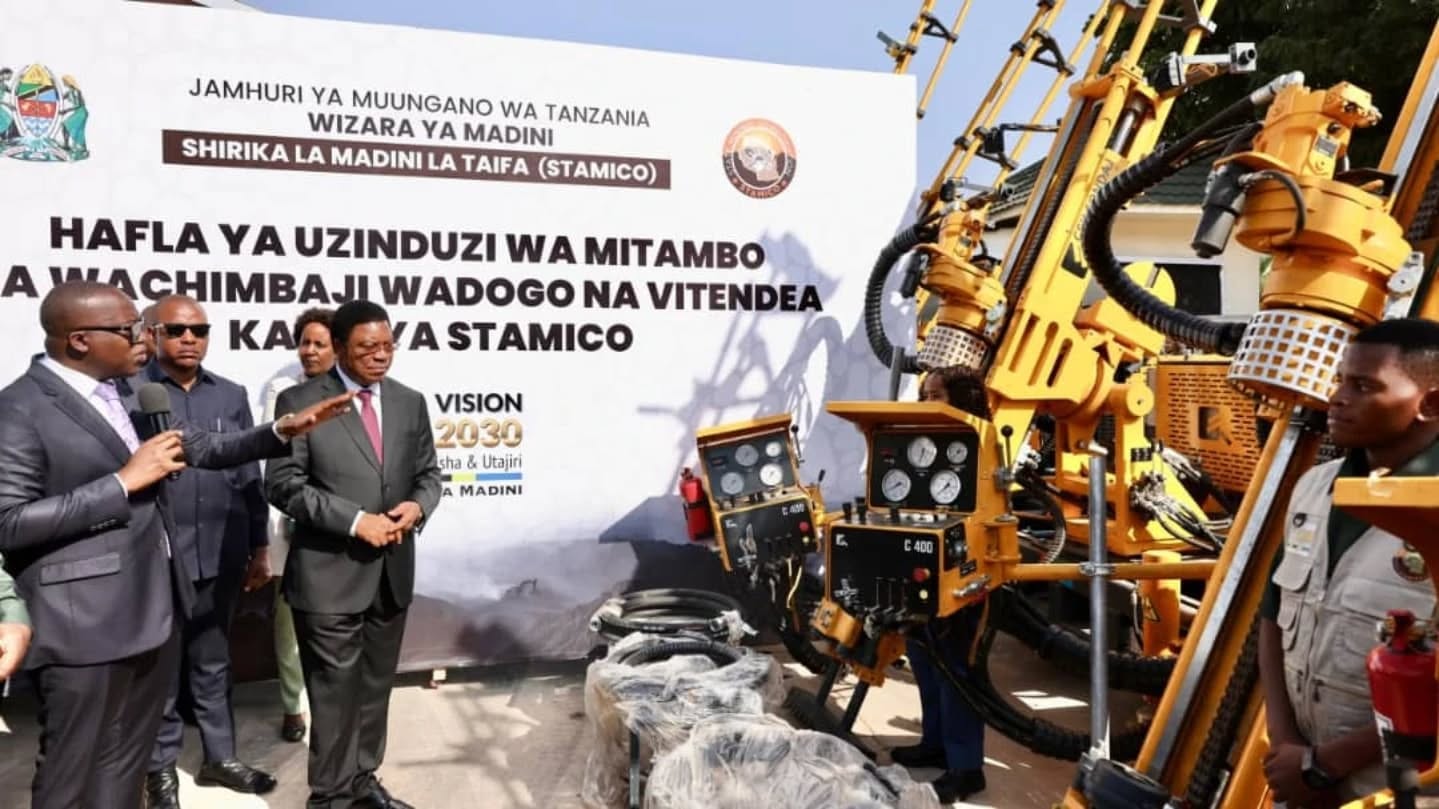


Dodoma. The Tanzanian government has formally unveiled a list of 20 goods and services that must be supplied to mining operations exclusively by companies that are 100 percent Tanzanian-owned, a move that marks a significant tightening of local content requirements in the extractive sector.
The decision is part of the implementation of directives issued by President Samia Suluhu Hassan to ensure Tanzanians play a more substantive role across the entire mining value chain.
The announcement was made on January 5, 2025, by the Minister for Minerals, Mr Anthony Mavunde, who said the measures follow amendments to the 2018 Mining (Local Content) Regulations.
The changes are designed to translate policy intent into enforceable obligations, particularly in areas where foreign firms have traditionally dominated procurement and service provision within mining projects.
At the core of the new framework is a clear demarcation of activities that are no longer open to foreign participation, at least at the level of ownership.
According to the minister, the Mining Commission had already, on November 14, 2025, published an initial list of goods and services to be reserved for fully Tanzanian-owned companies, with the latest announcement operationalising Regulation 13A of the amended rules.
This represents the first time the regulation has been applied in such a direct and prescriptive manner.
The policy shift is underpinned by data showing a steady increase in the participation of local firms in mining-related procurement over recent years.
Official figures indicate that the value of goods and services procured from Tanzanian companies rose from Sh1.85 trillion in 2018, equivalent to 62 percent of total mining procurement, to Sh4.41 trillion in 2024.
This accounts for 88 percent of the Sh5 trillion spent on mining purchases during that year, signalling what the government views as tangible progress in domestic value retention.
Employment trends have followed a similar trajectory. Tanzanians accounted for 95 percent of mining sector jobs in 2018, a figure that rose to 97 percent by December 2024.
In absolute terms, the number of Tanzanians employed in mining projects increased from 6,668 to 18,853 over the same period.
The government attributes this growth not only to expanded mining activity but also to regulatory mechanisms that require skills transfer and succession planning for positions initially held by expatriates.
Mr Mavunde cited the North Mara gold mine, operated by Twiga Minerals Corporation, a joint venture involving Barrick Gold, as an example of this approach in practice.
He said all top management positions at the mine are now held by Tanzanians, illustrating what authorities describe as the successful localisation of senior leadership roles following structured capacity-building and handover arrangements.
Beyond procurement and employment, the government is also seeking to anchor mining-related industrial activity within the country.
One of the flagship initiatives in this regard is the designation of the former Buzwagi large-scale gold mine as a special investment zone.
Covering 1,331 acres, the area has been earmarked for the establishment of factories producing goods for use in mining operations.
Six factories have already been constructed, while investors behind a further 15 projects have expressed interest in setting up facilities at the site.
The broader economic logic of the new measures is to reduce capital flight, stimulate domestic enterprise and strengthen linkages between mining and the wider economy.
By ring-fencing certain goods and services for Tanzanian companies, the government aims to ensure that a larger share of mining expenditure circulates within the local economy, supporting industrial growth and job creation.
However, the success of the policy will depend on the capacity of local firms to meet industry standards in terms of quality, reliability and scale.
Acknowledging this, the minister urged the private sector to seize the emerging opportunities, while also stressing the need for compliance with mining laws and local content regulations.
He called on Tanzanians to position themselves strategically to benefit from mining projects, framing the sector as a potential response to persistent employment challenges.
Taken together, the latest reforms signal a more assertive phase in Tanzania’s local content agenda for mining.
While the direction of policy is clear, its long-term impact will rest on effective enforcement, sustained skills development and the ability of domestic businesses to compete in a technically demanding and capital-intensive industry.