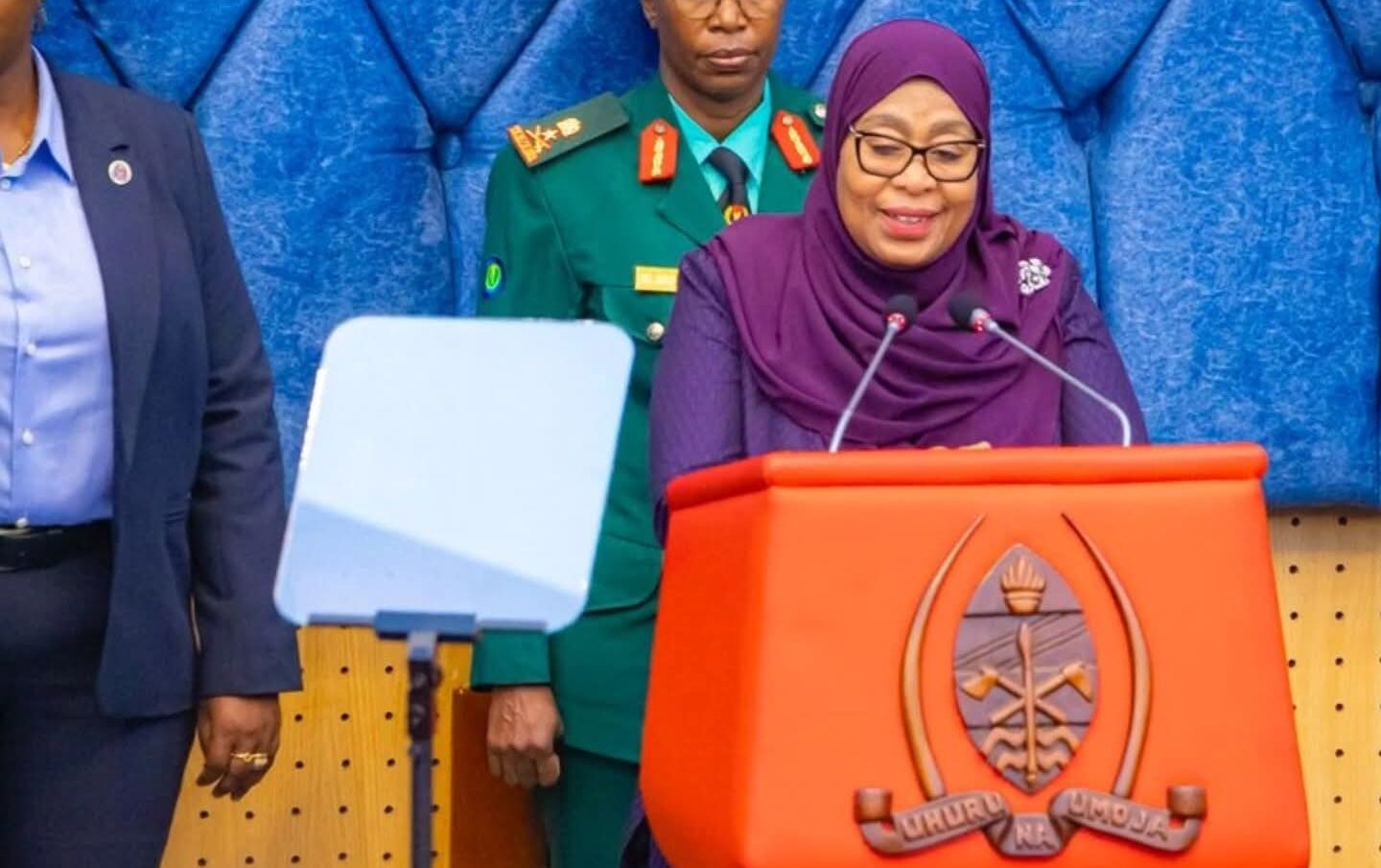

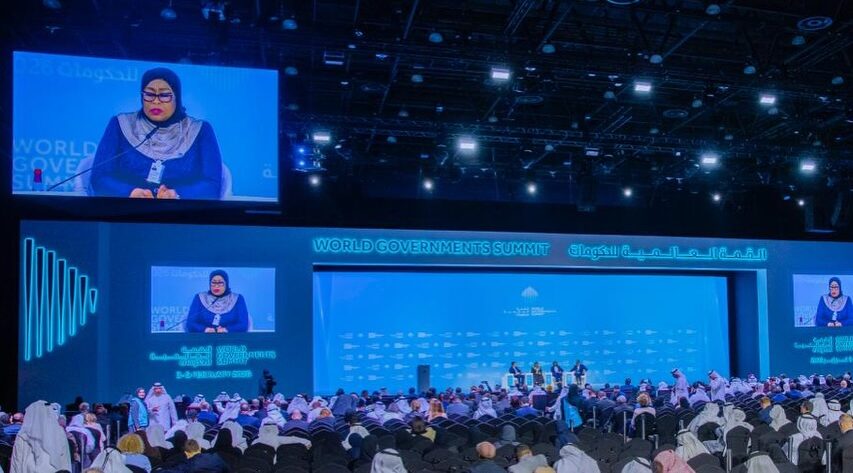
Dubai. President Samia Suluhu Hassan has presented Tanzania as a credible destination for long-term, structured investment, as African leaders and global investors convened in Dubai for the launch of the Global Africa Investment Summit (GAIS).
Speaking on the sidelines of the World Governments Summit, President Samia told delegates that global capital today is drawn not only by opportunity, but by trust, policy consistency, and governments that honour commitments.
“Tanzania’s development strategy is anchored in deliberate investments in backbone infrastructure, particularly in energy, transport, and logistics, to unlock productivity, support industrialisation, and strengthen regional integration,” she said.
President Samia pointed to flagship projects in hydropower, modern rail, ports, and roads, alongside the establishment of Special Economic Zones and a One-Stop Investment Facilitation Centre, as measures that have reduced friction for investors and improved confidence.
She added that platforms such as GAIS provide African countries with an opportunity to move away from fragmented project promotion towards structured collaboration aligned with national priorities and investor expectations.
The launch of GAIS brought together African Heads of State, senior policymakers, global investors, and business leaders around a shared assessment.
Africa’s central challenge, they argued, is not a shortage of resources, but a deficit of structure. That gap, leaders said, is now being deliberately addressed.
The GAIS seeks to move the continent away from fragmented project promotion towards institutional-grade investment aligned with national priorities and long-term returns.
President Samia reaffirmed Tanzania’s readiness to engage GAIS as a credible and dependable long-term investment partner.
“What investors seek today is not only opportunity, but trust – trust in institutions, policy consistency, and governments that honour commitments,” President Samia said.
She underscored Tanzania’s deliberate focus on backbone infrastructure as a foundation for growth.
Investments in energy, transport, and logistics, she noted, are designed to unlock productivity, accelerate industrialisation, and deepen regional integration.
Flagship projects in hydropower, modern rail, ports, and roads have been rolled out alongside Special Economic Zones and a One-Stop Investment Facilitation Centre.
These reforms, she said, have reduced friction for investors and strengthened confidence in the country’s investment environment.
President Samia also noted that platforms such as GAIS enable Tanzania, and Africa more broadly, to move from fragmented project promotion to structured collaboration.
Such collaboration, she said, is better aligned with national development priorities and investor expectations.
GAIS has been positioned not as a conventional conference, but as market infrastructure.
Its mandate is to convert Africa’s sovereign and public assets into bankable, de-risked portfolios that meet global standards for governance, risk management, and returns.
Dr Akinwumi Adesina, Co-Founder and Executive Chairman of GAIS and former President of the African Development Bank, said Africa’s challenge lies in weak structuring rather than a lack of assets.
“The problem is not a lack of assets, but the absence of trusted structures that connect those assets to global capital,” he said.
Dr Adesina noted that Africa’s strategic assets in energy, minerals, infrastructure, and natural capital remain undervalued. He attributed this to poor data, fragmented governance, weak structuring, and high due-diligence costs.
GAIS, he said, seeks to address these bottlenecks by prioritising scale, predictability, and long-term partnerships, rather than one-off transactions.
“Africa must move decisively from aid dependency to investment-led growth,” he emphasised.
The summit also heard from Angolan President João Lourenço, who chairs the African Union.
He said GAIS reflects Africa’s political maturity and readiness to engage global capital responsibly and competitively.
“Africa must increasingly take ownership of its sovereign assets and monetise them in ways that accelerate development,” President Lourenço said.
He stressed the importance of predictable rules, transparent contracts, and policy consistency.
He cited Angola’s reforms, including privatisation, one-stop investment windows, and energy transition initiatives, as evidence of a serious commitment to reform and execution.
Ghanaian President John Mahama echoed the call for a fundamental shift in how global capital engages with Africa.
“Africa does not lack assets. What it needs is the architecture that allows those assets to speak the language of global capital,” he said.
President Mahama cited Ghana’s gold and mineral sector reforms, including restrictions on raw mineral exports, as examples of how asset restructuring and value addition can unlock revenue, create jobs, and drive industrialisation.
GAIS, he added, provides the architecture global capital understands.
This includes structured platforms, risk mitigation mechanisms, and scale.
The launch was also attended by Mozambique’s Prime Minister, Maria Benvinda Levy, who represented President Daniel Chapo.
GAIS is a pan-African investment platform co-founded by Dr Adesina and Ms Margery Kraus, Founder and Executive Chair of APCO Worldwide.
It is designed to mobilise long-term global institutional capital for Africa and accelerate the continent’s shift from aid to investment-led development.