

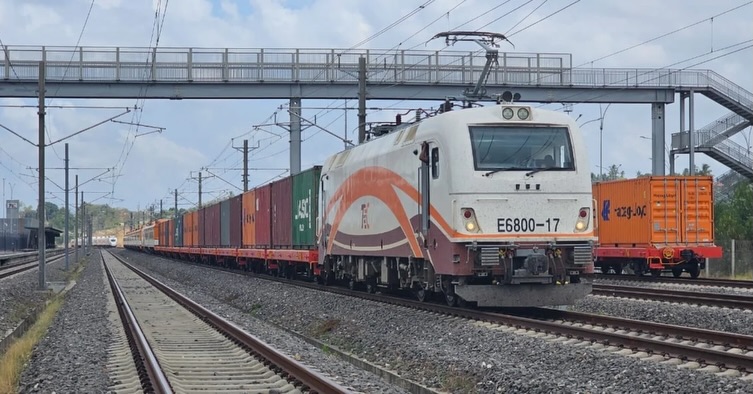
Dar es Salaam. The Tanzania Railways Corporation (TRC) has formally launched container freight transportation on the Standard Gauge Railway (SGR), marking a major step towards expanding trade, easing congestion at the port, and improving cargo movement to central regions.
The move signals a new phase in the commercial use of the SGR.
It follows the earlier introduction of passenger services and the transportation of bulk cargo, including rice and cement.
The first container train departed yesterday from Pugu in Dar es Salaam to Ihumwa in Dodoma Region.
The journey covers a distance of about 420 kilometres.
Speaking at the launch, the Acting Director of Transport at TRC, Mr Focus Makoye Sahani, said the service was designed to offer a faster, safer, and more efficient alternative for cargo transport.
He said the initiative aimed to widen business opportunities while reducing pressure on roads and port facilities.
“This is a major milestone for TRC. We have today expanded our business scope by introducing container transportation. As you can see, our first container train to Ihumwa has begun its journey, and we already have a strong opening offer from our first client,” said Mr Sahani.
He explained that the inaugural train consists of 50 wagons carrying a total of 100 containers.
The first customer is GSM, which has provided the initial cargo for the service.
Mr Sahani said the introduction of container transport builds on the steady growth of SGR operations since July, when TRC began moving passengers and bulk commodities.
He said cement loaded at Pugu had already shown the potential of rail-based cargo services to improve efficiency and lower logistics costs.
According to him, TRC has started container loading operations at the Pugu yard.
At the same time, it is upgrading infrastructure at key locations, including the Malindi Yard near Gerezani, to strengthen container handling capacity.
He said the improvements are part of a broader plan to modernise freight operations and ensure smooth loading and offloading processes.
“These developments will help to reduce congestion at the port. They also support the directive of our Director General to establish Inland Container Depots in Morogoro and Ihumwa,” he said.
He added that the Morogoro ICD is located about 193 kilometres from Dar es Salaam.
It will serve customers transporting cargo to Mbeya and Iringa.
He said the facility will allow traders to collect their goods closer to their destinations, cutting down transit times and reducing transport costs.
The Ihumwa ICD in Dodoma is expected to serve as a major logistics hub for the central corridor.
Mr Sahani said the terminal has sufficient land and modern infrastructure to handle large volumes of containers.
“The journey to Morogoro is short. Cargo destined for Dodoma is offloaded at the Ihumwa ICD, where there is ample space and the necessary facilities to manage container operations efficiently,” he said.
He noted that the introduction of container freight services would significantly reduce the reliance on heavy trucks along the Dar es Salaam–Dodoma highway.
He said this would ease road congestion, reduce wear and tear on highways, and improve road safety.
Mr Sahani urged traders and logistics companies to take advantage of the SGR service.
He said rail transport offers a reliable and cost-effective solution, particularly for bulk and containerised cargo.
He added that the SGR is designed to support high-capacity freight movement, which is essential for sustaining economic growth.
The launch comes at a time when Tanzania is seeking to strengthen its position as a regional logistics hub.
Efficient rail connectivity is expected to enhance trade flows within the country and across borders.
TRC officials said the container service would also improve turnaround times at the port by ensuring quicker evacuation of cargo.
They said this would enhance the competitiveness of the Port of Dar es Salaam in the region.
The corporation plans to gradually increase the frequency of container trains based on demand.
It is also working with key stakeholders, including shipping lines, freight forwarders, and cargo owners, to build confidence in the new service.
Mr Sahani said TRC would continue investing in modern equipment, staff training, and digital systems to improve service delivery.
He said the long-term goal is to create an integrated rail logistics network that supports industrial growth and regional trade.
He added that the success of the container service would depend on close collaboration between public and private sector players.
“With this launch, we are opening a new chapter in rail freight transport. We invite all traders to make full use of this service. It is safe, efficient, and affordable,” he said.
The SGR project is a central pillar of Tanzania’s transport infrastructure strategy.
It is expected to transform cargo movement patterns, reduce logistics costs, and support the country’s ambition to become a key gateway for regional trade.