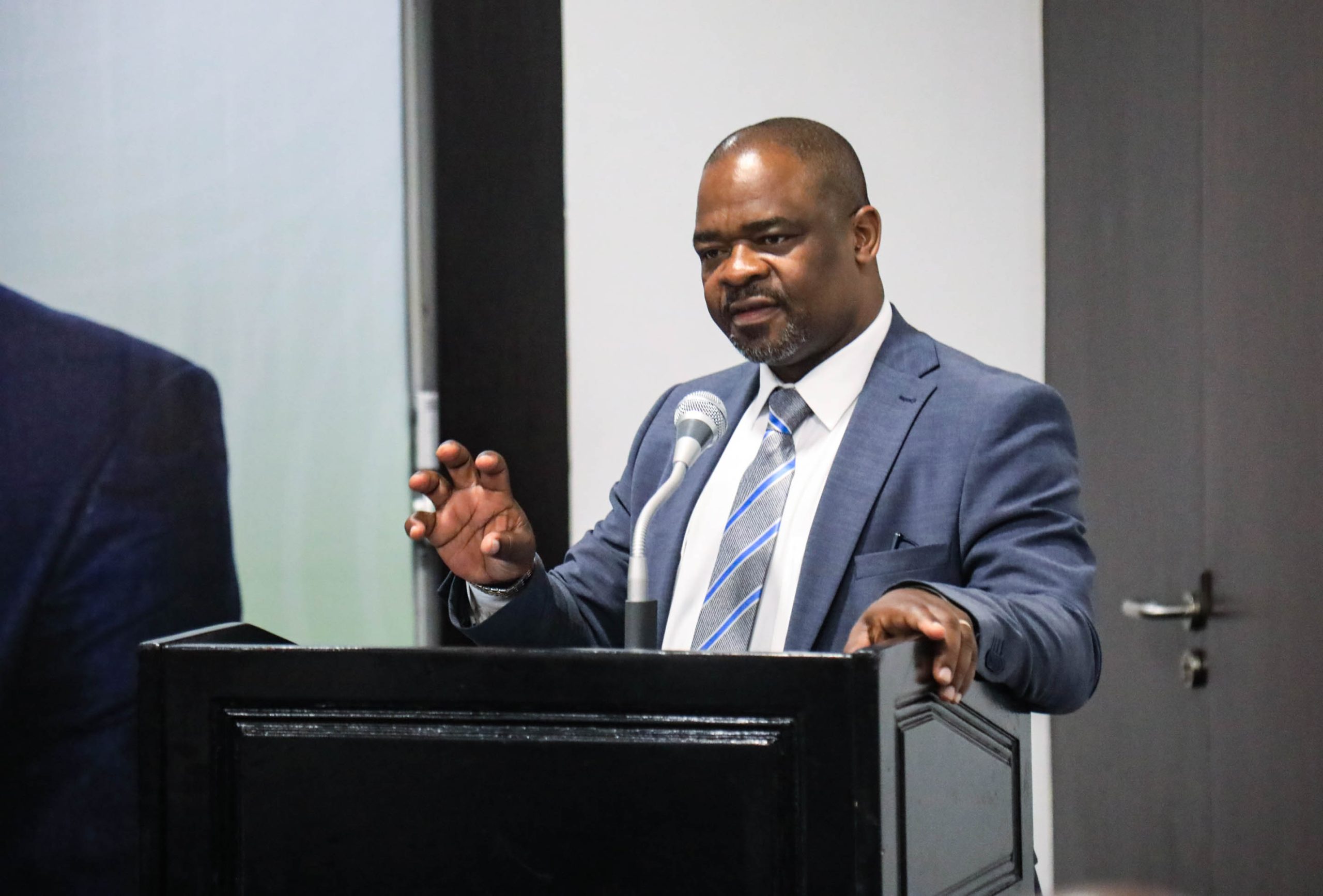

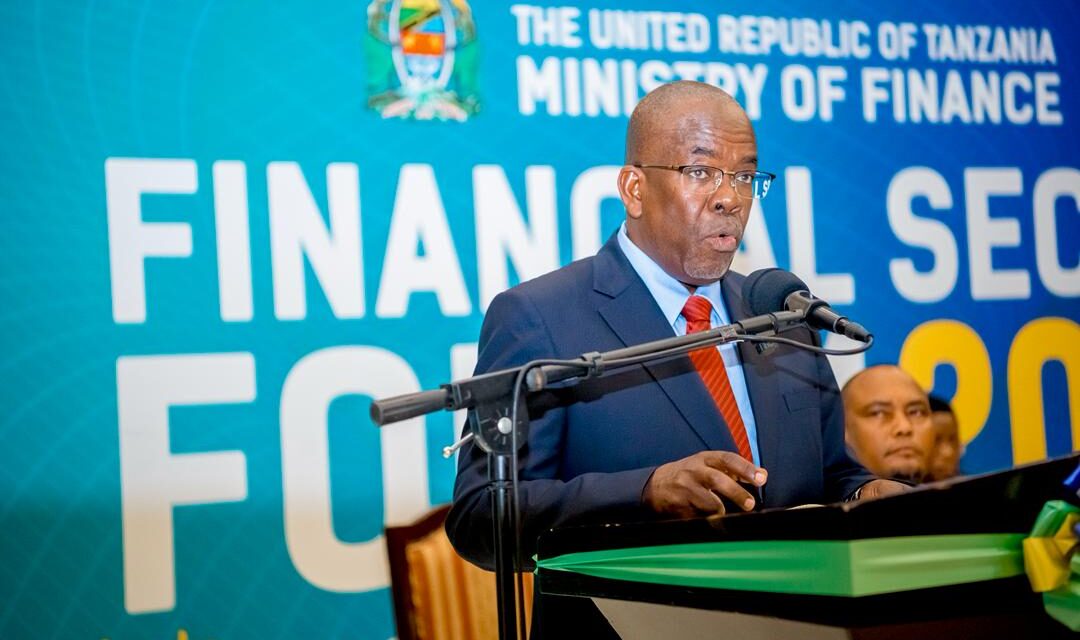
Dar es Salaam. The minister of Finance, Dr Khamis Mussa Omar, has underscored the critical need to bring together key financial development stakeholders.
He said this is essential to speed up national economic growth.
Dr Omar was speaking here on April 9, 2026 at the launch of the Second Financial Sector Stakeholders’ Forum 2026.
He said the forum forms part of the implementation of the Financial Sector Master Plan.
The plan aims to improve access to financial services for all citizens.
He said the forum will be an important platform for discussing the execution of financial sector development plans.
It will also offer expert advice to the government. He said various themes will be explored to stimulate transformation in the sector.
These include aligning the sector with global economic and technological progress.
Dr Omar explained that one key topic will be the evaluation of the implementation of the financial sector development plan since its launch.
The mid‑term review will be presented to stakeholders. It will assess achievements and current challenges.
He emphasised the importance of the National Development Vision 2050.
He said it remains the main guide for all economic activities in the next 25 years.
He urged every stakeholder to understand the vision.
“This understanding is crucial to ensure its implementation delivers positive outcomes for the nation,” he noted.
Dr Omar stated that the Government expects significant economic transformation.
The goal is to increase the nation’s economic value to higher levels in the coming period.
“Achieving this requires cooperation from all domestic and international stakeholders,” he said.
On achievements, he noted increased access to financial services.
He said more than 76 per cent of Tanzanians now have access to such services.
He also highlighted rapid growth in the financial sector.
It remains one of the leading contributors to economic expansion.
However, Dr Omar acknowledged existing challenges.
These include the impacts of climate change, international conflicts and rapid technological developments.
He stressed the need for robust strategies to address these challenges.
Dr Omar pointed to opportunities in the financial sector.
These include fintech innovations, non‑interest financial services and investment in climate finance.
He said these areas should be prioritised to enhance financial inclusion.
“I urge stakeholders to discuss how to improve access to capital for youth, women and small entrepreneurs. This group plays a vital role in economic growth but faces challenges in accessing credit,” he noted.
The minister also highlighted the need to strengthen financial literacy among citizens.
He stressed protecting users of financial services against various risks.
He said a strong financial sector must uphold transparency, safety and trust.
Dr Omar called on all stakeholders to fully participate in the forum.
He asked them to provide recommendations that will help improve policies, laws and structures in the financial sector.
He added that the success of the national development vision depends heavily on the sector’s contributions over the next 25 years.
Deputy Minister of Finance, Mr Hamad Chande, said the forum is important.
It brings together policymakers, service providers and users to discuss key issues affecting the economy.
He said the meeting provides a chance to address challenges facing the financial sector.
These include climate change, fintech and virtual assets, as well as the effects of international conflicts.
He said he expects experts to collaborate and share experiences.
The aim is to find solutions and enable the financial sector to contribute fully to economic growth and citizen welfare.
Earlier, the Permanent Secretary of the ministry of Finance, Dr Natu Mwamba, said the forum is vital for bringing together diverse stakeholders.
It provides a space to discuss the development and future of the financial sector.
He said the event is held as part of the Financial Sector Master Plan 2020/2021–2030.
The plan aims to broaden access to financial services, strengthen sector stability and create a favourable legal and regulatory environment.
He said the forum’s theme is Innovative and Inclusive Finance for Sustainable Economic Development.
Participants are afforded the opportunity to review achievements and discuss challenges.
The forum also allows exchange of experiences and discussion of new investment opportunities and technological applications in the financial sector.
Dr Mwamba listed several achievements.
These include increased lending to the private sector, expansion of banking services through agents, and growth in the small financial services sector and capital market.
He underscored the need for stakeholders to collaborate in improving financial policies, laws and systems.
This collaboration is vital to achieve the National Development Vision 2050.
Commissioner of the Tanzania Insurance Regulatory Authority (TIRA), Dr Baghayo Saqware, said the authority continues to implement the Financial Sector Master Plan 2020/2021–2030.
It has developed specific strategies to strengthen financial inclusion.
He said, through partnerships with various stakeholders, TIRA has prepared two major strategies.
These focus on expanding insurance services to citizens engaged in agriculture, livestock, fishing and mining.
They also aim to enhance financial inclusion through innovative insurance products.
These products will provide protection against health, economic and social risks.
Dr Saqware said TIRA is boosting the use of research and data in sector decision‑making.
It is also promoting innovation in products and delivery systems for insurance services.
The goal is to ensure a competitive, sustainable sector capable of responding to social and technological changes.
He said implementation of these strategies is expected to increase uptake of insurance services, especially in health, agriculture and infrastructure sectors.
He added that this will encourage affordable, accessible services through technology.
It will also strengthen the insurance sector’s contribution to the national economy and help achieve sustainable development goals.