
Arusha. The East African Community (EAC) has formally shifted its perspective on digital technology, reclassifying artificial intelligence as a cornerstone of industrial policy rather than a mere digital agenda.
This strategic pivot aims to drive structural transformation and enhance regional competitiveness through a unified approach to infrastructure and innovation.
Member states now view AI as a vital component of digital sovereignty and a primary tool for increasing national productivity across the continent.
To facilitate this transition, the region has committed to coherent action regarding regulation, financing, and the development of innovation ecosystems.
The EAC Declaration on AI establishes a clear roadmap for a robust regional environment.
A primary component of this plan involves the creation of a Regional Centre of Excellence for Emerging Technologies.
This facility will act as a central hub for coordinating policy development, research, and skills acquisition.
Parallel to the new centre, the establishment of the EAC AI Alliance will bridge the gap between various sectors.
This network intends to unite governments, academia, and private industry to accelerate the transfer of technology and the sharing of critical knowledge.
By fostering these partnerships, the EAC seeks to build a resilient framework that can withstand global shifts in the digital landscape.
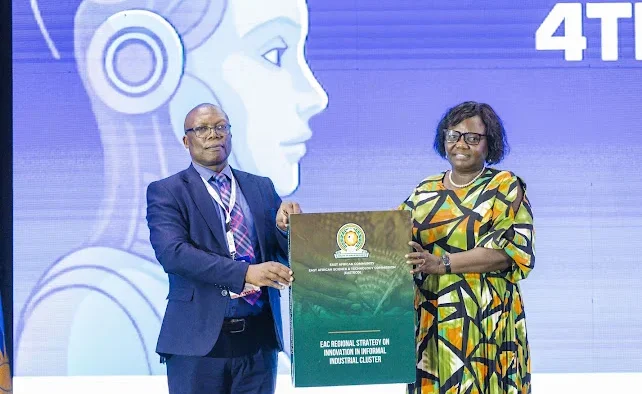
Executive Secretary of the East African Science and Technology Commission, Dr Sylvance Okoth, emphasised the necessity of shared digital infrastructure during a recent forum.
Ministers have committed to joint investments in high-performance computing, regional data centres, and cloud systems.
These collective efforts are designed to reduce the duplication of resources while achieving significant economies of scale.
Dr Okoth noted that such investments are essential for the region to compete effectively on a global stage.
Human capital development remains a fundamental pillar of this new industrial strategy.
Leadership within the EAC has prioritised the creation of a workforce capable of navigating an AI-driven economy.
This involves the harmonisation of educational curricula and the creation of regional certification frameworks.
By strengthening technical and vocational training, the region intends to produce a critical mass of professionals ready to lead innovation across all sectors.