
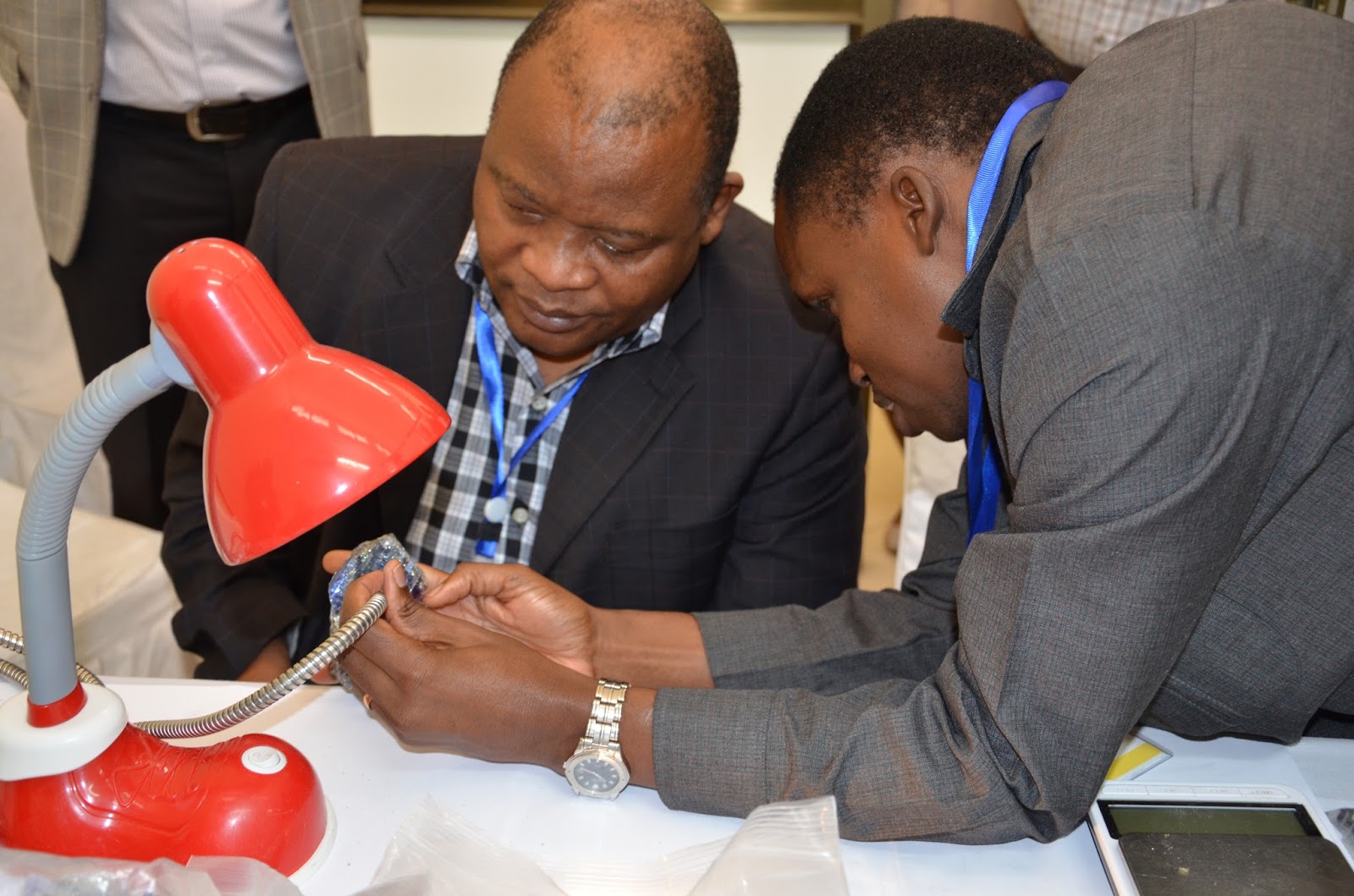
Arusha. The Tanzanian government has issued an international tender for the organisation of a high-tier Tanzanite auction in early 2026, signaling a major move to institutionalise the trade of one of the world’s rarest gemstones.
The initiative, led by the ministry of Minerals, aims to centralise the global supply chain in Arusha, shifting the market away from informal channels that have historically facilitated large-scale smuggling.
Assistant Commissioner for Mineral Beneficiation and Value Addition, Archard Kalugendo, confirmed that the upcoming auction is part of a broader fiscal strategy to “restore the prestige” of Tanzanite.
“By inviting international organisers, the government intends to professionalise the bidding process and attract Tier-1 global institutional buyers and luxury houses, ensuring that price discovery reflects the true scarcity of the asset,” Mr Kalugendo noted.
The One-Generation Asset
Tanzanite’s market value is fundamentally driven by its extreme geological rarity.
Discovered in 1967, the gemstone is found exclusively in a 14-square-kilometre area in the Mererani Hills.
Geologists estimate that the accessible reserves may be exhausted within the next two decades, leading many in the industry to label it a “one-generation gemstone.”
Despite this scarcity, Tanzania has historically struggled to capture the full economic rent of the mineral. In previous decades, an estimated 80 per cent of Tanzanite was smuggled out of the country, with significant value-addition occurring in hubs like Jaipur, India, rather than domestically.
Structural reforms and value addition
The 2026 auction is the culmination of a decade-long tightening of the regulatory framework.
This process began with the 2017 Mining Act amendments and was followed by the 2018 completion of a 24-kilometre perimeter wall around the Mirerani mining zone.
These security measures have significantly reduced illicit cross-border outflows, allowing the state to better monitor production volumes.
Parallel to security, the government is aggressively pursuing a “value-addition” mandate.
A new Sh33 ($12.5 million) gemstone processing and training centre is currently under construction in Arusha.
By mandating that more stones are cut, polished, and appraised locally, the ministry of Minerals aims to move the country up the value chain from a raw material exporter to a finished-goods hub.
Outlook
For the Tanzanian treasury, the formalisation of the Tanzanite trade is a critical component of the 2026 target to have the mining sector contribute 10% to the national GDP.
While gold remains Tanzania’s primary mineral export, Tanzanite represents a unique “soft power” asset in the global luxury market.
The successful execution of a transparent, internationally-run auction in 2026 would provide a much-needed benchmark for gemstone pricing and could serve as a model for other mineral-rich nations seeking to end the era of informal resource exploitation.