
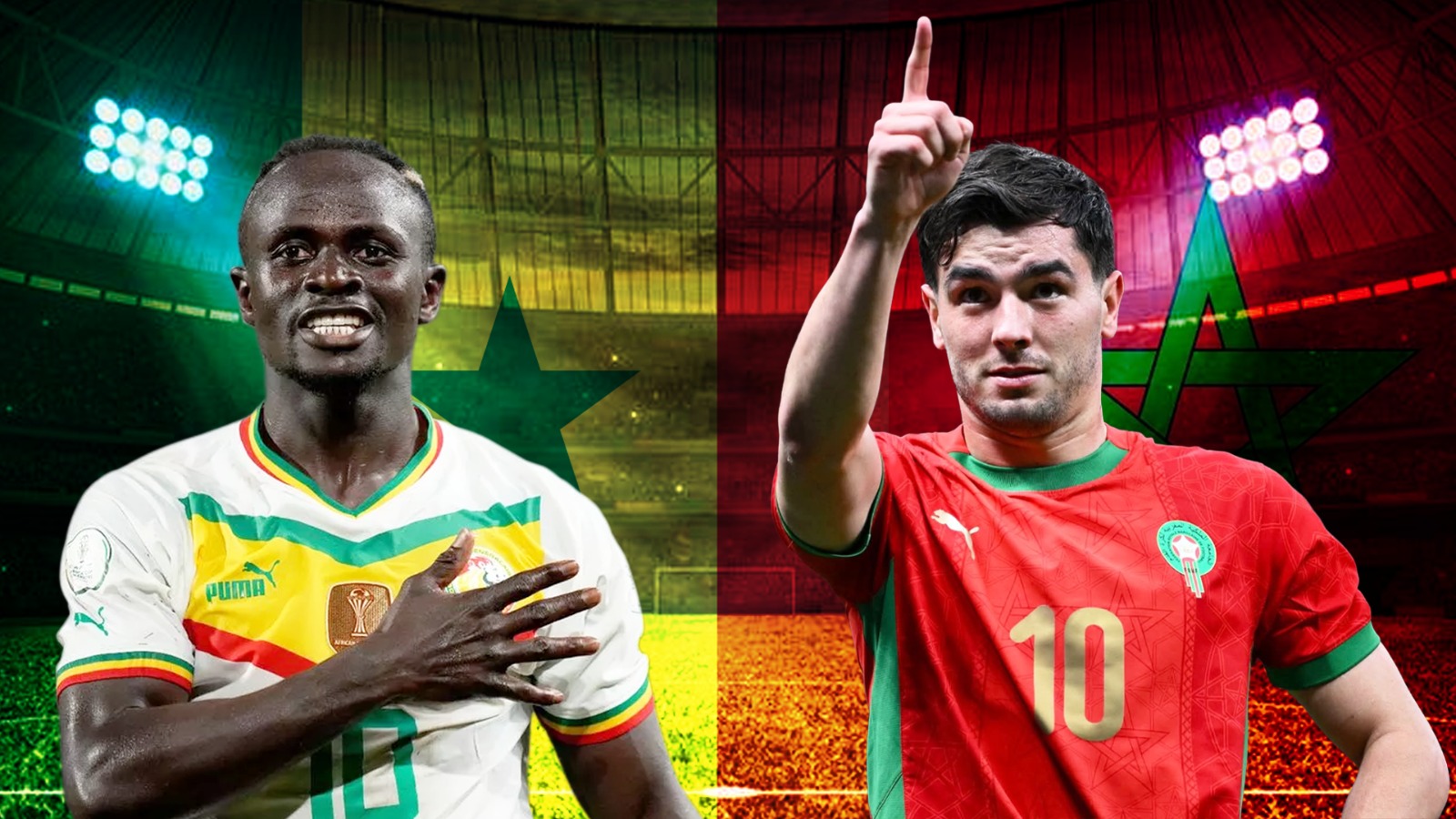
On Sunday night at the Prince Moulay Abdellah Stadium, African football reaches its ultimate destination.
90 minutes, perhaps more, will decide not only the champions of the continent, but also which footballing narrative will be etched permanently into history.
Hosts Morocco and reigning giants Senegal collide in an Africa Cup of Nations final that carries weight far beyond silverware.
For Morocco, this is destiny knocking with unusual persistence.
Fifty years have passed since the Atlas Lions last lifted the AFCON trophy in 1976.
Generations have grown up hearing stories of that triumph without ever witnessing a repeat.
Now, on home soil, with a united nation behind them and a squad built for control and resilience, Morocco stand one step away from immortality.
Standing firmly in their path are Senegal a side that has transformed consistency into culture.
This is their third AFCON final in the last four editions, a statistic that speaks volumes about their evolution from talented outsiders into continental heavyweights.
Having broken their own curse by winning AFCON 2021 in Cameroon, the Lions of Teranga now have the chance to confirm that triumph was not an isolated moment, but the foundation of a lasting era.
The atmosphere in Rabat is expected to be ferocious. Moroccan supporters, initially cautious during the early stages of the tournament, have found their voice as the knockout rounds unfolded.
Every tackle, every clearance and every forward run has been roared on with belief.
Regardless of Sunday’s outcome, this tournament has reconnected the national team with its people but victory would elevate that bond into legend.
Walid Regragui’s Morocco have not dazzled in the conventional sense, but they have been ruthlessly efficient.
Their journey to the final has been built on defensive excellence, tactical discipline and emotional control.
One goal conceded in six matches and that via a penalty underlines a back line that has turned organisation into an art form.
At the heart of that defensive machine stands Bono.
The experienced goalkeeper has once again proven himself a specialist for high-pressure occasions.
His penalty heroics in the semi-final against Nigeria, following 120 minutes of attritional football, were decisive.
With four saves from seven shootout penalties across recent major tournaments, Bono is as much a psychological weapon as he is a technical one.
Yet Morocco are more than a defensive unit.
Achraf Hakimi’s influence from right-back continues to shape their attacking rhythm, even when he is not directly involved in goals.
Brahim Diaz has been the creative spark, scoring in multiple rounds and consistently carrying the threat between the lines.
Though Ayoub El Kaabi has gone quiet since the group stage, his movement remains vital in stretching defences and creating space for others.
Senegal, by contrast, arrive in the final with a different identity one rooted in balance.
They have scored in every round of the tournament, blending physical authority with pace and intelligence in attack.
Where Morocco suffocate opponents, Senegal seek to destabilise them.
Much of that attacking belief flows through Sadio Mané. Now a seasoned leader rather than a raw superstar, Mané continues to deliver when it matters most.
His semi-final winner against Egypt his fifth goal involvement of the tournament and 20th at AFCON finals since 2017 was a reminder that he remains Senegal’s heartbeat.
When moments demand calm, conviction and clarity, Mané answers.
However, Senegal’s path to glory is complicated by absence.
Captain Kalidou Koulibaly, suspended after his booking in the semi-final, will miss the final a significant blow given his leadership and organisational presence.
Mamadou Sarr is expected to deputise, but filling Koulibaly’s shoes on such a stage is no small task.
Habib Diarra’s suspension further disrupts Pape Thiaw’s plans, likely forcing a reshuffle in midfield and increasing responsibility on Idrissa Gana Gueye and Pape Gueye to control tempo against Morocco’s structured press.
Nicolas Jackson is expected to lead the line, flanked by Mané and Iliman Ndiaye, offering pace but also risking isolation against Morocco’s compact shape.
Interestingly, Morocco are not without their own concerns.
Azzedine Ounahi’s continued absence removes a vital connector between defence and attack, while Romain Saiss’s injury has forced Regragui into a settled but less experienced central pairing.
Nevertheless, the system has absorbed these losses with remarkable stability.
Tactically, this final promises patience rather than chaos.
Morocco will aim to deny space, frustrate Senegal’s wide threats and strike with precision.
Senegal, meanwhile, must decide whether to press aggressively and risk exposure, or remain compact and trust their moments will come.
History suggests AFCON finals are rarely open affairs. They are games of fine margins, singular chances and decisive errors.
One lapse in concentration, one piece of brilliance, one refereeing call any could define the outcome.
Beyond tactics and statistics lies the emotional core of this contest.
Morocco carry the hopes of a nation yearning for closure. Senegal carry the confidence of champions seeking continuity.
One seeks redemption; the other, affirmation.
When the final whistle blows in Rabat, African football will have its answer.
Will Morocco finally end a 50-year wait and crown themselves kings on home soil, or will Senegal confirm that this era belongs to them? The stage is s