
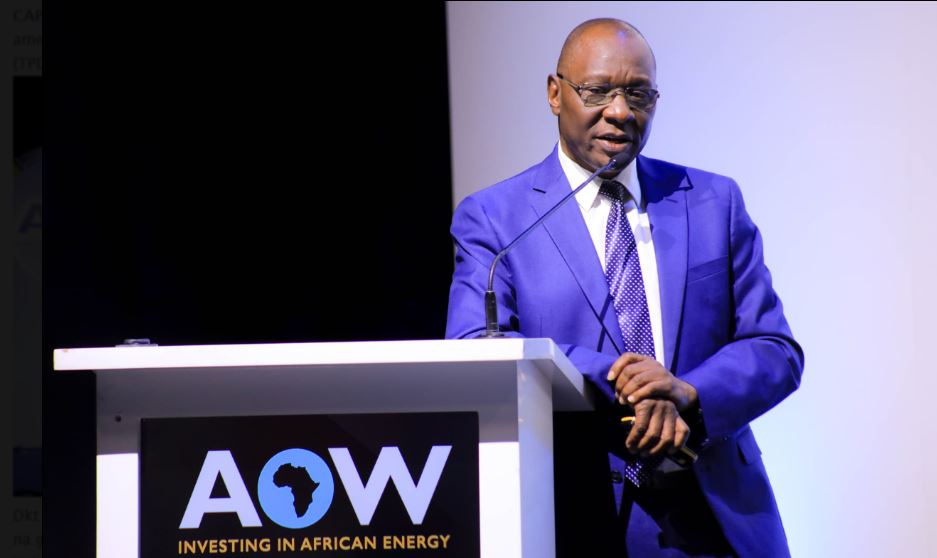
Dodoma. When the State House announced, on February 6, the promotion of Dr James Peter Mataragio to Permanent Secretary in the Ministry of Energy, it was clear that one person’s career had come full circle.
The promotion of Dr Mataragio carries deep strategic meaning, signalling Tanzania’s renewed determination to position itself decisively within the fiercely competitive global energy market.
At a moment when international capital is increasingly cautious and energy geopolitics more complex than ever, the appointment of a seasoned technocrat with deep experience in the oil and gas exploration sector was a deliberate and carefully calibrated move.
It required the restructuring of the ministry’s administrative leadership.
Dr Felchesmi Mramba will continue to oversee Electricity and Renewable Energy, areas critical to domestic development and the green transition.
In parallel, Dr Mataragio assumes responsibility for oil and natural gas, effectively becoming the state’s chief steward and principal negotiator in one of the most capital-intensive and geopolitically sensitive sectors of the economy.
For Dr Mataragio, whose professional life has been shaped by the intricate science of the earth’s subsurface and the equally demanding realm of international negotiation, the appointment represents the culmination of a long, demanding journey.
It is a career marked by global exposure, institutional turbulence, personal resilience and a sustained commitment to public service.
In the Diaspora
Dr Mataragio’s career trajectory is frequently cited as a model of the ‘brain gain’ strategy championed by successive governments during the mid-2010s.
Trained as a geoscientist, he holds a PhD in Geochemistry, Mineralogy, and Petroleum Geology from the Missouri University of Science and Technology, one of the United States’ leading research institutions in earth sciences and engineering.
His academic training equipped him with a rare blend of theoretical depth and practical competence, skills that would later prove indispensable in both corporate and public service roles.
Following his doctoral studies, he spent more than a decade in the United States, working in the heart of the global energy industry.
Based in Houston, Texas, widely regarded as the world’s energy capital, he rose to become a senior geoscientist at Bell Geospace, a firm specialising in advanced seismic imaging and subsurface data analysis.
His work placed him at the cutting edge of exploration technologies, allowing him to engage directly with multinational oil companies and energy investors operating across multiple continents.
Despite professional success abroad, Dr Mataragio maintained close ties with Tanzania.
At a time when the country was emerging as a promising frontier for natural gas exploration, he provided pro bono technical advice to government agencies, helping them navigate the complexities of geological surveys, data interpretation and early-stage investment negotiations.
His contributions earned respect within policy circles and gradually positioned him as one of the most trusted Tanzanian experts in the sector.
This sustained engagement ultimately led to his recruitment into public service.
In December 2014, then President Jakaya Kikwete appointed him director general of the Tanzania Petroleum Development Corporation (TPDC), the state-owned entity responsible for managing the country’s upstream petroleum resources.
He was the ‘golden boy’ brought home to transform a state agency into a commercial powerhouse.
He was seen as the technocrat capable of transforming TPDC from a largely regulatory body into a commercially driven institution, able to partner effectively with global energy majors while safeguarding national interests.
Resilience through turbulence
Yet, the journey was anything but straightforward.
In 2016, amid sweeping reforms under the late President John Magufuli, Dr Mataragio became entangled in a period of intense institutional scrutiny.
He, along with several senior executives, was suspended following administrative and procurement investigations.
The episode unfolded at a time of heightened public demand for accountability, transparency and efficiency within state institutions.
For many, the suspension marked a sudden and unexpected interruption to a promising public career.
In Tanzania’s often unforgiving political and bureaucratic environment, such setbacks can prove terminal.
However, Dr Mataragio’s experience and specialised expertise would soon underscore his enduring relevance.
After a period of review, he was reinstated in 2019, a move widely interpreted by analysts as a tacit acknowledgement of his indispensable technical competence and institutional memory.
His journey since then has been one of steady, quiet delivery, eventually leading to his appointment as Deputy Permanent Secretary by President Samia Suluhu Hassan, and now, the full stewardship of the sector.
His work spanned policy formulation, regulatory coordination and complex negotiations with international partners.
Over time, this consistent delivery restored his standing and laid the groundwork for his subsequent appointment as Deputy Permanent Secretary.
The promotion to Permanent Secretary represents the formal recognition of that long process of professional rehabilitation and renewed confidence.
The $42 billion weight on his shoulders
The timing of Dr Mataragio’s elevation is inseparable from the extraordinary stakes currently confronting Tanzania’s energy sector.
The country stands at a critical juncture in the development of its long-awaited $42 billion Liquefied Natural Gas (LNG) project, one of the largest single investments in its history.
Anchored in Lindi, the project is expected to unlock offshore gas reserves estimated at over 57 trillion cubic feet, transforming Tanzania into a major global gas exporter.
After years of complex negotiations, commercial discussions with a consortium led by Shell and Equinor, alongside ExxonMobil, have recently concluded.
The focus has now shifted to final legal and fiscal arrangements, with a binding agreement anticipated by June 2026.
The coming months will therefore be decisive. Any misstep could delay the project further, undermining investor confidence and eroding the country’s competitive position.
It is within this context that Dr Mataragio’s appointment assumes profound significance because it was clear that the government needed a technocrat who could speak the language of Shell, Equinor, and ExxonMobil fluently.
His technical fluency, coupled with his familiarity with the corporate cultures of international energy firms, positions him uniquely to bridge the divide between government policy objectives and investor expectations.
Few Tanzanian officials possess comparable exposure to both the scientific and commercial dimensions of the industry.
A senior official from the ministry of Energy in Dar es Salaam described the appointment as both timely and pragmatic.
“Dr Mataragio understands the geology of the blocks, the economics of the Houston boardrooms, and the political imperatives of Dodoma. That combination is rare, and it matters enormously at this stage,” he said asking for anonymity.
Beyond the LNG negotiations, his portfolio includes several other strategic priorities.
These include overseeing the upcoming 5th Licensing Round, in which Tanzania plans to auction 26 exploration blocks to global investors.
The exercise is intended to revitalise upstream exploration, attract new capital and diversify the country’s investor base.
Equally significant is his role in ensuring the successful completion of the East African Crude Oil Pipeline (EACOP), a landmark regional project designed to transport Ugandan crude oil to the Tanzanian port of Tanga.
With construction now more than 65 percent complete, sustained coordination and diplomatic engagement will be required to meet its ambitious operational timelines between 2027 and 2030.
A Two-Pronged Ministry
The reconfiguration of the Ministry of Energy reflects a broader strategic recalibration.
By dividing responsibility between electricity and renewables on one hand, and hydrocarbons on the other, the government has effectively created a dual engine for growth.
Dr Mramba’s remit focuses on expanding power generation, stabilising supply and accelerating the shift towards clean energy.
These priorities are essential for domestic development, industrial expansion and climate commitments.
In contrast, Dr Mataragio’s mandate centres on maximising the value of extractive resources.
His challenge is to ensure that Tanzania’s gas reserves translate into tangible socio-economic benefits.
This requires not only securing favourable fiscal terms, but also embedding local content, infrastructure development and downstream industrialisation within major investment frameworks.
The objective is to prevent the familiar paradox of resource-rich economies that fail to achieve broad-based prosperity.
As he settles into his new office at Government City in Mtumba, Dr Mataragio confronts expectations that extend far beyond bureaucratic efficiency.
He carries the hopes of a nation eager to see its natural endowment converted into jobs, revenue and long-term economic resilience.
In the months ahead, the success or failure of Tanzania’s most ambitious energy ventures may well hinge on his ability to navigate technical complexity, political scrutiny and global market volatility.
For Dr Mataragio, the journey that began in distant laboratories and seismic fields has now reached its most consequential chapter.
Dr Matarajio’s educational, professional background
Dr Mataragio is a distinguished geoscientist with an extensive academic background and over three decades of professional experience in geology, geophysics, and the global oil and gas industry.
In the addition to his PhD in Geochemistry, Mineralogy, Structural Geology and Petroleum Geology from the University of Missouri–Rolla, US that he obtained in 2005, Dr Mataragio also holds a Master of Science degree in Geochemistry and Petrology at the University of Okinawa, Japan, in 1997.
In 2008 he earned a Master of Business Administration (MBA) in Business Development from the University of Charlotte, North Carolina, the US.
His higher education journey started at the University of Dar es Salaam (UDSM) where he completed in 1994 graduating with a Bachelor of Science (Honours) in Geology.
After graduating from the UDSM he worked as an Exploration Geologist at Anglo American Corporation between 1994 and 1999.
He also served as a Project Manager at the Buzwagi operations from 1999 to 2000.
The same year he was recruited by the UDSM to serve as an assistant lecturer at the University of Dar es Salaam.
He then moved to the University of Missouri where he served in the same capacity as Assistant Lecturer while pursuing his doctoral studies, between 2001 and 2004.
At Bell Geospace, Dr Mataragio collaborated with leading international oil and gas companies, including Petrobras of Brazil, BP, Anadarko, Tullow, Pemex of Mexico, Brazil’s National Petroleum Agency (ANP), Ecopetrol of Colombia, Petronas of Malaysia, and Vale Rio Doce.