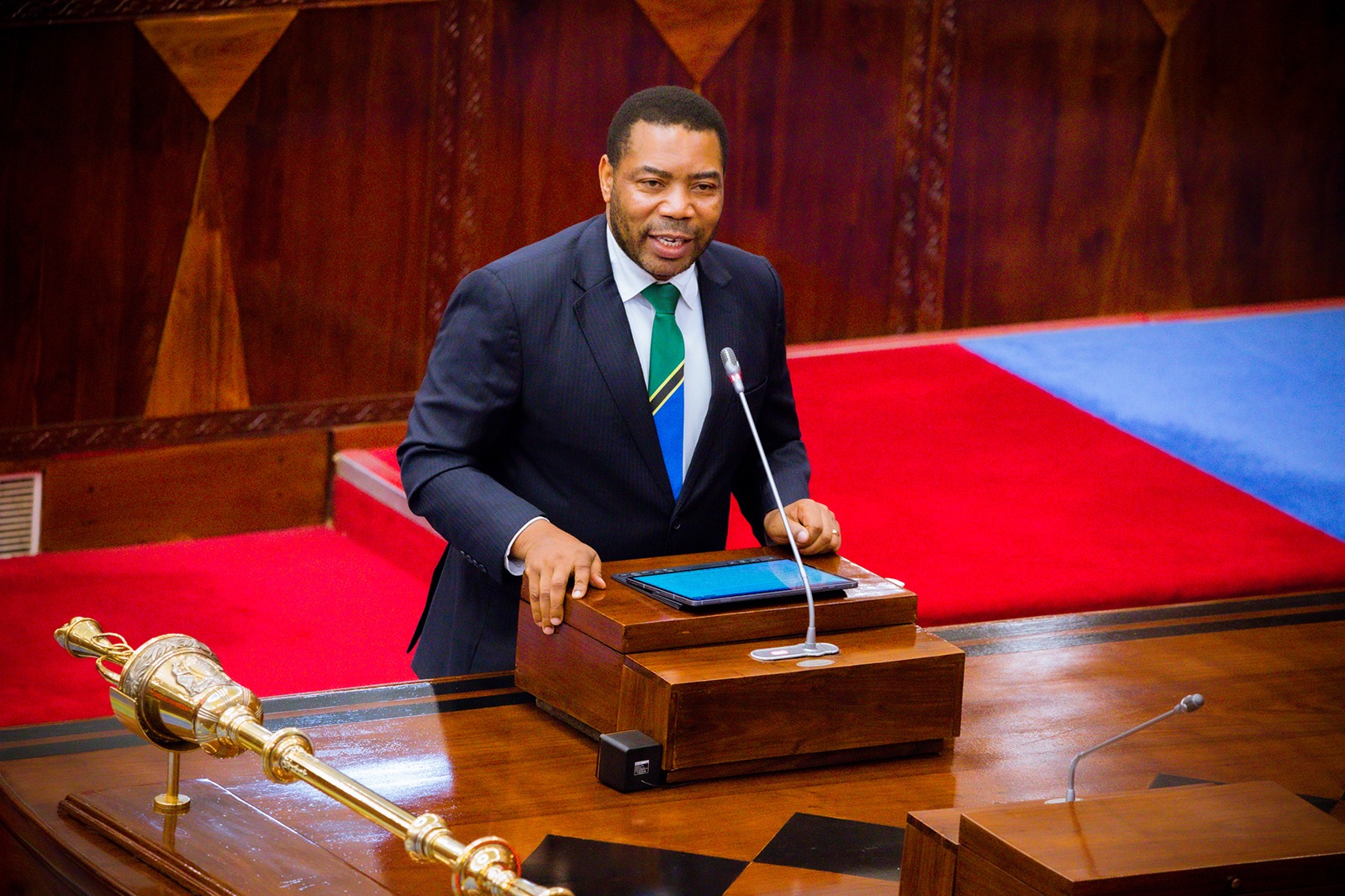

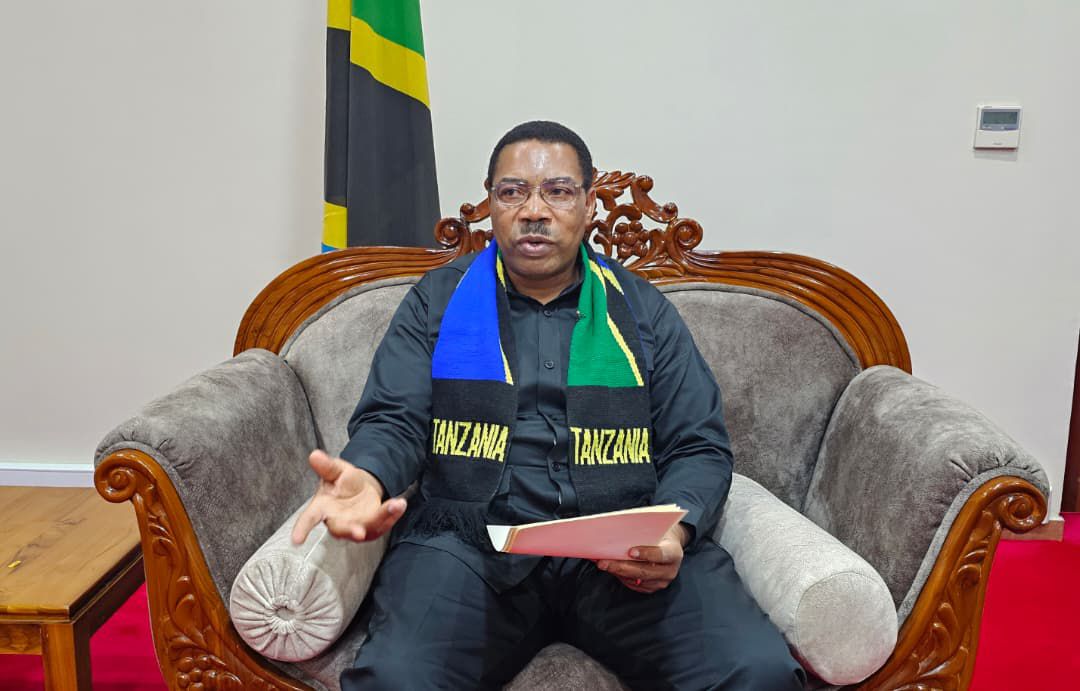
Dodoma. Prime Minister Dr. Mwigulu Nchemba has called upon Tanzanians to conserve their existing food reserves and avoid unnecessary consumption due to the delayed start of the rainy season.
The Prime Minister made the appeal on Sunday, December 14, 2025 while meeting with several Regional and District Commissioners at his office in Mlimwa, Dodoma.
Addressing the regional leaders from Dodoma and Singida, Dr Nchemba said that the Tanzania Meteorological Authority (TMA) had previously issued a seasonal outlook for the Vuli short rains (October–December 2025) and the main rainy season (November 2025–April 2026).
“Based on this forecast, some regions across the country are expected to receive below-average to average rainfall, characterised by long dry spells and poor rain distribution,” he said.
He noted that the TMA assessment indicates that delayed rains are anticipated in the regions of Dodoma, Katavi, Kigoma, Singida, Tabora, Iringa, Mbeya, Mtwara, Njombe, Songwe, Rukwa, Ruvuma, and the southern part of the Morogoro Region.
Food Security and Caution
Dr Nchemba assured the public that despite the current weather concerns, there is no threat of food shortages due to the national food reserves.
“While there is no threat of food shortage because of the existing national food reserves, it is still prudent for citizens to continue observing proper food usage. We have sufficient food reserves, but I urge the public to keep their own savings and avoid unnecessary spending,” he advised.
Preparing for the Season
The Prime Minister used the opportunity to remind farmers to prepare their fields in a timely manner and to utilise inputs suitable for low rainfall availability.
He also stressed the importance of following the guidance of agricultural experts, who are currently travelling nationwide to educate farmers.
Furthermore, Dr Nchemba called on all pastoralists to establish good plans for the use and storage of water and livestock feed to cope with the anticipated dry conditions.
Extension Services and Logistics
The Prime Minister stressed the importance of regional and district leaders ensuring that agricultural extension officers visit farmers to provide advice, including the correct use of seeds adapted to the weather conditions, rather than remaining in their offices.
“Furthermore, Regional Commissioners, District Commissioners, and Council Directors should continue to encourage farmers to register on the farmer database and ensure they obtain their registration numbers,” he emphasised.
Finally, Dr Nchemba instructed the Tanzania Ports Authority (TPA), the Tanzania Revenue Authority (TRA), and the Tanzania Fertiliser Company (TFC) to ensure that shipments of agricultural inputs are processed promptly for efficient distribution across the country.