
Dar es Salaam. The Tanzanian government has formally unveiled the tools necessary to implement its long-term development strategy, Vision 2050, officially known as Dira 2050, following directives from President Samia Suluhu Hassan.
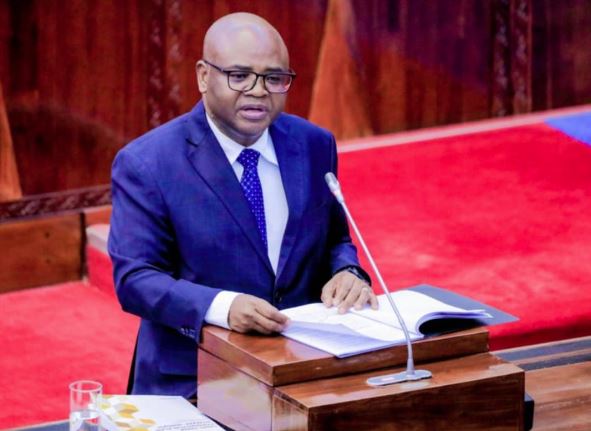
The Minister of State in the President’s Office [Planning and Investment], Prof Kitila Mkumbo, tabled the Dira 2050 implementation plans in Parliament on Monday, February 2, 2026, for approval by MPs.
The plans are set to officially take effect on July 1, 2026.
The suite of tools presented includes the Long-Term Perspective Plan (LTPP) 2026/27–2050/51, the Fourth Five-Year Development Plan (FYDP4) 2026/27–2030/31, and the Annual Development Plan (ADP) 2026/27.
These instruments are designed to guide Tanzania’s economic, social, and political development over the next three decades.
“Dira 2050 aims to build on the successes achieved so far and address challenges encountered during the implementation of the previous Dira/LTPP 2025, while creating new opportunities to drive the nation forward in economic, political, and social development towards 2050,” Prof Mkumbo staid.
The Long-Term Perspective Plan specifies clear goals and actions aligned with the objectives and priorities outlined in Dira 2050.
Considering the rapid population growth and its impact on land availability, public services, and infrastructure the LTPP emphasises sustainable urban planning and environmental stewardship.
According to Prof Mkumbo it also focuses on broad stakeholder participation in development planning, expansion and quality improvement of social services, and productivity enhancement in agriculture, industrial production, and service delivery through accelerated adoption of technology, including digital tools, innovation, and value addition.
It also seeks to create predictable, investor-friendly environments to attract domestic and international private capital and promote governance reforms and cultural transformation to improve public sector efficiency and performance.
The second instrument tabled was FYDP4 (2026/27–2030/31), which follows the completion of the Third Five-Year Development Plan (FYDP3) 2020/21–2025/26, marking the conclusion of Vision 2025’s planning cycle.
“FYDP4 is the first medium-term plan to operationalise Dira 2050. It builds on past successes, addresses challenges from FYDP3, and leverages new opportunities to transform economic and social development,” Prof Mkumbo explained.
The overarching goal of FYDP4 is “Transformations for Inclusive Economic Growth and Job Creation.”
It focuses on implementing major reforms that will change institutional practices, mindsets, and operational culture to boost productivity, enhance Tanzania’s competitiveness regionally and globally, and stimulate sectoral integration.
Prof Mkumbo emphasised that one of the strategic objectives is to position Tanzania as a hub for transport, logistics, industry, and commerce in Africa.
Cost for implementing Dira 2050
The cost of implementing FYDP4 is estimated at Sh477 trillion, covering transformational sectors and growth drivers, including integrated transport, energy and mining, industry and trade, agriculture, ICT, environmental resilience, social services, governance, and research and development.
The funding model anticipates a 70:30 split between the private sector and public institutions, with private investors expected to contribute approximately Sh324.49 trillion, government ministries and local authorities Sh115.04 trillion, and public corporations Sh38.22 trillion.
The third tool presented, the Annual Development Plan (ADP) 2026/27, outlines strategic priorities for the upcoming fiscal year.
These priorities include building a resilient, inclusive, and competitive economy through institutional reforms and good governance, enhancing human capital and social development to cultivate skilled, healthy, and adaptive citizens, strengthening digital infrastructure, energy.
Other priorities are integrated transport systems, supporting productive sectors to drive value addition and inclusive growth, and promoting environmental conservation and climate resilience.
Prof Mkumbo noted that macroeconomic targets for 2026/27 include increasing real GDP growth from an estimated 5.9 percent in 2025 to 6.3 percent in 2026 and achieving 6.9 percent over the medium term, while maintaining inflation at single-digit levels averaging between 3 percent and 5 percent.
Other objectives include raising domestic revenue to 17.1 percent of GDP, ensuring tax revenue reaches 13.7 percent of GDP, limiting tax exemptions to no more than 1 percent of GDP, and maintaining a budget deficit below 3 percent of GDP.
Dira 2050 was officially launched on July 17, 2025, in Dodoma.
During the launch, President Samia Suluhu Hassan observed that the lack of practical implementation tools had hindered progress under the outgoing Vision 2025.
“We want to avoid repeating past mistakes. That is why this time, all necessary plans and strategies have been prepared in advance to ensure a smooth implementation of Dira 2050,” the President said.
She instructed the responsible ministries to expedite the finalisation and internalisation of these plans well ahead of the July 2026 start date.
The unveiling of these tools marks a pivotal moment in Tanzania’s journey towards long-term socio-economic transformation, signalling a robust framework for strategic planning, investment, and inclusive growth over the next three decades.