
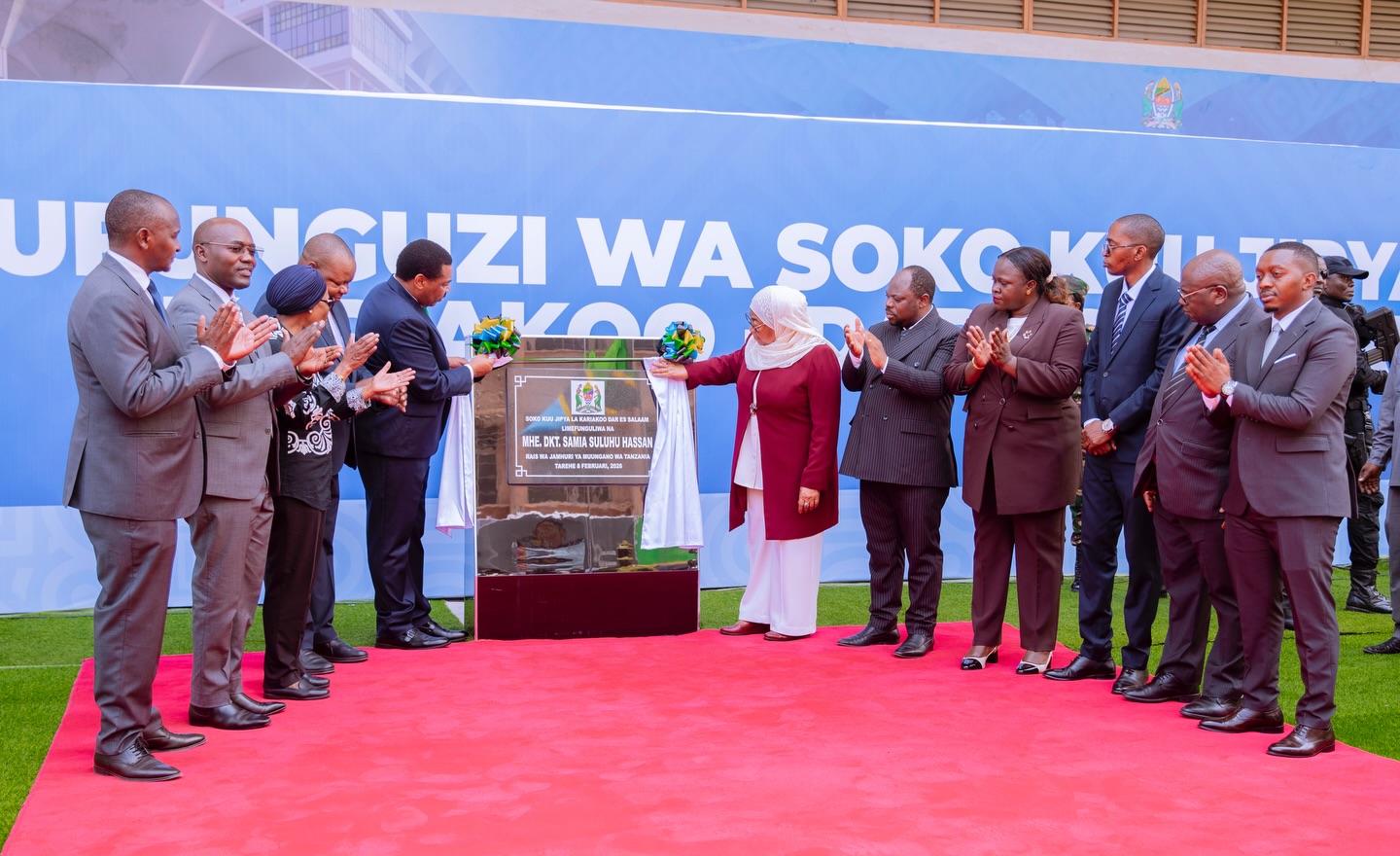
Dar es Salaam. In a landmark move for East African commerce, President Samia Suluhu Hassan has officially inaugurated the newly reconstructed and expanded Kariakoo International Market, marking a triumphant recovery from the devastating fire of July 2021.
The completion of this massive infrastructure project signifies a new chapter for Tanzania’s economic engine, transitioning from a site of charred remains to a modern, multi-storey hub designed to anchor the nation’s retail and wholesale trade for the coming decades.
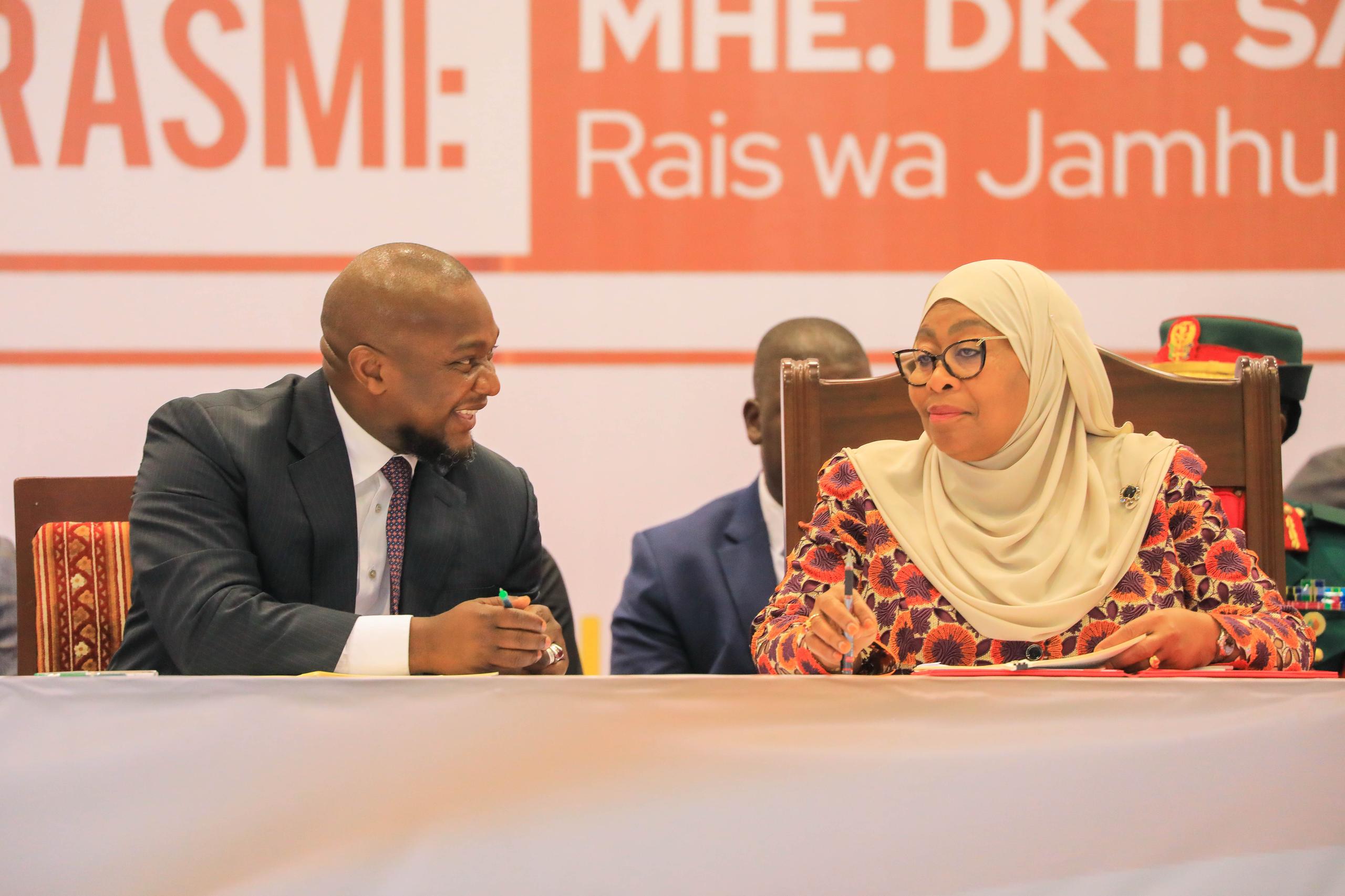
President Samia said she wanted the new market to set a benchmark for market operations in Tanzania.
“The process of returning traders who were here previously should be carried out without nepotism or bureaucracy,” President Samia directed.
She said she would not wish to hear that government officials had taken up the stalls in order to sublet them to small traders.
“Let the Kariakoo Market Corporation be responsible for renting out the stalls, not government officials acting as individuals,” she added, stressing that the rent should be reasonable, neither too high nor too low.
The revitalised market complex represents a strategic investment of Sh28 billion, a sum that reflects the government’s commitment to urban renewal and the formalisation of the informal sector.
Following the 2021 blaze that gutted the historic brutalist landmark designed by architect B.J. Amuli in the 1970s, the Samia administration prioritised not only the restoration of the original structure but also a significant expansion of its capacity.
The facility now boasts 2,000 stalls, a substantial increase from the 1,520 available prior to the fire, allowing for a more inclusive environment for the city’s burgeoning population of entrepreneurs.
Architecturally, the project balances heritage with modernisation.
While the old landmark has been meticulously refurbished to preserve its iconic status within Dar es Salaam’s skyline, a new six-storey building has been integrated into the complex.
This vertical expansion is a direct response to the chronic shortage of trading space in the Ilala District, which has historically forced many vendors to operate from the pavements.
Beyond the increase in floor space, the technological and logistical upgrades are perhaps the most transformative aspects of the new Kariakoo.
The market is now equipped with state-of-the-art facilities designed to support 24-hour trading cycles, including modern lighting, fire suppression systems, and improved sanitation.
One of the most critical interventions is the introduction of an extensive underground parking facility capable of housing 400 vehicles.
For years, the narrow arteries of Kariakoo have been choked by logistical bottlenecks and haphazard parking.
This new capacity is expected to decongest the surrounding streets, facilitating a smoother flow of goods and services.
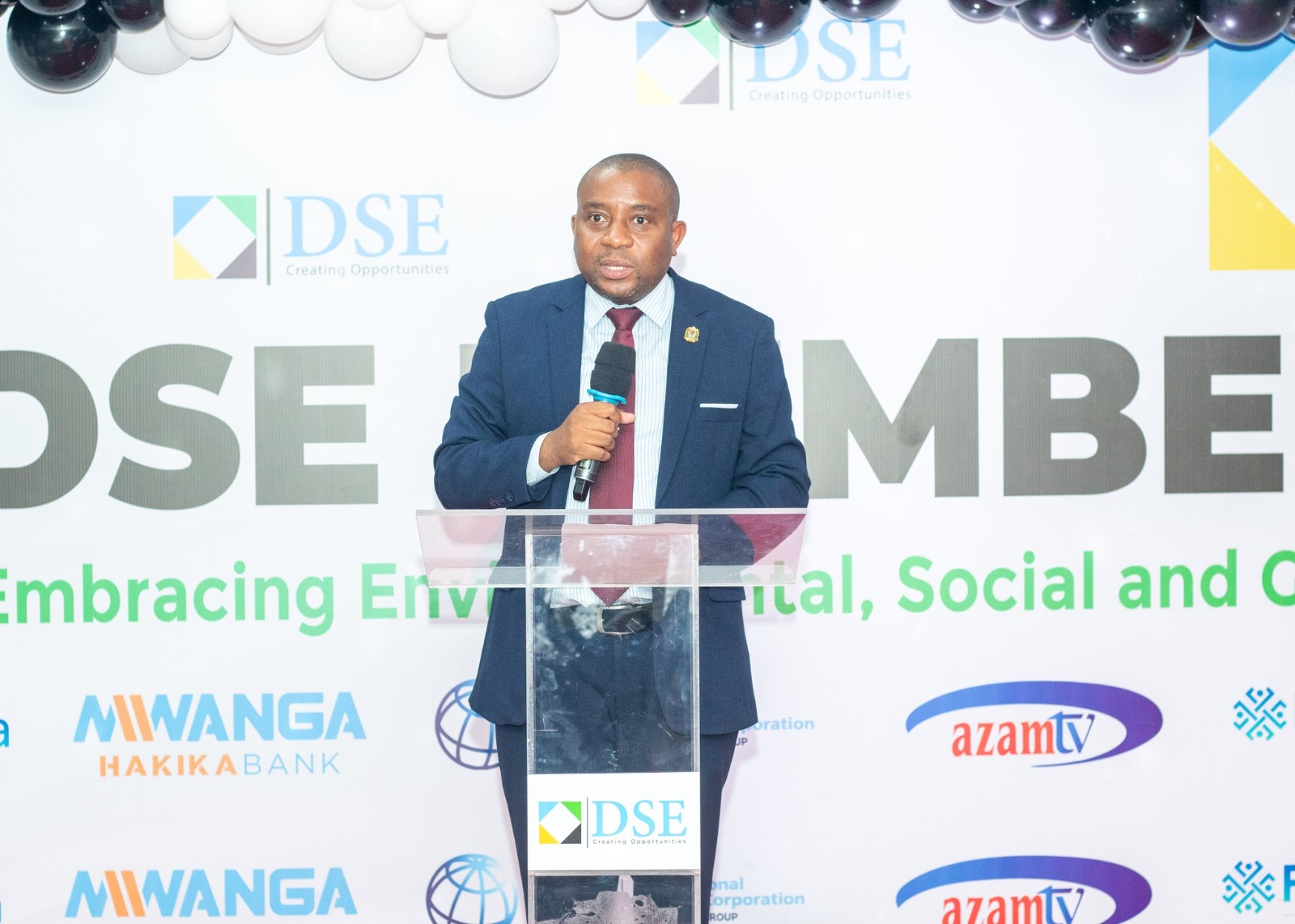
Regional Commissioner Albert Chalamila underscored the strategic importance of this development, noting that Kariakoo is more than just a local market.
It is a designated tax region under the Tanzania Revenue Authority (TRA) and a vital source of national revenue.
He announced that the regional administration has reached a consensus to reopen all blocked roads within the Kariakoo precinct.
This policy shift aims to ensure that the area remains a fluid economic zone where development is not hindered by physical obstruction.
By moving traders from the streets into the newly available stalls and frames, the city intends to restore order while simultaneously boosting the tax base.
The inauguration also served as a platform for President Samia to highlight broader infrastructural resilience across the commercial capital.
Recognising that a market can only thrive if it remains accessible, the government has allocated significant funding for the construction of bridges and drainage systems in flood-prone areas such as Jangwani, Mwajuni, and Kigogo.
These projects are designed to ensure that even during the heavy equatorial rains, the logistical lifelines connecting the residential outskirts to the Kariakoo heartland remain unbroken.
This holistic approach to urban planning suggests that the new market is not an isolated achievement, but the centrepiece of a wider effort to modernise Dar es Salaam’s commercial landscape.