

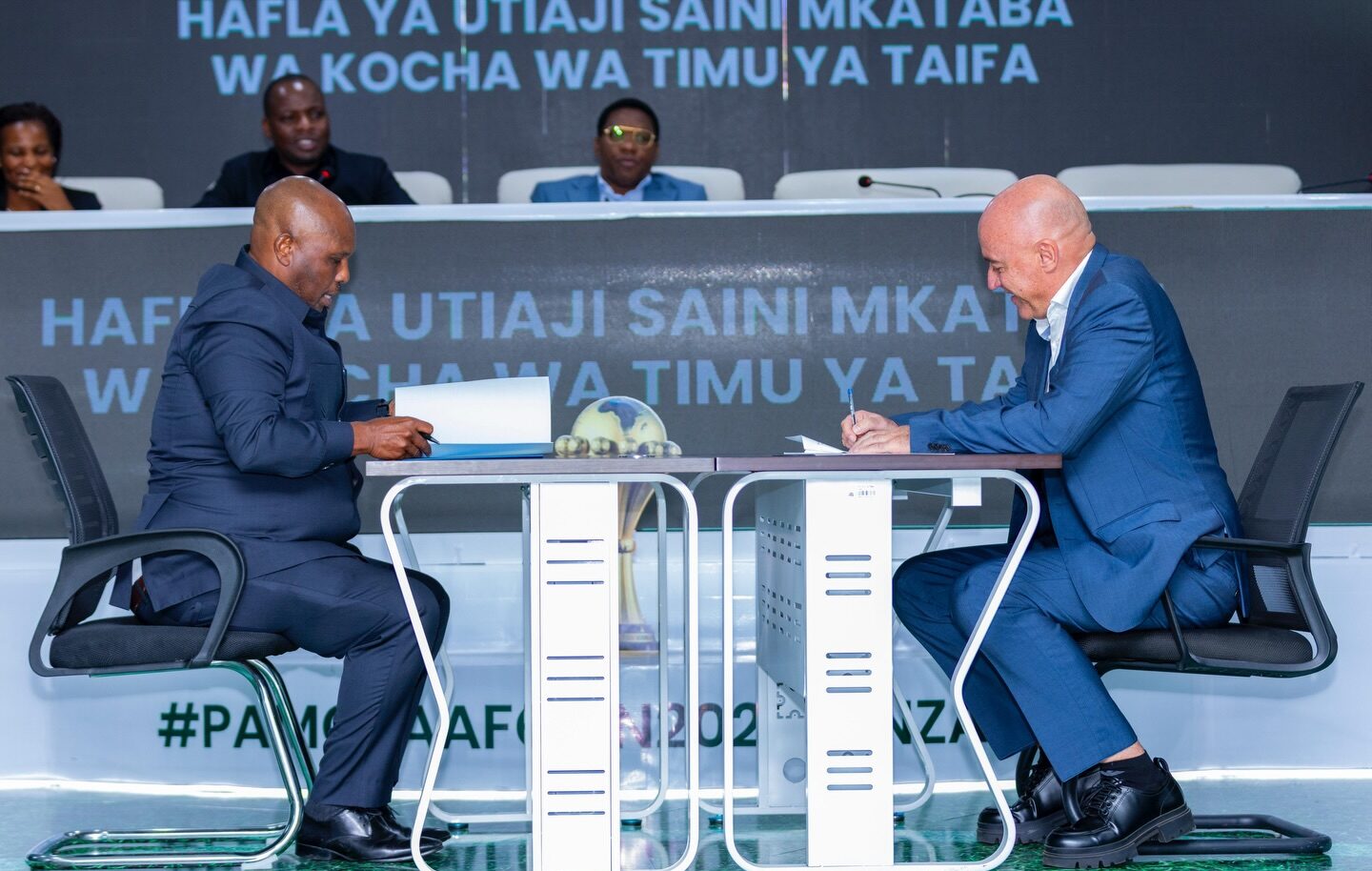
Dar es Salaam. The official handing over of a two-year contract to Argentine coach Miguel Gamondi today, February 16, is not just an administrative announcement it is a statement of intent.
For a national team that has been searching for sustained consistency at continental level, this decision reflects calculated planning rather than short-term reaction.
Gamondi’s journey with Taifa Stars did not begin today. His interim role during the AFCON 2025 finals in Morocco served as a live audition under intense competitive pressure.
During that spell, he demonstrated composure, tactical organisation and the ability to manage expectations on a big stage.
By confirming him on a permanent two-year deal, the Tanzania Football Federation (TFF) is effectively endorsing continuity over experimentation.
In modern international football, stability in technical leadership is often the foundation upon which competitive identity is built.
Frequent coaching changes disrupt tactical philosophy, player development pathways and dressing-room cohesion.
TFF’s move suggests a desire to establish a recognisable playing structure rather than constantly resetting the project.
One of Gamondi’s biggest advantages lies in his deep understanding of Tanzanian football dynamics.
His previous spells at Young Africans (Yanga) and Singida Black Stars gave him first-hand exposure to the domestic league’s strengths and limitations.
Unlike many foreign tacticians who require months to grasp local structures, Gamondi already understands the talent pipeline and competitive environment.
This familiarity could accelerate squad evolution and improve synergy between club and national team systems.
The presence of senior government officials at the contract ceremony further elevates the magnitude of this appointment.
Such institutional backing signals that Taifa Stars’ progress is viewed as a matter of national sporting ambition, not merely federation business.
However, political visibility also raises the performance bar expectations will be immediate and demanding.
The two-year timeframe itself is strategic.
It provides enough room to build tactical identity, nurture emerging talent and implement structural discipline, while maintaining measurable accountability.
Gamondi will likely be judged on qualification campaigns, competitive resilience and visible stylistic development.
His reputation suggests emphasis on structured defensive organisation, controlled transitions and tactical discipline.
If successfully implemented, Taifa Stars could evolve into a more compact, difficult-to-break unit capable of competing consistently against higher-ranked African opponents.
Yet, the true measure of this appointment will not be press conference optimism, but competitive outcomes.
Results in upcoming qualifiers and regional tournaments will determine whether this decision becomes a turning point.
For now, February 16 may be remembered as the day Tanzania chose continuity, familiarity and structured ambition.
Whether that choice ushers in a new era of sustained competitiveness now rests in Gamondi’s technical execution and the team’s ability to translate belief into performance on the pitch.