
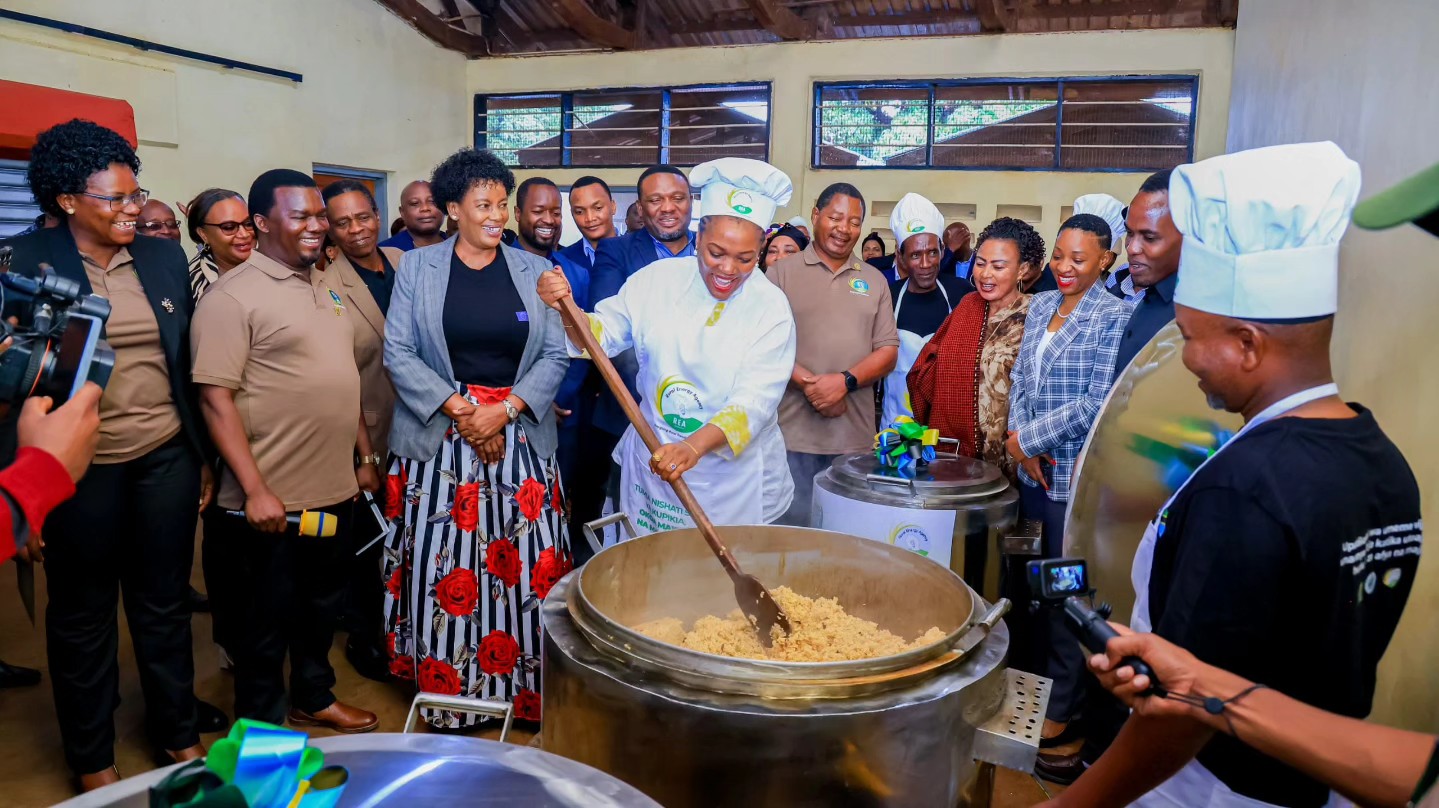
Dodoma. The Tanzanian government has launched the first phase of a national project to roll out clean cooking energy systems in public institutions serving more than 100 people, in a move aimed at accelerating the country’s transition to safer, affordable, and environmentally sustainable energy use.
The initiative was officially launched on February 17, 2026, by the Deputy Minister for Energy, Ms Salome Makamba, at Kondoa Girls’ Secondary School in Dodoma Region, the first institution to benefit from the installation of a clean cooking energy system under the project.
The first phase covers 52 secondary schools and one Vocational Education and Training Authority (VETA) college across 18 regions of Mainland Tanzania.
It forms part of a wider programme to equip 453 institutions with clean cooking infrastructure at a total cost of Sh25.8 billion, fully financed by the government through the Rural Energy Agency (REA).
Speaking at the launch, Ms Makamba said the project involves the installation of liquefied petroleum gas (LPG) systems, the provision of energy-efficient stoves, and the distribution of alternative charcoal in all targeted institutions.
She noted that, under the first phase, 53 institutions will benefit, while the second phase will extend the programme to the remaining 400 institutions across all regions of the country.
“The implementation of this project reflects the firm commitment of the government, under the leadership of President Samia Suluhu Hassan, to ensure that all institutions serving more than 100 people adopt clean cooking energy,” she said.
Ms Makamba stressed that the initiative is designed to reduce dependence on traditional biomass fuels, cut harmful emissions, improve health outcomes, and protect the environment, while also lowering long-term operational costs for public institutions.
She called on local government authorities, the Ministry of Education, Science and Technology, and the President’s Office – Regional Administration and Local Government (Tamisemi) to ensure proper management and maintenance of the installed systems.
“For this project to be sustainable, all responsible authorities must closely supervise the installed infrastructure. This will not only safeguard the investment but also encourage surrounding communities to emulate public institutions by shifting to clean cooking energy,” she said.
The deputy minister also urged private sector players to seize the emerging opportunities in the production and distribution of clean cooking solutions, noting that increased market participation would enhance availability and drive down costs for households.
In addition, she directed REA to intensify efforts to promote the adoption of clean cooking energy in public spaces such as auction markets, bus terminals, and marketplaces.
She cited recent studies indicating the presence of 13,763 primary and secondary auction markets and about 1,229 fish markets nationwide, describing them as critical entry points for expanding access to clean cooking technologies.
The project aligns with the government’s broader energy transition agenda, which seeks to scale up the use of modern, efficient, and environmentally friendly cooking solutions, particularly in high-demand institutional settings.
Once fully implemented, the programme is expected to significantly reduce the consumption of firewood and traditional charcoal, curb deforestation, and contribute to national efforts to mitigate climate change, while improving safety and working conditions in public kitchens across the country.