

The intensifying war in the Gulf between Iran on one side and Israel and the United States on the other has sharply escalated the risk of a global energy crisis, with potentially severe consequences for fuel-importing countries such as Tanzania.
Heavy air and missile strikes across the region have disrupted shipping routes, shaken oil markets, and exposed the vulnerability of nations that lack strategic petroleum reserves.
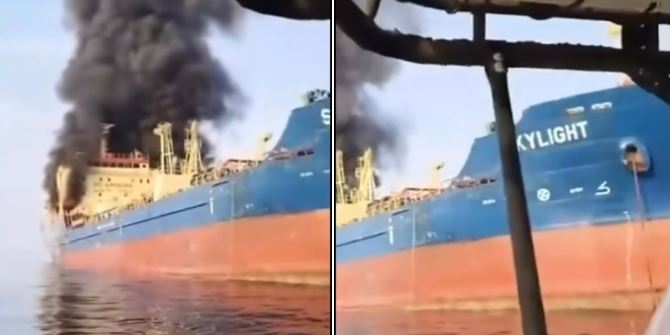
The crisis has deepened following reports that an oil tanker, Skylight, was attacked and left sinking near the Strait of Hormuz, one of the world’s most critical energy transit corridors.
The vessel is said to be taking on water and listing heavily after sustaining severe hull damage during an alleged Iranian assault, raising fears of a large-scale oil spill and prolonged disruption to global crude shipments.
The Strait of Hormuz is a narrow but vital shipping channel linking the Persian Gulf to global markets.
It passes through the territorial waters of Iran and Oman and typically carries about 20 percent of the world’s oil and gas supplies.
According to United States government data, roughly 20 million barrels of crude and petroleum products transit the strait each day, supplying key markets in Asia, Europe, and Africa.
A 2025 report by the Energy Information Administration warned that there are very limited alternative routes for transporting oil if the strait is closed.
The agency noted that while Saudi Arabia and the United Arab Emirates possess some pipeline infrastructure capable of bypassing the strait, the combined capacity of these routes is insufficient to handle current export volumes.
As a result, any sustained disruption would have immediate and far-reaching effects on global energy markets.
Shipping activity in the area has already collapsed. According to data from the maritime analytics firm Kpler, traffic through the strait fell by about 75 percent by the end of yesterday compared with the previous day.
Many vessels have turned back, suspended transit, or are idling offshore to avoid the conflict zone. Others have been diverted to longer and more expensive routes, significantly raising transport costs.
Oman’s maritime security centre confirmed that the tanker Skylight was attacked about five nautical miles off the coast of Masandam, injuring four crew members.
Authorities said the vessel suffered severe structural damage and was at risk of sinking.
The incident has further heightened security concerns across Gulf waters, prompting naval patrols and port authorities to issue fresh warnings to commercial shipping.
Major global shipping lines have responded by halting transits through the strait.
Denmark’s Maersk and Germany’s Hapag-Lloyd announced the suspension of vessel crossings due to elevated threats to crew safety and cargo security.
Industry analysts say these decisions could significantly constrain global fuel supply in the coming weeks.
Financial markets have reacted sharply. Global oil prices surged as traders priced in the risk of prolonged disruption.
Futures contracts rose steeply amid fears of supply shortages, while energy equities experienced heightened volatility.
Analysts warn that if hostilities persist or intensify, prices could climb to levels last seen during major geopolitical crises.
For import-dependent economies, the implications are profound.
Countries without strategic petroleum reserves are especially exposed to sudden supply shocks and price spikes.
Tanzania, which imports nearly all of its refined petroleum products, stands among the most vulnerable.
Tanzania’s fuel supplies are sourced mainly from the Middle East and transported through Indian Ocean shipping lanes before arriving at the ports of Dar es Salaam and Tanga.
Any sustained disruption in Gulf maritime routes is therefore likely to translate rapidly into domestic fuel shortages and rising prices.
Energy analysts in Dar es Salaam warn that the immediate impact will be felt at fuel stations.
Pump prices could rise sharply within days if global prices continue to surge.
This would directly affect transport costs, leading to higher fares for commuters and increased freight charges for goods.
Food prices would soon follow. Tanzania’s agricultural supply chains rely heavily on road transport.
Higher fuel costs would increase the price of moving crops from farms to markets.
Urban households would face rising costs for basic foodstuffs, adding pressure to already strained budgets.
Electricity generation could also be affected.
While Tanzania has expanded its hydropower and natural gas capacity, diesel remains a critical backup fuel during periods of low rainfall or peak demand.
Higher diesel prices would increase generation costs and potentially strain public finances through subsidies or tariff adjustments.
Industrial activity would face similar challenges.
Manufacturing firms dependent on fuel-powered machinery and generators would experience rising operational costs.
Logistics companies would pass on higher transport expenses to clients.
Export competitiveness could weaken as shipping and production costs escalate.
The absence of strategic fuel reserves leaves Tanzania acutely exposed.
Unlike many advanced and emerging economies, the country does not maintain large emergency stockpiles capable of sustaining national consumption for several months. Current commercial inventories are estimated to cover only a few weeks of normal demand, offering limited protection against prolonged global supply disruptions.
Economists argue that this vulnerability reflects a longstanding policy gap.
For years, experts have urged the government to establish national strategic petroleum reserves as a buffer against external shocks.
Such reserves would help stabilise domestic markets, protect households, and reduce fiscal exposure during crises.
Progress, however, has been constrained by financing limitations and competing development priorities.
The current crisis has also revived concerns about foreign exchange pressures.
Higher fuel import bills would strain Tanzania’s reserves of hard currency.
This could weaken the shilling, further inflating the local cost of fuel and other imported goods. Inflationary pressures would intensify, complicating monetary policy and economic management.
Regional economies face similar risks. Kenya, Uganda, Rwanda, and Burundi all rely on imported fuel routed through Indian Ocean corridors.
Prolonged disruption in Gulf supply chains would reverberate across East Africa, raising transport costs, widening trade deficits, and increasing consumer prices.
In the short term, Tanzanian authorities are expected to intensify monitoring of domestic fuel stocks and shipping schedules.
Emergency procurement arrangements may be activated to secure alternative supplies, though options remain limited in a tight global market.
Diplomatic engagements with key suppliers could also accelerate.
Longer term, the crisis may strengthen the case for energy diversification.
Investments in natural gas, renewable energy, and regional pipeline infrastructure could reduce vulnerability to external shocks.
Tanzania’s vast offshore gas reserves offer a pathway toward greater energy security, though development timelines remain lengthy and capital-intensive.
For now, uncertainty prevails. The war in the Gulf shows no sign of immediate de-escalation.
Any further attacks on shipping could deepen the crisis.
Energy markets are likely to remain volatile. Import-dependent economies such as Tanzania must brace for sustained turbulence.
As the conflict intensifies, the fragility of global energy supply chains has once again been laid bare.
For countries without strategic fuel buffers, the risks are immediate, profound, and potentially destabilising.