
Dar es Salaam. In the bustling city of Dar es Salaam, Tanzania, a momentous event unfolded at the heart of economic development and gender equality.
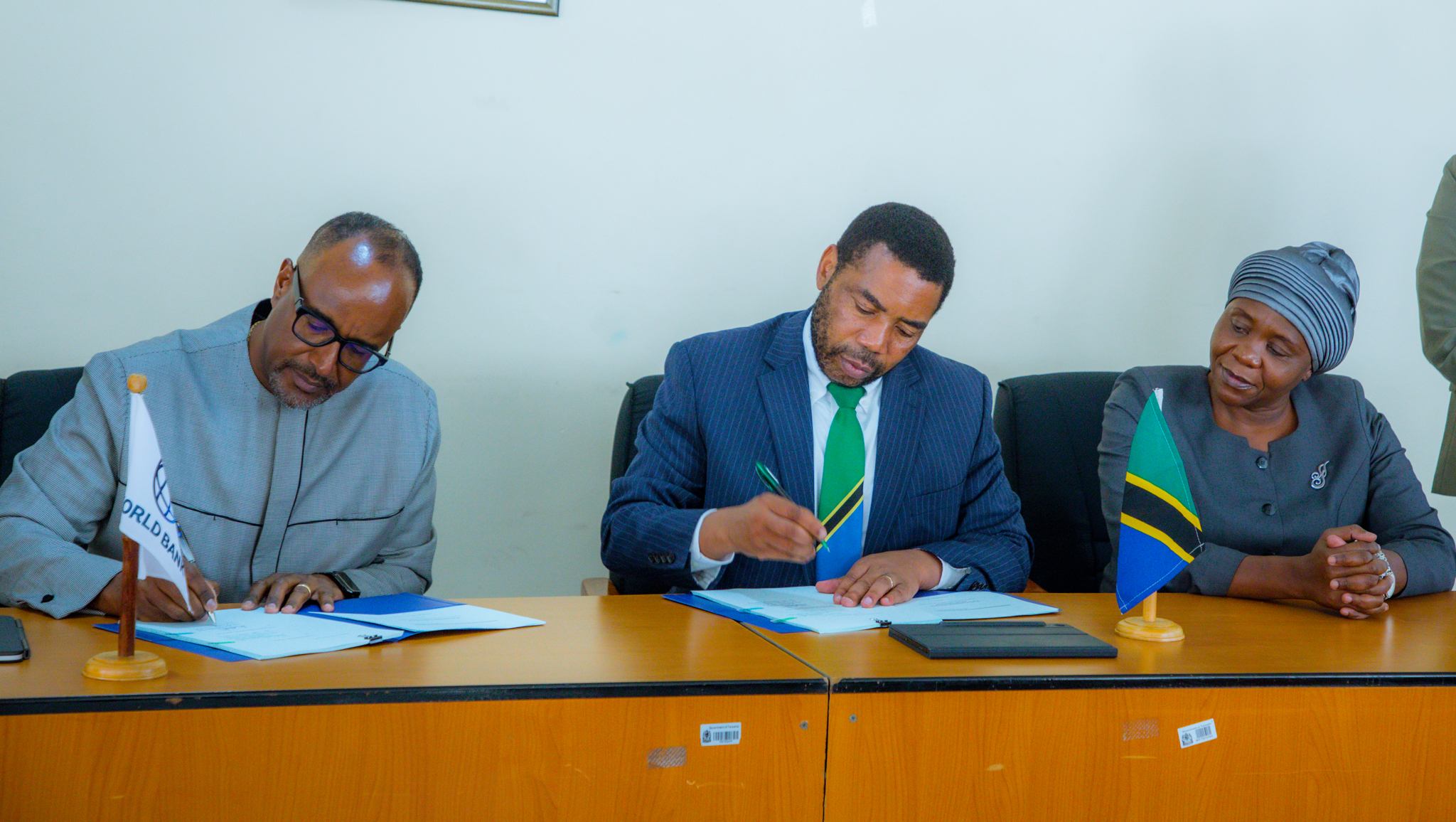
The Tanzanian government, represented by Finance Minister Dr Mwigulu Nchemba, and the World Bank (WB), led by Country Director Nathan Belete, signed two significant agreements worth $104 million (approximately Sh248 billion) to support the ambitious “Pamoja” Gender Equality Enhancement Project.
This project aims to transform the economic landscape for women in Tanzania and Zanzibar by addressing critical gender-based challenges, particularly in the economic and social sectors.
The signing ceremony, a symbol of collaborative efforts between Tanzania and international partners, marks the beginning of an era where gender equality is not just a fundamental human right but also a key driver of national development.
Minister Nchemba explained the two agreements, highlighting that $4 million of the total amount would be a grant, while the remaining $100 million would be a low-interest loan, reflecting the World Bank’s support and commitment to Tanzania’s growth.
The “Pamoja” project will empower women by enhancing their access to economic opportunities.
Through a series of initiatives, including the creation of business skills groups for women, the provision of affordable credit, and the expansion of financial services through formal systems, the project aims to provide 319,850 women direct benefits.
Additionally, over 399,000 indirect beneficiaries, including family members, will also experience the positive ripple effects of these programs.
Minister Nchemba emphasized that gender equality is not solely a women’s issue; it is a fundamental pillar for a thriving, democratic, and prosperous nation.
He explained that by narrowing gender gaps, productivity would increase, and economic resilience would be strengthened.
This initiative is a part of Tanzania’s broader commitment under the Third Five-Year Development Plan (2021/22 – 2025/26) and the Vision 2050, which prioritizes gender equality as a national agenda under the leadership of President Samia.
The project also aligns with the United Nations Sustainable Development Goals, especially Goal 5, which calls for achieving gender equality and empowering all women and girls.
The World Bank’s Nathan Belete lauded the initiative, underscoring that the “Pamoja” project is not just about financial assistance but also about breaking down entrenched social norms and addressing gender-based violence.
He noted that empowering women economically is essential for tackling systemic issues, and that the project’s success hinges on coordinated efforts across all relevant ministries.
The Minister of Community Development, Gender, Women, and Special Groups, Dr Dorothy Gwajima, highlighted the importance of the project, praising President Samia Suluhu Hassan for her continuous efforts to uplift women economically.
Dr Gwajima revealed that the Ministry had already launched a National Gender Policy and an accompanying strategy, emphasizing economic empowerment as one of its key goals.
Part of the project’s focus includes building safe houses for children affected by gender-based violence and establishing 200 safe centers for child care and development, with 184 in mainland Tanzania and 16 in Zanzibar.
These facilities will provide much-needed refuge and care for vulnerable children, while also creating economic opportunities for women working in the care sectors.
Additionally, the project will equip social welfare officers with the resources they need to carry out their work effectively, including the provision of 40 new offices for both social welfare and community development officers.
This initiative will enhance service delivery, ensuring that women and children in need have access to the support they deserve.
The project will also focus on providing women with business training, access to capital, and opportunities to expand their businesses.
This economic empowerment, Minister Gwajima explained, will be backed by comprehensive support systems, including accessible financial services and training programs that equip women with the knowledge and skills to thrive in the marketplace.
With the signing of this landmark agreement, the government of Tanzania and the World Bank have laid the groundwork for a transformative project that will empower women and stimulate economic growth.
The “Pamoja” project, with its focus on gender equality, economic empowerment, and social development, represents a vital step toward building a more inclusive, prosperous Tanzania.
As the project unfolds, it promises to bring about lasting change—ensuring that the benefits of growth reach every corner of the nation, particularly for women who are the backbone of Tanzania’s future.