
Dar es Salaam. The history of post-independence Tanzania is often told through the lens of monolithic ideology, yet at its heart, the nation’s survival was forged in the fire of intense, intellectual friction between titans.
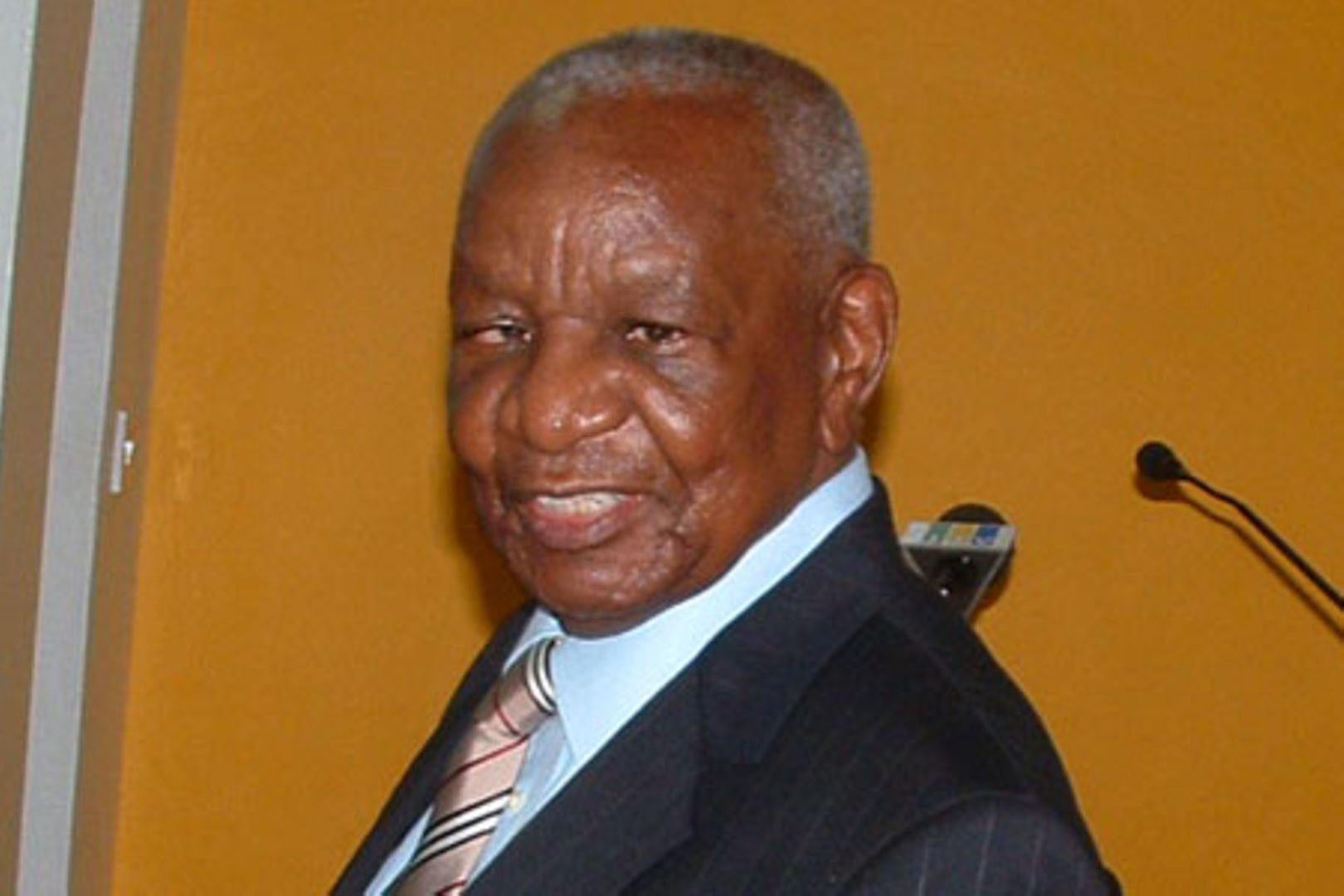
Perhaps no relationship better illustrates the delicate balance between personal conviction and national duty than that of Mwalimu Julius Nyerere, the nation’s founding father, and Edwin Mtei, the first Governor of the Bank of Tanzania.
Mtei passed away on the night of 19 January 2026 in Arusha at the age of 94
Their story is not merely one of economic disagreement, but a profound masterclass in how statesmanship can transcend even the most volatile professional divides.
By the late 1970s, Tanzania found itself at a harrowing crossroads.
The global oil crisis, the costs of the war against Idi Amin, and the internal struggles of the Ujamaa socialist experiment had left the economy gasping for air.
The Bretton Woods institutions, the International Monetary Fund and the World Bank, stood ready with financial lifelines, but they came with strings that Mwalimu Nyerere found tethered to the very dignity of his people.
The IMF demanded a devaluation of the Tanzanian shilling and an end to subsidies for loss-making state enterprises.
To Nyerere, these were not merely fiscal adjustments; they were an affront to Tanzanian sovereignty.
He famously and defiantly asked the world, “Who appointed the IMF as the International Ministry of Finance?”
In the opposite corner stood Edwin Mtei, a man whose pragmatic grasp of global finance led him to a different conclusion.
Where Nyerere saw interference, Mtei saw a necessary, albeit painful, mechanism for redemption.
He believed that integrating Tanzania into the global financial system was the only way to arrest the economic decline.
This fundamental ideological schism reached a boiling point in 1979 during a high-stakes meeting at Nyerere’s beachside residence in Msasani.
The atmosphere that day was thick with the humid air of the coast and the heavy tension of a failing negotiation.
As the IMF delegation pressed their demands, Mwalimu Nyerere, known for his intellect but also his fierce principles, reached his limit.
He abruptly walked out of the meeting, leaving the international financiers sitting in stunned silence while he retreated to the shoreline to pace in solitary frustration.
When Mtei eventually followed him to the beach to ask if the meeting was over and if the guests should depart, Nyerere’s instruction was curt and uncompromising: get the delegation out of the country immediately.
What followed is a moment of legend and contested memory that defines the “insubordination” of a professional versus the “passion” of a patriot.
Mtei did not expel the delegates. Citing the lack of immediate flights in his autobiography, From Goatherd to Governor, he instead booked them into a nearby hotel until arrangements could be made.
To Nyerere, this delay appeared to be a defiance of a presidential order. The fallout was swift.
In December 1979, the partnership that had built the nation’s financial foundations fractured.
The end of Mtei’s tenure as Finance Minister is shrouded in the poignant drama of two men who respected one another too much to be truly bitter.
Some accounts suggest Mtei was sacked; others, including his own, state he resigned.
The most evocative version describes Mtei presenting his resignation with trembling hands, only for Nyerere to ask if he had already received a letter from the presidential assistant.
That letter, already written, was to inform Mtei he had been relieved of his duties.
It was a simultaneous parting of ways, a collision of two men who both knew the current path was unsustainable but could not agree on the map.
Yet, it is the epilogue of this confrontation that truly captures the essence of statesmanship.
In a world where political disagreements often descend into lifelong vendettas and character assassination, Nyerere and Mtei chose a different path.
Less than three years after their public and private rupture, it became Tanzania’s turn to appoint an Executive Director to the IMF in Washington DC.
Despite their history, despite the “insubordination” at the beach, and despite their clashing economic philosophies, Nyerere personally seconded Mtei’s name for the post.
Mwalimu recognised that while they disagreed on policy, Mtei’s competence, integrity, and brilliance were unmatched.
He refused to let a professional disagreement deprive the nation, and the world, of a formidable talent.
This appointment reflected Nyerere at his most refined: a leader who placed the merit of the individual and the needs of the state above his own ego.
This gesture allowed Mtei to continue his journey of service, later returning to Tanzania in 1986 under President Ali Hassan Mwinyi.
During those economically tumultuous years, Mtei’s expertise was once again called upon to chair pivotal commissions on banking, taxation, and financial restructuring.
The man who had once been ushered out of the inner circle became the architect of the very reforms that would eventually modernise the Tanzanian economy.
Beyond his time in government, Mtei’s commitment to Tanzania’s evolution saw him become a founding member of the opposition party, (Chadema), dedicating his later years to the cause of multi-party democracy.
He was a man of the soil who, in his quiet retirement, found joy in the company of his family and the tending of his coffee plantation.
His death marks the end of an era, but his influence remains etched into the fabric of the republic.
As the nation reflects on his life, Chadema has organised two days of commemorative events on 22 and 23 January to honour a man who dedicated his life to the democratic fruits Tanzanians enjoy today.