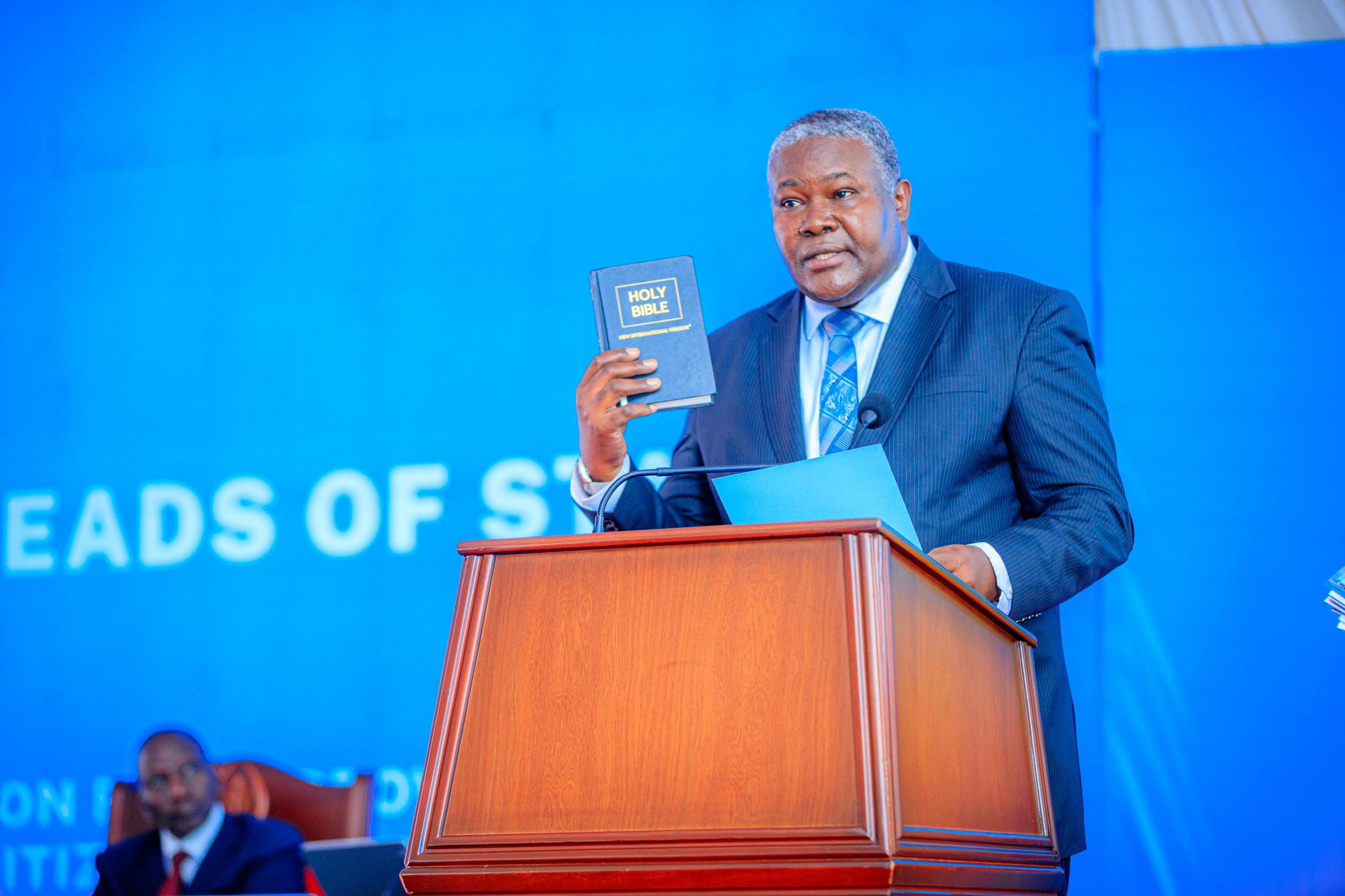

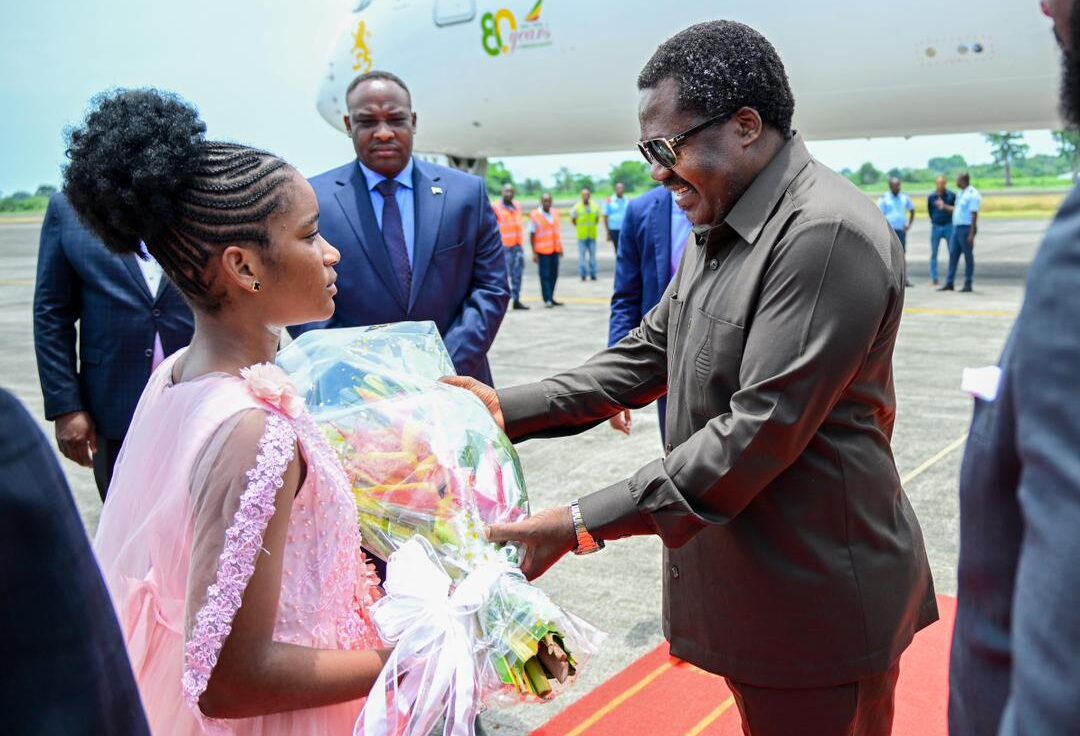
Malabo. Vice-President Dr Emmanuel Nchimbi, on March 26, 2026, arrived in Malabo, Equatorial Guinea, where he is representing President Samia Suluhu Hassan at the 11th Summit of Heads of State and Government of the Organisation of African, Caribbean and Pacific States.
The summit will be held from March 27 to 29, 2026. It will convene leaders from Africa, the Caribbean and the Pacific to deliberate on shared development priorities, regional cooperation, and new strategic directions for the organisation.
Preparatory engagements ahead of the summit included forums focusing on youth, women, private sector participation, peace and security, and climate change.
These platforms are intended to shape discussions among leaders and advance South–South cooperation among member states.
Tanzania is expected to use the summit platform to present its national priorities.
The country will also contribute to deliberations aimed at shaping new strategies for the organisation.
These discussions come at a symbolic moment as the bloc approaches its 50th anniversary since its formation in 1975 under the Georgetown Agreement.
Officials note that Tanzania’s participation reflects its commitment to remain active in regional and global forums.
The country seeks to strengthen its voice in development diplomacy and reinforce its contribution to international cooperation frameworks.
On the sidelines of the summit, the Vice-President is scheduled to hold bilateral talks with several leaders attending the meeting.
The talks are expected to focus on expanding economic cooperation, strengthening trade relations, and advancing development partnerships.
Historical background of ACP cooperation
The Organisation of African, Caribbean and Pacific States traces its roots to the mid-1970s.
In 1975, developing nations from the three regions formed a common platform to strengthen collective bargaining power in global trade and development negotiations.
One of the earliest and most influential agreements in the partnership between ACP countries and Europe was the Lomé Convention.
This agreement established preferential trade arrangements that allowed many agricultural and mineral exports from ACP countries to enter European markets without tariffs.
It also provided development funding to support economic growth in member states.
Over time, the partnership evolved into more comprehensive frameworks.
In 2000, ACP states and the European Union signed the Cotonou Agreement in Cotonou.
The agreement created a broad political and economic partnership designed to reduce poverty and integrate ACP economies into global markets.
The Cotonou Agreement introduced new elements beyond trade and aid.
These included political dialogue, governance reforms, and commitments to human rights and democratic principles.
The treaty was intended to last 20 years but was extended temporarily while negotiations continued for a successor framework
Negotiations with the European Union and the Samoa Agreement
The expiry of the Cotonou framework triggered lengthy negotiations between ACP countries and the European Union.
Talks began in 2018 to establish a modern partnership capable of addressing emerging global challenges such as climate change, migration, trade transformation, and digitalisation.
These negotiations culminated in the signing of the Samoa Agreement in November 2023 in Apia.
The agreement established a renewed legal framework governing relations between the European Union and 77 ACP states.
The Samoa Agreement entered provisional application on January 1, 2024, while awaiting full ratification by all participating states.
It is designed to strengthen political cooperation, enhance development partnerships, and enable coordinated responses to global challenges such as climate resilience and economic transformation.
Despite progress, ratification delays have remained a concern among member states.
Leaders have repeatedly urged governments to accelerate approval processes to ensure the agreement becomes fully operational.
Strategic importance of the Malabo Summit
The Malabo summit is expected to focus on strengthening unity among member states and enhancing collaboration across regions.
Key thematic areas include climate action, trade integration, digital transformation, governance, and social development.
The gathering also aims to assess progress made under existing frameworks and identify new opportunities for economic cooperation among member states.
These efforts are particularly important as developing nations seek to strengthen their collective voice in global economic governance.
Analysts view the summit as a platform to consolidate South–South cooperation while maintaining balanced engagement with global partners such as the European Union.
The discussions are also expected to shape long-term policy directions as the organisation approaches its golden jubilee.
Tanzania’s diplomatic and development interests
For Tanzania, participation in the summit reflects broader diplomatic objectives.
The country continues to pursue economic diplomacy as a central pillar of its foreign policy.
Engagement in multilateral platforms allows Tanzania to advocate for fair trade systems, increased investment flows, and technology transfer.
Tanzania also stands to benefit from development programmes linked to ACP–EU cooperation frameworks.
Historically, these partnerships have supported infrastructure, agriculture, education, and institutional development across ACP countries.
Officials believe that bilateral engagements on the sidelines of the summit could open new opportunities in trade, tourism, agriculture, and industrial development.
The Vice-President’s presence at the summit therefore signals Tanzania’s commitment to strengthening its international partnerships and ensuring that national development priorities remain visible within global policy platforms.