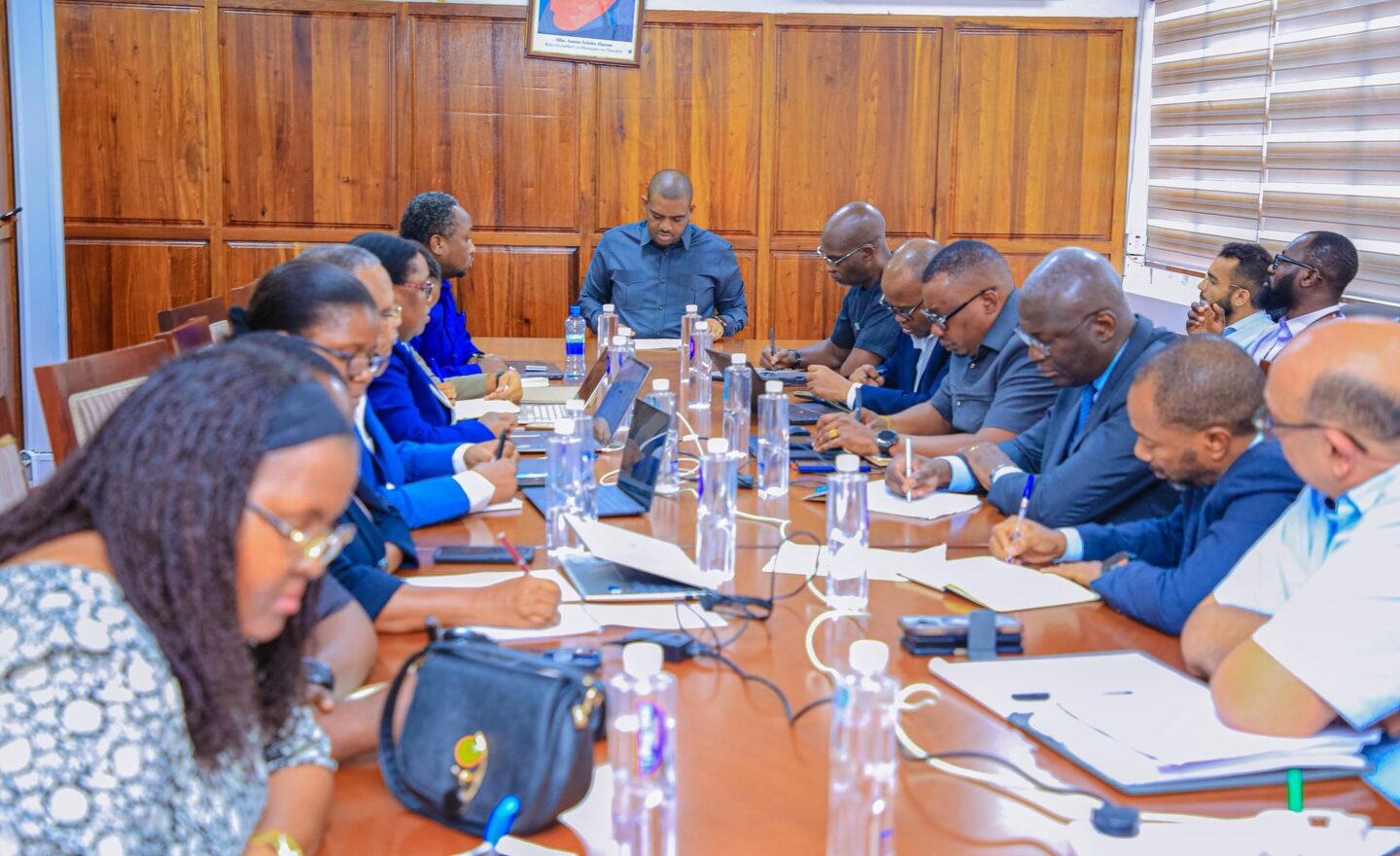

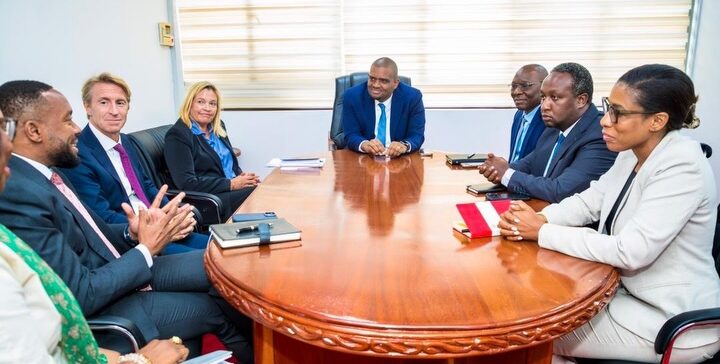
Dar es Salaam. The minister for Energy, Deogratius Ndejembi, has held high-level talks with executives from Equinor and Shell on the implementation of Tanzania’s long-awaited liquefied natural gas project.
The meeting took place on April 10, 2026, in here in the city.
It brought together senior officials from the ministry of Energy and representatives of the international oil companies leading the multibillion-dollar venture.
Those present included Mr Menno Bax, managing director and chairman of Shell Exploration and Production Tanzania Ltd, and Ms Hilde Merete Nafstad, vice-president and country manager for Exploration and Production International at Equinor Tanzania AS.
Also attending were Permanent Secretary for Petroleum and Gas, Dr James Mataragio, and Commissioner for Petroleum and Gas, Mr Goodluck Shirima.
The discussions focused on advancing exploration, development and eventual liquefaction of offshore natural gas resources located off the southern coast.
Officials said the companies remain engaged in exploration and development work, while preparations for the LNG export project continue.
Prime Minister signals strong progress
The latest developments follow fresh assurances from Prime Minister, Dr Mwigulu Nchemba, that negotiations on the project have reached an advanced stage and that implementation is expected to begin soon.
Dr Nchemba said there are no legal or regulatory obstacles preventing the execution of the LNG project, which is valued at about $42 billion, equivalent to more than Sh100 trillion.
Responding to a question from Mtwara Rural Member of Parliament, Mr Arif Suleman Premji, on April 9, 2026, the Prime Minister said the government continues to engage investors to establish strong foundations for implementation.
He said negotiations remain focused on protecting national interests while ensuring the project proceeds in a timely manner.
Dr Nchemba added that key matters under discussion include securing domestic use of part of the gas produced and expanding participation of local companies in the supply chain.
He noted that increasing local participation is expected to stimulate indigenous business growth and strengthen the national economy.
Project approaching critical agreements
Government officials have indicated that negotiations with investors are nearing completion, with legal and commercial frameworks expected to be finalised in the near term.
The legal framework governing the project is expected to be concluded before June 2026, paving the way for subsequent investment decisions.
The LNG development is widely regarded as the largest industrial investment ever planned in Tanzania.
It is expected to transform the energy sector and create large-scale employment during construction and operation.
The project will be implemented in southern Tanzania, particularly in the regions of Lindi Region and Mtwara Region, where offshore gas discoveries have been concentrated.
An onshore liquefaction plant and export terminal are planned for Lindi.
The facility will convert natural gas into liquefied form for export to global markets.
Vast gas reserves underpin project
Tanzania discovered substantial offshore gas reserves along the Indian Ocean coastline over the past decade.
These discoveries are concentrated mainly in Lindi and Mtwara regions.
Current estimates indicate that Tanzania holds more than 57 trillion cubic feet (TCF) of natural gas reserves.
The scale of these discoveries has positioned the country among Africa’s major natural gas holders.
Energy officials say the LNG project will add significant value to these resources by enabling large-scale exports and supporting domestic industrial development.
The development also aims to ensure that part of the gas produced is allocated for domestic use.
This approach is intended to support power generation, manufacturing and other energy-intensive industries within the country.
Consortium led by global investors
Equinor and Shell lead the consortium responsible for the LNG project.
The consortium includes partners such as ExxonMobil, Pavilion Energy, Medco Energi and the state-owned Tanzania Petroleum Development Corporation.
Earlier milestones included the signing of a framework agreement in 2022 between the government of Tanzania and investors.
That agreement established the foundation for negotiations on fiscal, legal and commercial arrangements governing the project.
Officials have since continued detailed technical and commercial discussions aimed at unlocking the next stage of implementation.
Long-term economic impact expected
Energy analysts believe the LNG project will stimulate major infrastructure development in southern Tanzania.
Roads, ports and housing facilities are expected to expand significantly once construction begins.
The project is also expected to generate employment opportunities across multiple sectors.
These include construction, logistics, engineering and support services.
Government officials have repeatedly emphasised that increasing local company participation remains a priority.
This is intended to ensure that Tanzanian firms benefit from supply contracts and technology transfer opportunities.
The LNG initiative is also viewed as central to Tanzania’s long-term economic strategy.
It is expected to enhance export earnings, strengthen foreign exchange reserves and accelerate industrial growth.