
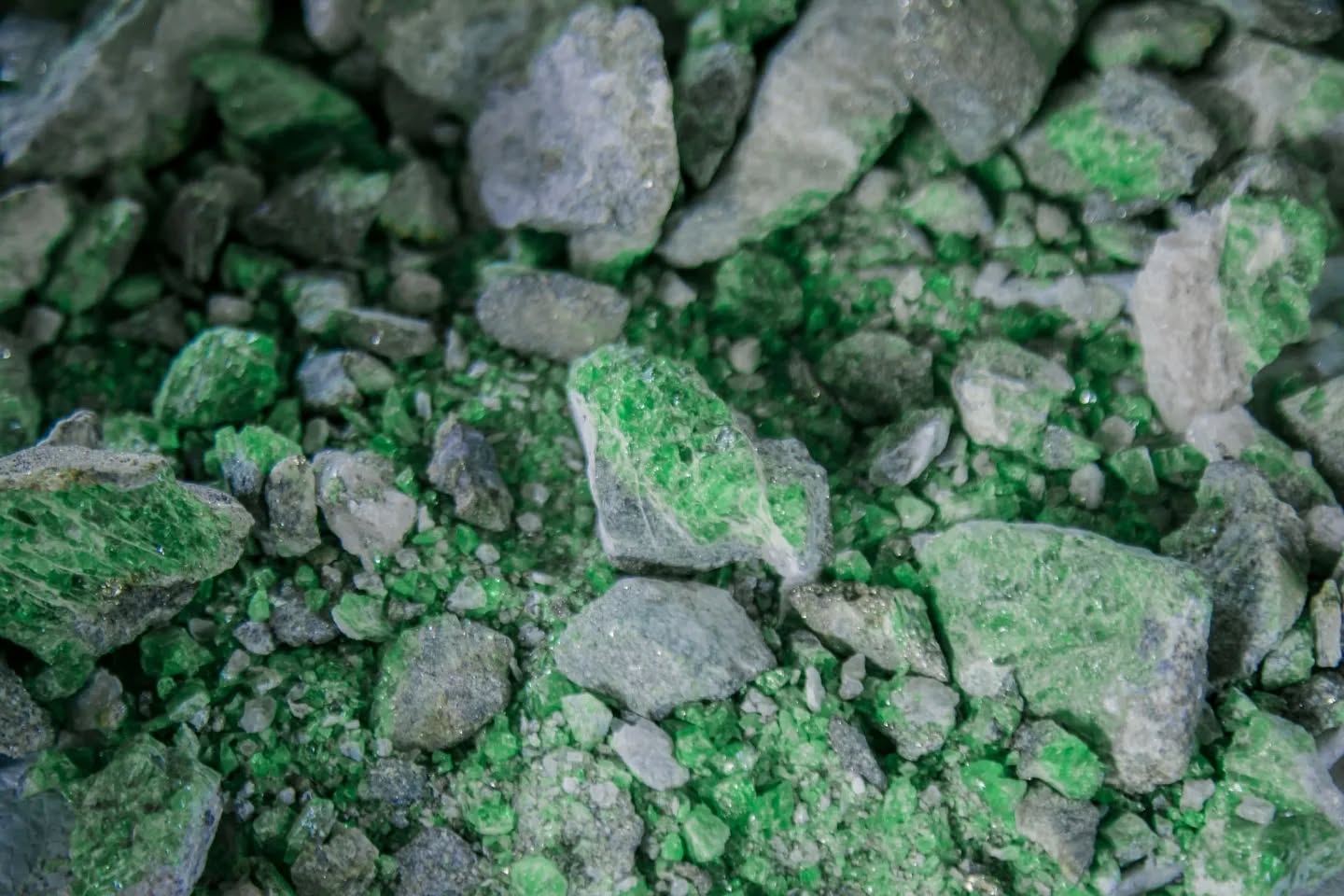
Arusha. Tanzania continues to cement its status as a global powerhouse for rare gemstones. While Tanzanite often dominates the headlines, a vibrant green jewel known as Tsavorite is quietly carving out a prestigious niche.
This gemstone represents more than just aesthetic beauty. It serves as a vital economic pillar for the nation.
Deep beneath the rugged terrain of Northern Tanzania lies the heart of this industry.
The Lemshuku Village within the Simanjiro Mountains remains the primary source of this radiant green treasure.
These stones are the product of millions of years of intense geological transformation. They emerge from gneiss and schist rock formations under extreme heat and pressure.
The science of the glow
Tsavorite belongs to the grossular garnet family. It is often mistakenly grouped with generic green garnets, yet its chemical composition sets it apart.
The striking vivid green hue is the result of specific trace elements. Vanadium and chromium interact within the crystal lattice to create a brilliance that rivals the finest emeralds.
Unlike other green garnets such as demantoid or uvarovite, Tsavorite boasts exceptional clarity.
Most specimens are naturally transparent and require no heat treatment or oiling.
This purity is a significant draw for high-end collectors and ethical jewelers.
The gemstone also ranks highly for durability. It sits between 7.0 and 7.5 on the Mohs scale of mineral hardness.
This makes it ideal for daily wear in rings and necklaces.
A legacy rooted in history
The story of this stone began in 1967. British geologist Campbell R. Bridges first discovered the deposits in the Simanjiro hills.
Although the gem was later named after the Tsavo region in Kenya for marketing purposes, its geological roots remain firmly tied to the Tanzanian landscape.
This historical connection gives Tanzania a unique strategic advantage in the global gemstone trade.
International markets in Europe, Asia, and America show an increasing appetite for the stone. Designers prize it for its high refractive index and “fire.”
As global demand for untreated, natural gemstones rises, Tanzania’s deposits become even more significant. The Ministry of Minerals views this as a key opportunity for national development.