

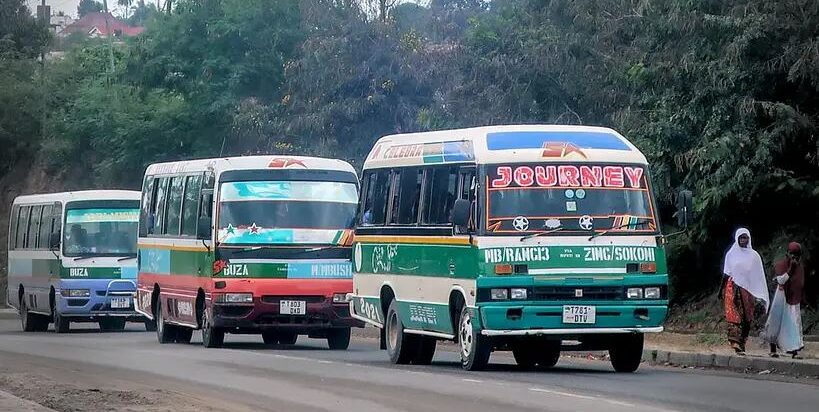
Dar es Salaam. Bus passengers across the country are set to pay higher fares following the publication of new transport charges in the Government Gazette on April 17, 2026, according to Mwananchi.
The revised fares, issued by the Land Transport Regulatory Authority (Latra), cover commuter buses popularly known as daladala as well as long-distance buses operating on both tarmac and gravel roads.
The new rates will come into force 14 days after the gazette notice was issued.
According to Mwananchi, the fare adjustments were introduced to reflect rising operational costs within the transport sector, particularly fuel price increases that have exerted pressure on operators in recent months.
Under the new structure, daladala passengers travelling distances of up to 10 kilometres will now pay a minimum fare of Sh700, up from the previous Sh600.
Charges will continue to increase progressively depending on distance, with fares for journeys between 36 and 40 kilometres rising to Sh1,500 from the former Sh1,400.
Students, however, will continue to benefit from a subsidised flat fare of Sh200 regardless of the distance travelled.
For upcountry travel, the new fares vary depending on the class of bus and the nature of the road used.
Passengers using ordinary long-distance buses will pay Sh57.93 per kilometre on tarmac roads and Sh66.62 per kilometre on gravel roads.
Semi-luxury buses will charge Sh74.18 per kilometre on tarmac surfaces, reflecting the higher standards of service offered in that category.
Latra explained that the review was conducted in accordance with Section 19 of the law establishing the regulator, which mandates it to set and periodically revise transport fares to ensure fairness to both passengers and service providers.
The authority indicated that the new tariffs were determined after analysing prevailing market conditions and the cost of providing services.
Reports published by Mwananchi noted that the revised fares are expected to have a significant impact on daily commuters, particularly in major urban centres where daladala remain the dominant mode of transport.
The increase is also likely to affect inter-regional travel costs, especially for passengers relying on ordinary and semi-luxury buses for long-distance journeys.
Transport stake holders have previously expressed concern over fluctuating fuel prices, spare parts costs and maintenance expenses, factors that have compelled operators to seek fare adjustments to sustain operations.
The government, through Latra, has maintained that fare reviews aim to strike a balance between the sustainability of transport services and the affordability of travel for the public.
Passengers and operators are now preparing for the transition period before the new rates officially take effect later this month.