
Dar es Salaam. Fitch Ratings has revised Tanzania’s sovereign credit outlook to Positive from Stable while affirming the country’s Long-Term Foreign-Currency Issuer Default Rating (IDR) at ‘B+’, citing stronger international reserves, manageable fiscal deficits and sustained economic growth.
The outlook revision, announced on Friday, August 21, 2026, follows a series of engagements between Fitch Ratings and Government institutions as part of the agency’s second 2026 Sovereign Credit Rating Review of Tanzania.
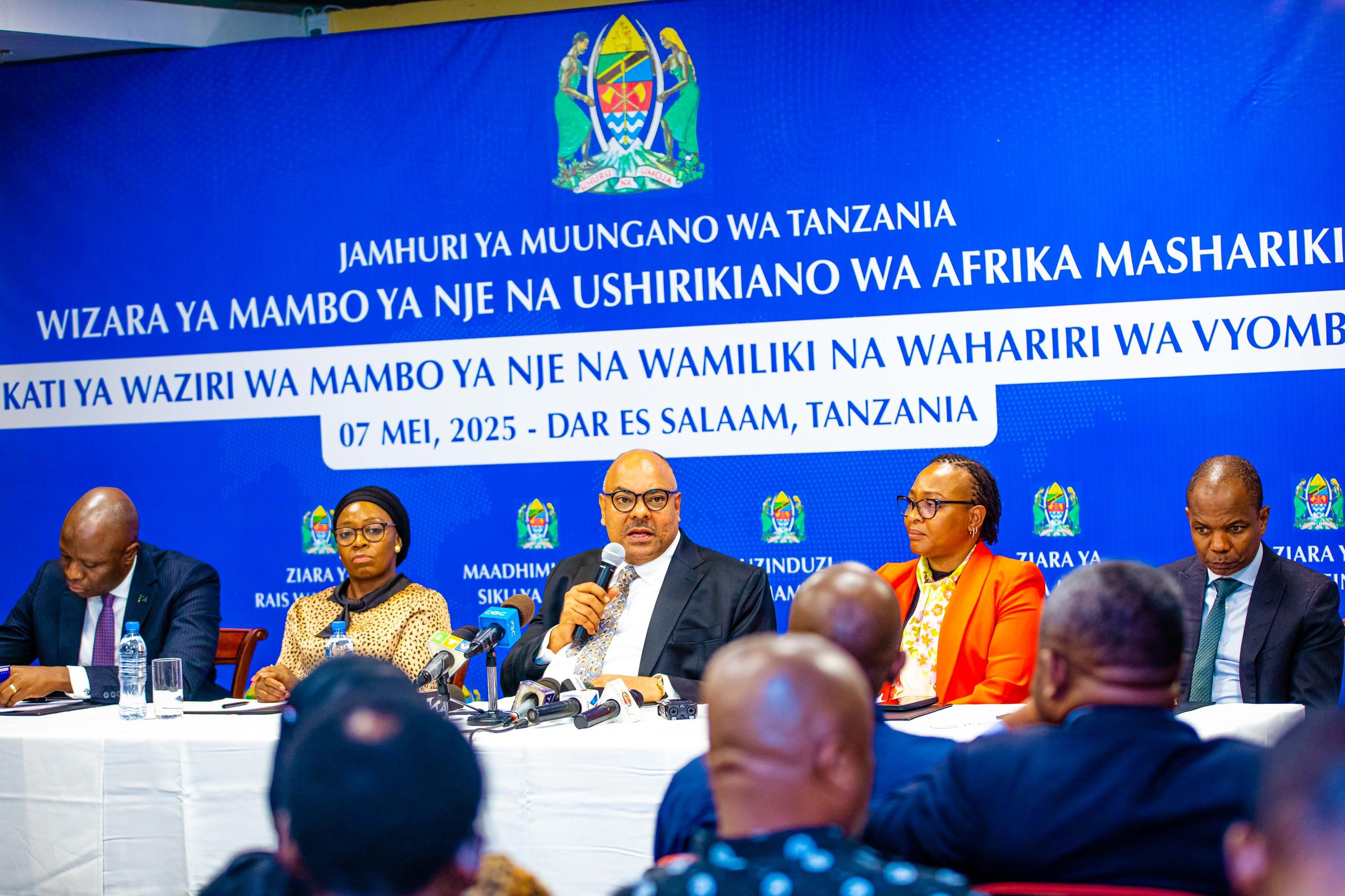
A few days before the latest assessment, Fitch analysts held separate discussions with the Ministry of Finance and public institutions, including the Office of the Treasury Registrar (OTR), to assess Tanzania’s economic performance, fiscal position, policy reforms and emerging risks.
The engagements provided Fitch with an opportunity to assess not only headline economic indicators, but also the institutional and policy measures underpinning Tanzania’s economic and fiscal performance.
At the Ministry of Finance, the government told Fitch that the economy is projected to grow by 6.3 percent in 2026, up from 5.9 percent in 2025 and 5 percent in 2024.
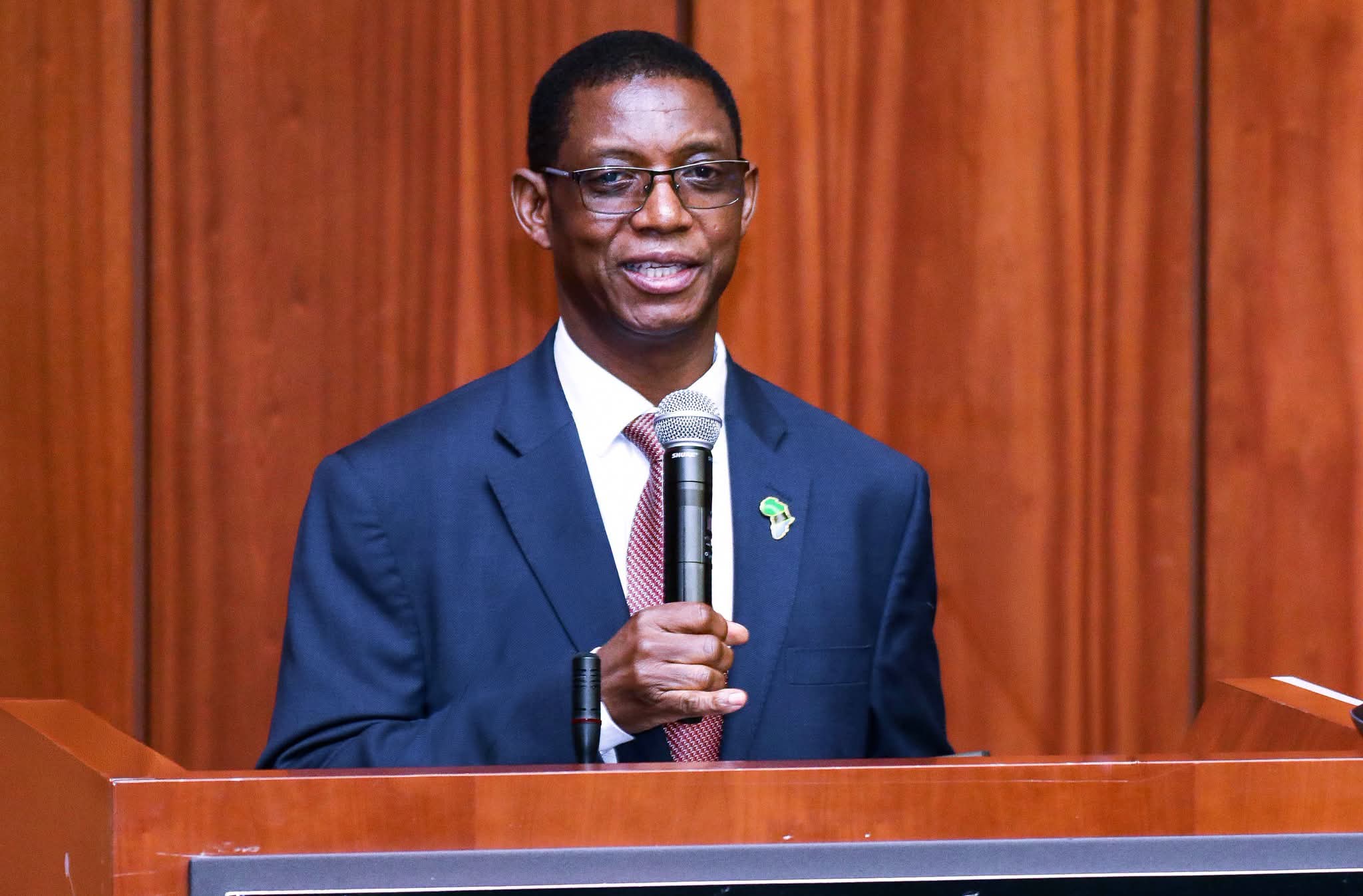
Minister for Finance, Ambassador Khamis Omar, said the projected growth would be supported by investments in mining, gas, energy, agriculture and infrastructure.
Opening an online meeting with Fitch analysts as part of the review, Ambassador Omar said the Government had continued to improve the business and investment environment, including acting on recommendations of the Tax Reform Commission.
While the government’s growth projection is higher, Fitch itself forecasts Tanzania’s real GDP growth at 5.8 percent in 2026, still significantly above the 3.7 percent it expects for the median ‘B’-rated sovereign.
Fitch expects growth to average 6.1 percent in 2027 and 2028, supported by public investment, tourism, Tanzania’s expanding role as a regional logistics hub and the emerging mining sector.
The agency said Tanzania’s economy had demonstrated resilience to the shock arising from the war in Iran, noting that authorities prevented material disruptions to fuel supplies through direct procurement arrangements between May and July.
The growth outlook, however, remains exposed to an escalation of the conflict, while agriculture remains vulnerable to higher fertiliser prices, changing rainfall patterns and natural disasters.
Reserves strengthen, external pressures ease
One of the central reasons behind Fitch’s decision to revise the outlook is its expectation that Tanzania’s international reserves will continue strengthening.
The agency expects reserves to increase from $6.3 billion at the end of 2025 to $7.9 billion by 2028, equivalent to around 3.3 months of current external payments.
Although this would remain below the ‘B’ median of 4.2 months, Fitch said reduced distortions in the foreign exchange market and greater exchange-rate flexibility had helped mitigate near-term external risks.
Tanzania could also gain additional external buffers from the Bank of Tanzania’s holdings of non-monetary gold, estimated by Fitch at approximately US$2.4 billion. The central bank has begun a process through which some of these holdings could either be sold for foreign exchange or converted into monetary gold.
Fitch expects the current account deficit to widen to 3.2 percent of GDP in 2026, partly due to the impact of the war in Iran, before narrowing to around 2.5 percent of GDP in 2027 and 2028.
The agency also expects Tanzania’s net external debt to decline to 38 percent of GDP by 2028, although this would remain above the projected ‘B’ median of 16 percent.
Fiscal position provides further support
Tanzania’s fiscal position is another factor behind the Positive Outlook.
Fitch estimates that the fiscal deficit stood at 2.8 percent of GDP in FY2026, supported by strong revenue performance and the limited impact of fuel subsidies on fiscal execution.
The agency expects the deficit to remain close to 3 percent of GDP through FY2028, partly reflecting continued gains in domestic revenue mobilisation under the Government’s Medium-Term Revenue Programme.
Tax revenues increased by one percentage point to 15.6 percent of GDP between FY2023 and FY2025, a development Fitch expects to continue supporting fiscal consolidation.
Consequently, government debt is projected to decline from 48.9 percent of GDP in 2025 to 46.2 percent by 2028, below the projected ‘B’ median of 55 percent.
The debt trajectory nevertheless remains exposed to exchange-rate movements because external debt accounts for approximately 68 percent of Tanzania’s total government debt.
Fitch also recognised improvements in public financial management, particularly measures to address the accumulation of supplier and VAT-refund arrears.
By March 2026, the verified stock of these arrears had declined to 0.2 percent of GDP, from 1.2 percent in December 2022.
OTR reforms put public institutions under closer scrutiny
The engagement with OTR formed part of Fitch’s broader assessment of the role and performance of public institutions in Tanzania’s fiscal and economic framework.
Discussions at OTR focused on the performance of public institutions, ongoing reforms, fiscal risks and financial flows between the Government and state-owned enterprises.
Treasury Registrar Mr Nehemiah Mchechu, who led the OTR team, briefed the Fitch delegation on reforms aimed at improving the performance and efficiency of public institutions, strengthening governance and accountability, and reducing their dependence on Government support.
He explained that OTR’s reform agenda over the past two years had placed greater emphasis on leadership, performance management and accountability, including improving the quality of boards and management teams and strengthening board evaluations to identify skills gaps.
The reforms have been supported by a more structured performance management system intended to provide greater focus on institutional results and accountability.
The discussions are significant to the broader credit assessment because the financial performance of public institutions can influence government finances through dividends, transfers, guarantees, borrowing and other financial flows.
Policy framework increasingly important
Fitch’s assessment also recognises progress in Tanzania’s macroeconomic policy framework since 2023.
The agency said institutional and operational reforms had strengthened central bank independence, the exchange-rate regime and foreign-exchange management.
The quality of official economic data has also improved following the completion of the GDP rebasing exercise in June 2026, easing previous concerns over whether low measured growth volatility adequately captured risks to the economy.
However, Fitch cautioned that some of these reforms are relatively recent and their resilience has yet to be tested through significant economic shocks.
This distinction is important: while Fitch has retained the sovereign rating at ‘B+’, it has changed the direction of the outlook, effectively indicating that the balance of risks around the rating has become more favourable.
The Fitch delegation was led by José Mantero, Associate Director and primary analyst responsible for Tanzania, accompanied by Gaimin Nonyane, Director in Fitch Ratings’ Sovereign and Supranational Group, and Gerard Arabian, Vice President and Sovereign Advisor – Public Sector Group Corporate Banking.
The discussions examined Tanzania’s economic outlook, implementation of fiscal and monetary policies and the Government’s strategies for managing public debt.
Analysts also assessed the potential impact of the Iran conflict on Tanzania, particularly through fuel and fertiliser prices, as well as measures being taken by the Government to contain emerging risks.
What could trigger an upgrade?
Fitch identified three areas that could ultimately support an upgrade of Tanzania’s sovereign rating.
The first is greater confidence that improvements in the macroeconomic policy framework will strengthen Tanzania’s ability to withstand external shocks and preserve macroeconomic stability.
The second is continued strengthening of foreign-exchange reserves, which would reduce external vulnerabilities.
The third is continued improvement in revenue mobilisation and expenditure controls, consistent with keeping the government debt-to-GDP ratio on a firm downward trajectory.
The outlook could, however, come under pressure if Tanzania’s macroeconomic policy framework fails to strengthen resilience to shocks, international reserves come under sustained pressure, or government debt begins to rise significantly because of fiscal slippage, higher interest costs or weaker economic growth.
For Tanzania, the Positive Outlook therefore represents more than a change in terminology.
It reflects Fitch’s assessment that several underlying elements of the country’s credit profile are moving in the right direction—economic growth remains strong, reserves are expected to improve, fiscal deficits remain manageable, public debt is projected to decline and policy institutions are undergoing reforms.
The next challenge will be to demonstrate that these improvements can be sustained and withstand external shocks. If they do, Fitch’s Positive Outlook provides a clearer pathway towards a higher sovereign rating.