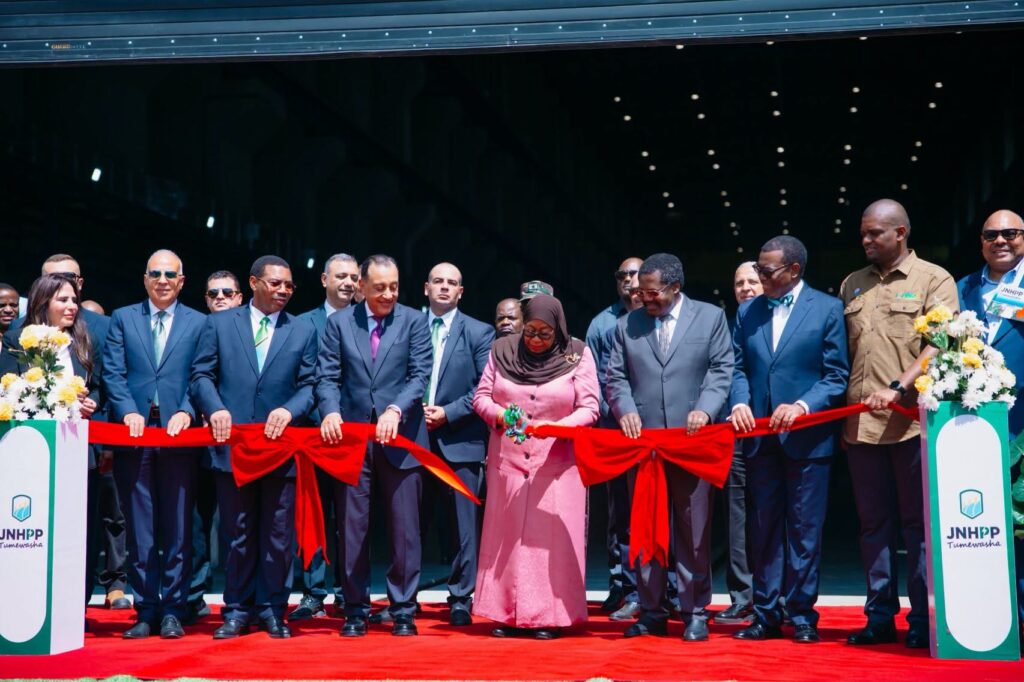


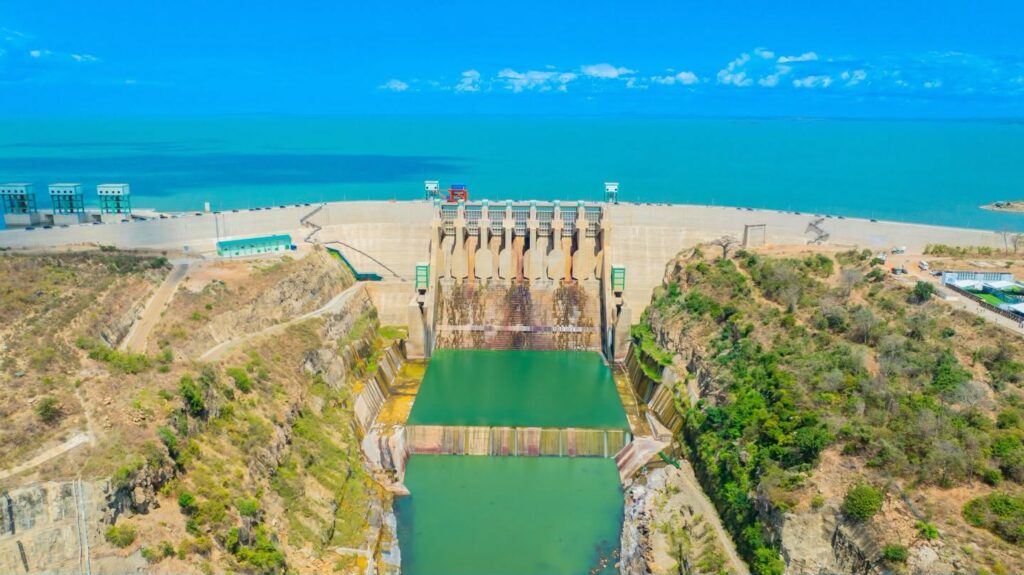
Dar es Salaam. President Samia Suluhu Hassan on Saturday August 22, 2026 officially inaugurated the Julius Nyerere Hydropower Plant (JNHPP), marking the completion of Tanzania’s flagship power project and opening a new chapter in the country’s ambitions to expand electricity trade with its neighbours.
The 2,115-megawatt plant has helped raise Tanzania’s total electricity generation capacity to 4,646MW, against peak demand of 2,271MW, creating a capacity surplus of 2,375MW, the minister for Energy, Deogratius Ndejembi, said.
The government now wants to use the additional capacity to support industrialisation at home while developing electricity exports to neighbouring countries.
“We must now trade electricity, and we are implementing that directive using our surplus capacity,” Mr Ndejembi said yesterday during the inauguration ceremony in Rufiji District, Coast Region.
He said Tanzania had already entered into an agreement with Zambia to sell electricity, while it had an arrangement with Kenya to exchange power depending on the needs of the two countries.
The government is also negotiating similar arrangements with other neighbouring countries, he said.
The inauguration of JNHPP comes as Tanzania strengthens its electricity transmission network to ensure the additional generation capacity can be delivered to industrial, commercial and investment centres across the country.
President Samia said the new generation capacity must translate into measurable gains in manufacturing, trade, mining, modern agriculture, investment, public services and employment.
“This project has demonstrated Tanzania’s capabilities. We must now harness that capacity to advance other strategic projects and build a strong, self-reliant nation,” she said.
She also urged Tanzanians to preserve peace and stability, describing the two as essential to protecting strategic investments and sustaining national development.
Transmission backbone
Mr Ndejembi said expanding generation capacity would have limited value without a transmission network capable of carrying the additional electricity to areas where it was needed.
“However, we recognise that increasing generation capacity alone is not enough. We must have a network capable of receiving and transmitting all the electricity to different parts of our country,” he said.
He said the 400-kilovolt Chalinze-Dodoma transmission line had been completed, allowing electricity generated by JNHPP to reach Dodoma more reliably.
The impact of the line was reflected in the national grid within days of it becoming operational, he said, with peak electricity consumption rising from 2,130MW to 2,280MW.
“Just last week, the peak electricity consumption in our country was 2,130 megawatts. But immediately after switching on the Chalinze-Dodoma line, we have now reached a peak of 2,280 megawatts. This happened within just three days,” Mr Ndejembi said.
The increase illustrates the importance of strengthening transmission infrastructure alongside generation, particularly as more electricity becomes available for productive activities.
The government is also constructing the Chalinze-Mkuranga-Kinyerezi transmission line to strengthen electricity supply in the Coast Region and areas with significant industrial activity.
Mr Ndejembi said the Iringa-Mbeya-Tunduma/Sumbawanga transmission corridor, known as TAZA, had reached about 98 per cent completion.
The more than 617-kilometre line will strengthen the connection between Rukwa and the national grid, improving the reliability of electricity supply in the Southern Highlands.
Construction of the Songea-Tunduru-Masasi-Mahumbika transmission line is also progressing, with the contractor already at the project site.
The project is intended to improve electricity supply in Lindi and Mtwara and strengthen the southern part of the national grid.
Mr Ndejembi said the government was also expanding regional interconnections to enable Tanzania to participate more actively in cross-border electricity trade.
The emerging regional power market could allow Tanzania to sell electricity when it has excess capacity while importing power when circumstances require it, strengthening the resilience of national and regional electricity systems.
JNHPP’s economic significance
The commissioning of JNHPP represents a major expansion of Tanzania’s electricity generation base.
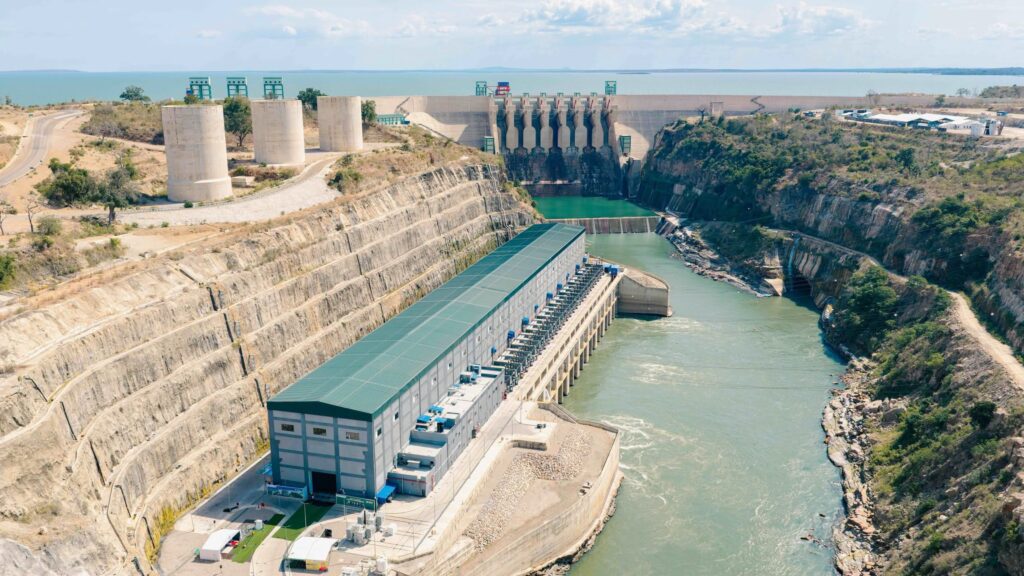
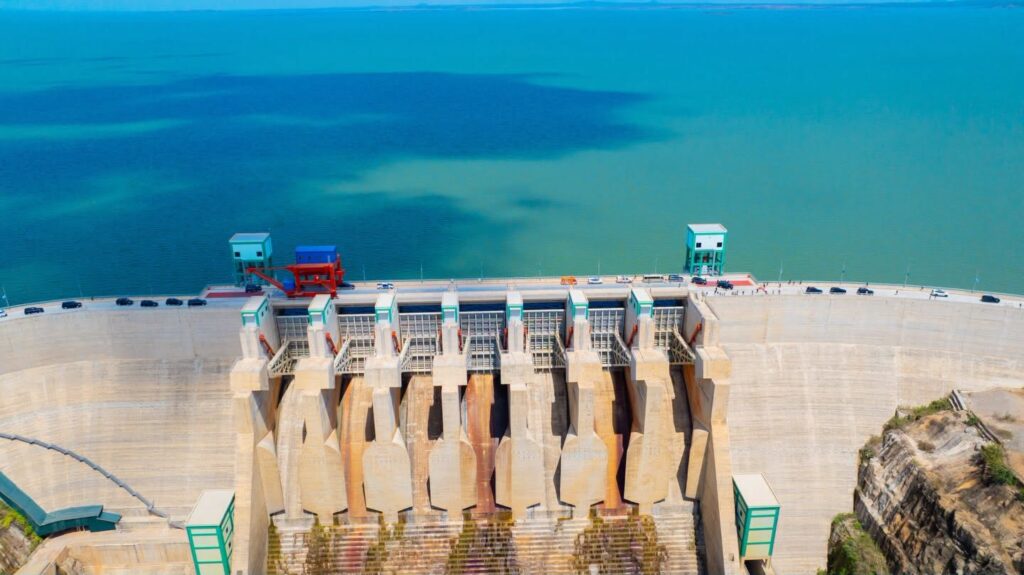
The plant has nine generating units, each capable of producing 236MW, giving it a combined installed capacity of 2,115MW.
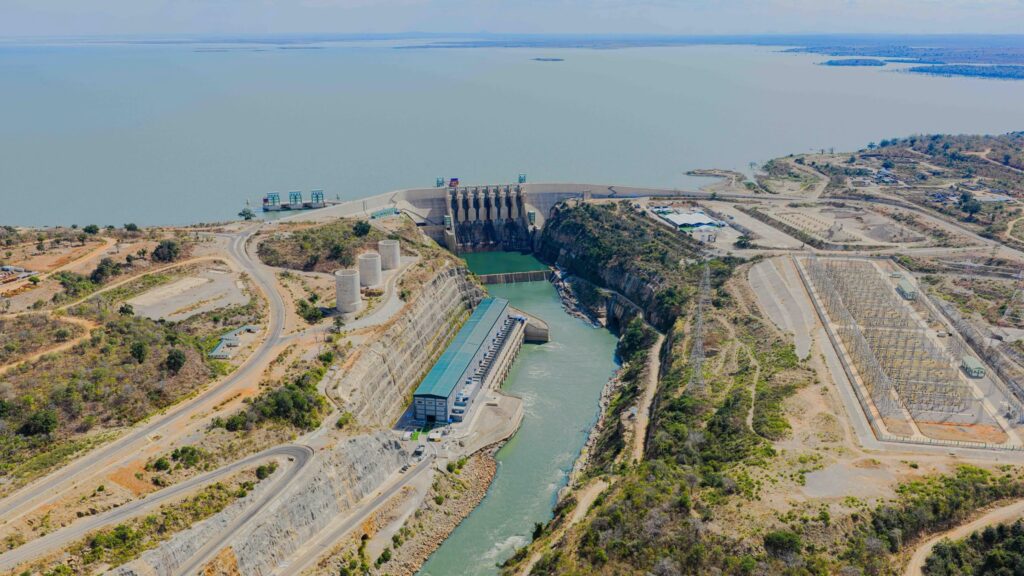
It also comprises 27 transformers and a 400kV switchyard.
Construction began in 2019 at a cost of Sh7.452 trillion.
President Samia traced the project to the vision of Tanzania’s founding President, Mwalimu Julius Nyerere, saying successive administrations had continued to advance it.
She particularly recognised the late President John Pombe Magufuli, whose administration took decisive steps to move the project into construction in 2019.
The President also called for strict protection of the plant, its surrounding environment and water catchment areas to safeguard its long-term performance and operational efficiency.
Former African Development Bank Group president Akinwumi Adesina said the plant had the potential to position Tanzania as an energy and economic hub for East and Central Africa.
“You have built the power. Now use it to build the future,” Dr Adesina said, describing reliable electricity as critical to mineral beneficiation, agro-processing, industrial growth and employment.
Egyptian Prime Minister Mostafa Madbouly said completion of the project demonstrated the ability of African countries and companies to deliver large-scale infrastructure projects through continental cooperation.
“The completion of this plant demonstrates the ability of Egyptian companies to execute major projects to international standards, particularly across Africa,” Mr Madbouly said.
He said the project’s success would deepen Tanzania-Egypt cooperation in trade, investment, construction, roads, ports, agriculture and energy.
From generation to trade
The completion and inauguration of JNHPP shifts the focus of Tanzania’s electricity strategy from expanding generation capacity to making productive use of the additional power.
With generation capacity now substantially above peak demand, the country has an opportunity to provide more reliable electricity to industries and other productive sectors while developing a market for exports.
The government’s ability to realise that opportunity will depend partly on the pace at which transmission infrastructure is expanded and regional interconnections strengthened.
For Tanzania, the JNHPP therefore represents more than an increase in electricity generation.
It provides the foundation for a broader strategy in which reliable and abundant power supports domestic economic transformation while electricity becomes an increasingly important component of regional trade.