

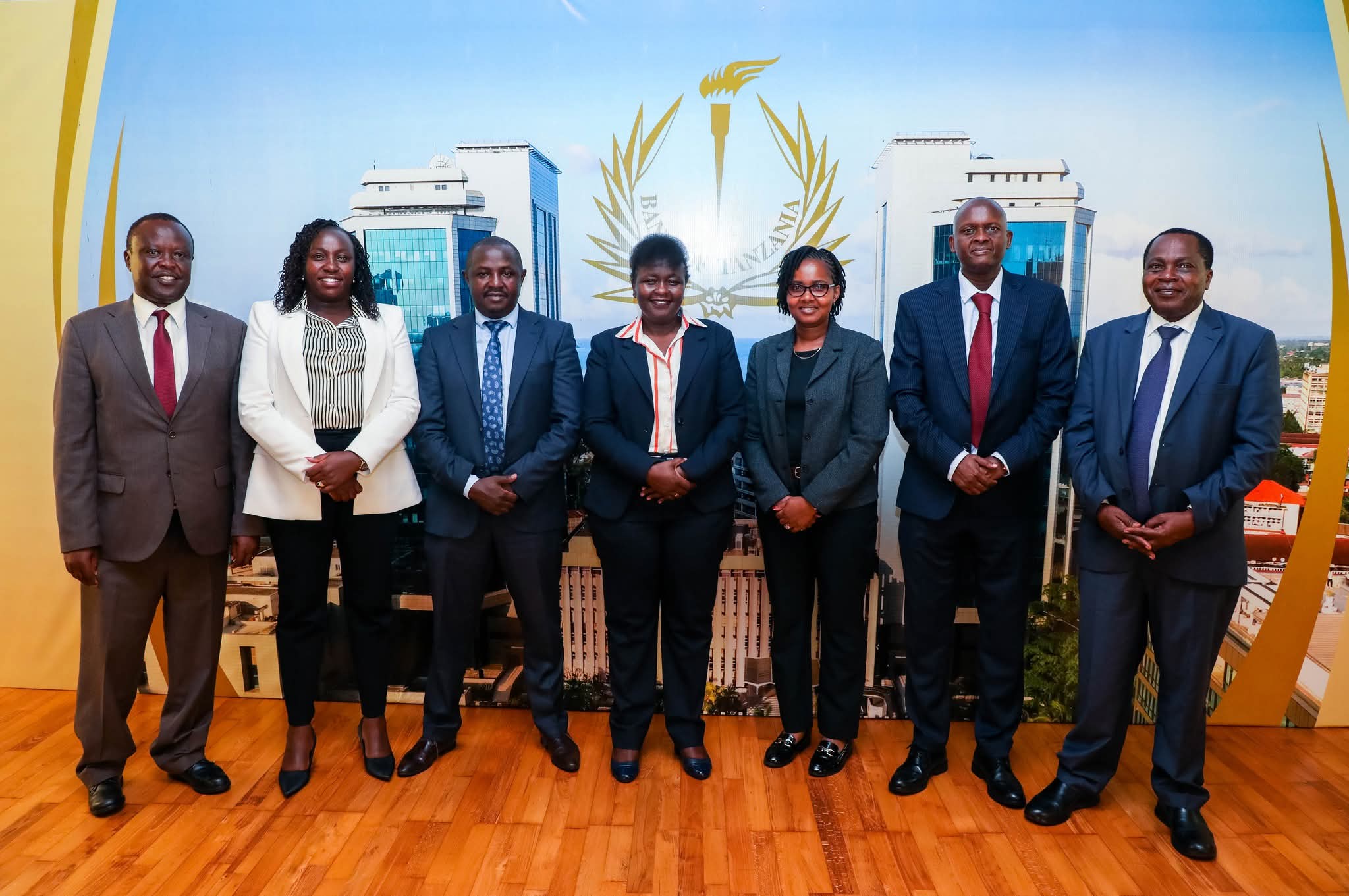
Dar es Salaam. A delegation from the Central Bank of Kenya (CBK), led by its Deputy Governor, Dr Susan Koech, on has paid a study visit to the Bank of Tanzania (BoT) offices in Dar es Salaam to gain first-hand insight into Tanzania’s Gold Purchase Programme.
The delegation was received by the Deputy Governor of the Bank of Tanzania in charge of Economic and Financial Policies, Dr Yamungu Kayandabila, on January 13 who outlined the structure, implementation and outcomes of the programme.
He explained that the initiative, which involves the purchase of gold from both small-scale and large-scale miners, has recorded notable success in strengthening the country’s foreign exchange reserves and reinforcing the stability of the Tanzanian shilling.
Dr Kayandabila noted that the programme has become a strategic tool in Tanzania’s monetary and financial policy framework, particularly at a time of heightened global economic uncertainty.
. By leveraging domestically produced gold, the central bank has been able to diversify reserve assets while simultaneously supporting the local mining sector.
On her part, Dr Koech expressed appreciation to the Bank of Tanzania for hosting the delegation and for openly sharing its experience.
She commended BoT for what she described as exemplary leadership in the design and execution of the gold purchase initiative, saying it had set a benchmark for other central banks in the region.
“We have witnessed significant reforms undertaken by the Bank of Tanzania in the gold purchase programme and the tangible results it has delivered,” Dr Koech said.
She recalled that during a meeting of the Monetary Affairs Committee (MAC), which brings together central banks of the East African Community, BoT was tasked with supporting other member states in the region in rolling out similar programmes.
Following the implementation of the Mining Act, specifically Section 59, the programme has recorded substantial progress. From October 1, 2024, to January 13, 2026, a total of 17.916 tonnes of gold, valued at approximately $2.44417 billion, had been purchased under the initiative.
The visit underscores growing regional interest in innovative reserve management strategies and highlights Tanzania’s emerging role as a reference point for policy learning within the East African Community.