
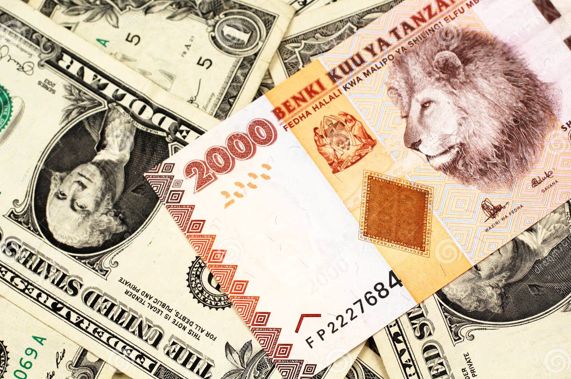
Dar es Salaam. The Bank of Tanzania (BoT) has undertaken a significant market intervention, selling $47.25 million in a single auction to address a widening liquidity gap in the foreign exchange market.
This move follows a period of heightened pressure on the national currency that saw the Tanzanian shilling lose ground against the US dollar.
According to the central bank’s latest figures, the injection was carried out at a weighted average exchange rate of Sh2,538.57 per USD, reflecting the regulator’s attempt to manage the rising cost of foreign currency.
Market data reveals a stark decline in the shilling’s value over a very short period.
On January 29, 2026, the shilling was trading at a weighted average exchange rate of S2,497.21 per US dollar.
However, in a rapid four-day slide, the currency plummeted to Sh2,538.57 per US dollar by February 2, 2026.
This swift depreciation prompted the BoT to step in with the multi-million dollar injection to prevent a further freefall and satisfy the mounting demand for greenback from commercial lenders.
The volatility is being attributed to a combination of seasonal demand for hard currency to fund manufacturing inputs and petroleum imports, which traditionally peak at this time of year.
While the BoT maintains a healthy level of foreign reserves—recently reported at approximately $6.52 billion—the pace of the shilling’s slide has necessitated more aggressive direct interventions.
Market analysts suggest that while the shilling has shown resilience compared to regional peers, the conclusion of the peak tourism season has naturally tapered dollar inflows, necessitating direct action from the central bank.
The BoT’s strategy focuses on smoothing out these short-term fluctuations rather than defending a specific fixed rate, ensuring that legitimate foreign exchange needs, such as debt servicing and essential imports, are met without causing panic in the broader economy.
Despite the slight softening of the shilling, the country’s macroeconomic outlook remains grounded.
The Monetary Policy Committee recently opted to maintain the Central Bank Rate at 5.75 percent, citing stable inflation projections within the preferred 3 to 5 percent range.
Despite the recent dip, the BoT continues to monitor the Interbank Foreign Exchange Market (IFEM) closely, as stipulated in its 2023 Foreign Exchange Intervention Policy.
While the $47.25 million injection provides immediate relief, the market remains watchful for further signs of stability as the government balances infrastructure spending with the need for a resilient national currency.