
A second day of sustained missile and drone attacks has pushed the Middle East deeper into open conflict, as Iran, Israel and the United States exchanged heavy blows across multiple fronts, spreading violence from Tehran to Israel and into the heart of the Gulf.
The latest strikes, carried out overnight and into Sunday, have intensified fears of a prolonged regional war, with civilians and critical energy infrastructure increasingly exposed.
One of the most serious incidents was reported in the United Arab Emirates, where an explosive Iranian suicide drone struck a major oil refining facility, sparking a massive fire.
Thick plumes of smoke rose above the complex as emergency crews rushed to contain the blaze.
UAE authorities said the attack caused casualties and injuries, though full details were still being compiled.
Energy officials warned of possible disruption to fuel production and exports, raising concerns over global supply chains.
The refinery strike came amid a broader wave of Iranian missile and drone launches across the Gulf.
In Dubai, debris from intercepted drones caused fires at several landmarks and damaged a high-rise building, prompting evacuations and the temporary closure of parts of the city.
Authorities said air defences intercepted the majority of incoming projectiles, but falling debris still caused injuries and property damage.
In neighbouring Abu Dhabi, drone debris struck the Etihad Towers complex, which houses several diplomatic missions, including the Israeli embassy. A woman and her child were injured.
Officials said the incidents highlighted the growing difficulty of shielding civilian areas from the expanding battlefield.
As the conflict widened, Israel also came under renewed Iranian attack. In the town of Beit Shemesh, a missile strike killed at least nine people and wounded dozens.
Israeli officials said the attack targeted an army headquarters and a weapons manufacturing complex located near residential neighbourhoods, resulting in high civilian casualties.
Jerusalem further accused Tehran of deploying missiles fitted with cluster sub-munitions in densely populated areas.
According to Israeli authorities, the weapons scattered multiple bomblets across wide zones, forcing emergency teams to conduct painstaking clearance operations while residents sheltered indoors.
The Islamic Revolutionary Guard Corps claimed responsibility for several of the attacks, including the launch of four ballistic missiles at the US aircraft carrier USS Abraham Lincoln.
The Guard described the strike as retaliation for ongoing American and Israeli military operations against Iran. US officials said damage assessments were continuing and declined to confirm whether the vessel had been hit.
Former US president Donald J. Trump issued a statement claiming that US forces had destroyed and sunk nine Iranian naval ships, adding that further operations were underway.
Pentagon officials have not independently verified the claim, though Washington said it had significantly reinforced its naval presence in the region.
Behind the military exchanges, intelligence operations have also played a central role.
Israeli and American agencies, including the Central Intelligence Agency, had reportedly been tracking senior Iranian leaders for months, monitoring their movements, communications and security arrangements in preparation for targeted strikes.
Among those reported killed in the initial wave of joint US-Israeli attacks was Ayatollah Ali Khamenei, Iran’s Supreme Leader.
Iranian state media confirmed his death, describing it as a devastating blow to the nation’s leadership.
His killing marked an unprecedented moment in the history of the Islamic Republic and triggered an immediate escalation in hostilities.
Former Iranian president Mahmoud Ahmadinejad was also reported killed during the same operations.
He served as president between 2005 and 2013 and later returned to academia at the University of Tehran.
Iranian sources said he died in strikes targeting senior political and military figures.
Several other high-ranking officials were confirmed dead, including Defence Minister Aziz Nasirzadeh, General Mohammad Pakpour, head of the ground forces, and General Ali Shamkhani, former national security chief and close adviser to Khamenei.
Military research chief General Hossein Jabal Amelian and General Mohammad Shirazi, head of the Supreme Leader’s protection unit, were also among the casualties.
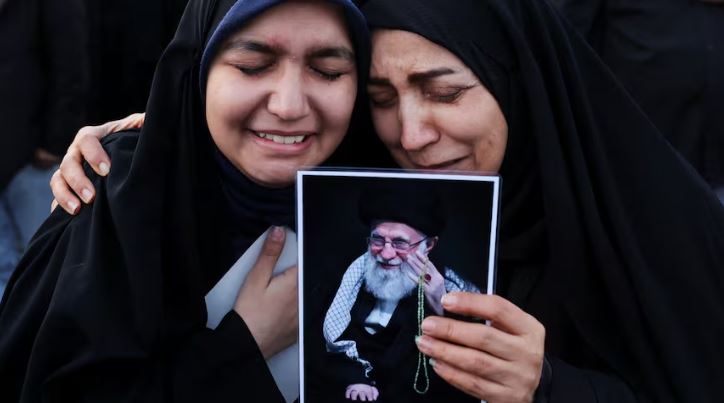
Iranian state media described the deaths as a national tragedy and declared days of mourning.
Religious leaders urged unity and resistance, while large crowds gathered in several cities to pay tribute to the fallen.
Israel, meanwhile, placed its armed forces on full alert.
Air defence systems were activated nationwide, reservists were mobilised, and residents were instructed to remain close to shelters.
Hospitals shifted into emergency mode as authorities prepared for further casualties.
The United States reinforced its military posture across the Gulf and Eastern Mediterranean, deploying additional naval and air assets.
Washington said its primary aim was to protect its forces and allies while preserving freedom of navigation in key shipping lanes.
Financial markets reacted sharply. Oil prices surged amid fears of sustained disruption to Gulf production and export routes.
Maritime security alerts were issued for vessels transiting the Strait of Hormuz and other strategic waterways.
Airlines cancelled hundreds of flights as regional airspace closures expanded.
Diplomatic efforts to halt the violence have so far failed.
Emergency meetings at the United Nations and other international forums have produced urgent calls for restraint, but no agreement on a ceasefire.
Global leaders warned that further escalation could trigger a wider war with far-reaching humanitarian and economic consequences.
As strikes and counterstrikes continue into a second day, the conflict shows no sign of abating.
What began as targeted military operations has rapidly evolved into a broad regional confrontation, placing millions of civilians and vital infrastructure at growing risk.