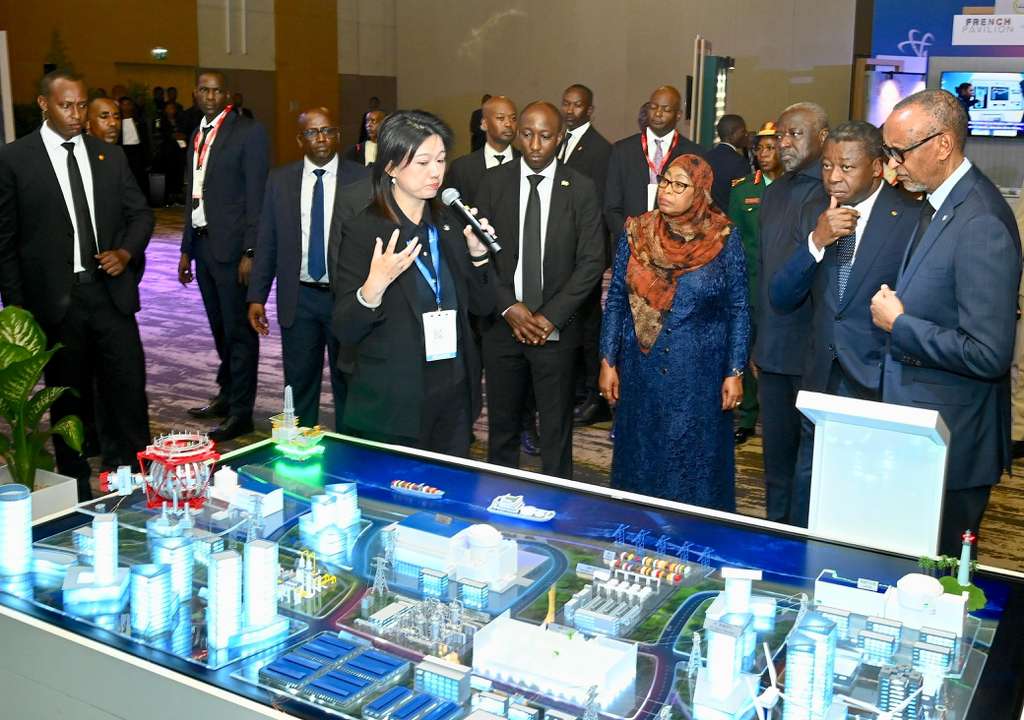

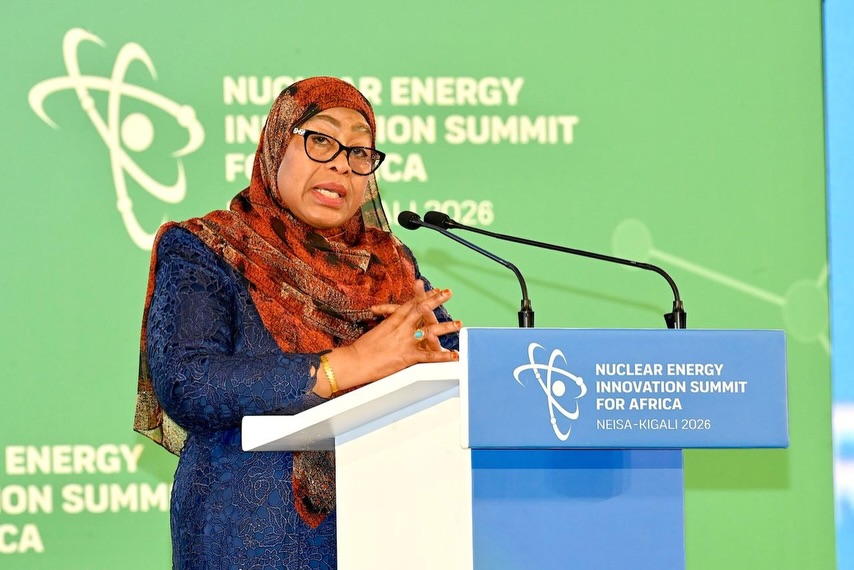
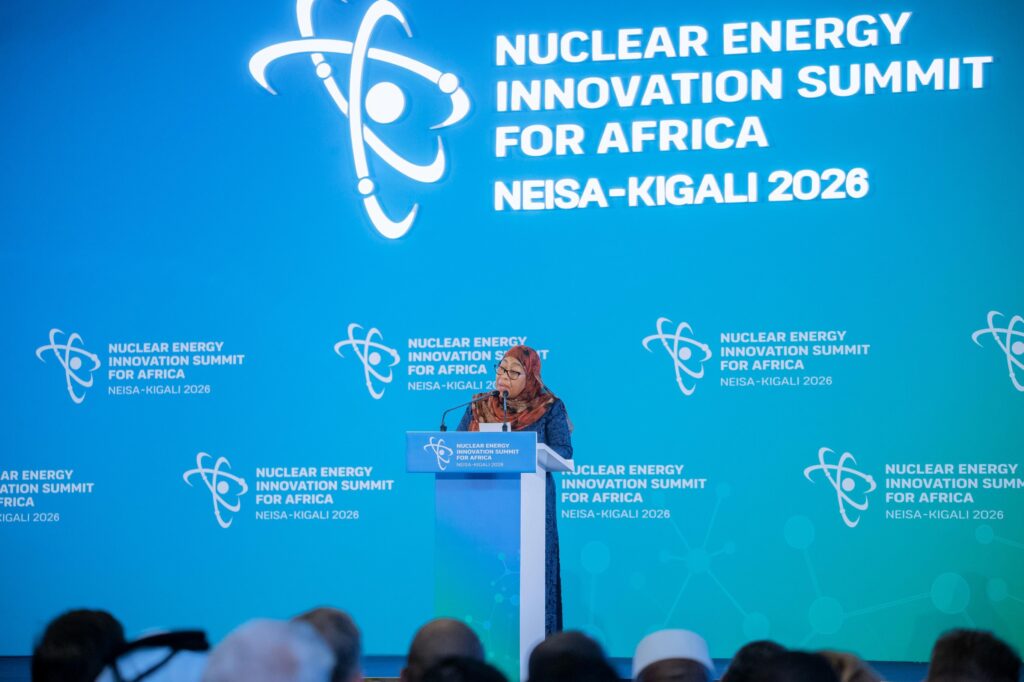
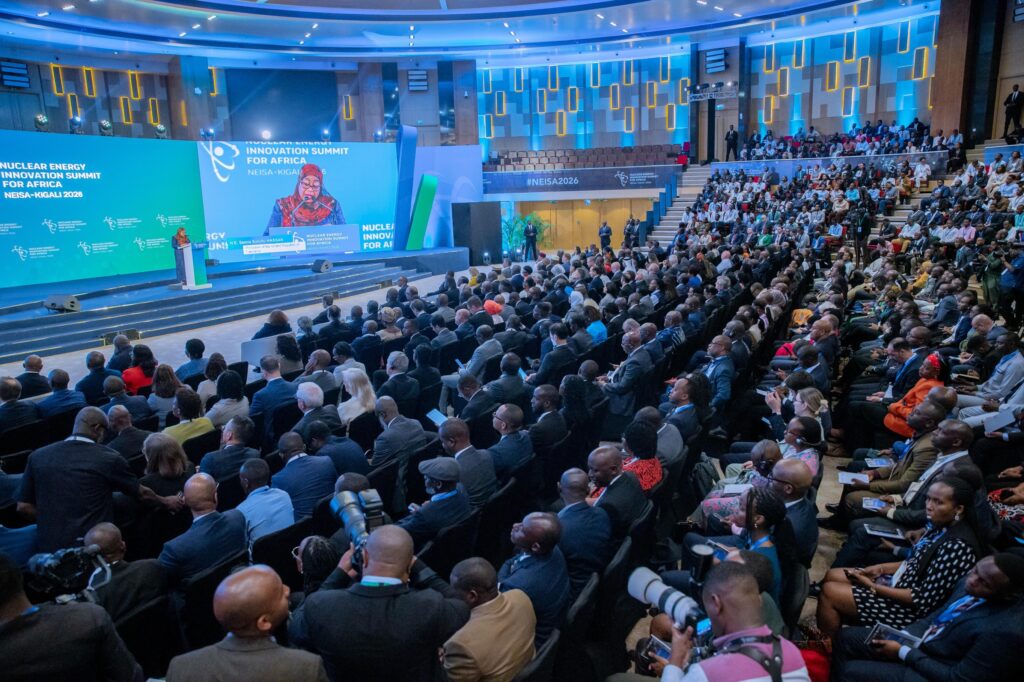
Kigali. President Samia Suluhu Hassan, on Tuesday May 19, 2026 delivered a milestone keynote address at the opening of the Second Nuclear Energy Innovation Summit in Africa (NEISA 2026).
Speaking before a high-level assembly of continental leaders, global energy executives, and international financiers at the Kigali Convention Centre, President Samia positioned atomic energy as a non-negotiable pillar for Africa’s industrial future and socio-economic transformation.
Addressing the assembly alongside her host, President Paul Kagame of Rwanda, and other regional leaders including President Faure Essozimna Gnassingbé of Togo and Prime Minister Ali Mahamane Zeine of Niger, President Samia stressed that Africa can no longer afford to rely solely on weather-dependent or carbon-heavy power sources.
She argued that the chronic power deficits hampering sub-Saharan Africa require a pragmatic and aggressive diversification of the energy mix.
“Reliable, uninterrupted baseload electricity is the fundamental catalyst needed to drive manufacturing, secure food systems through modern agriculture, and lift millions out of energy poverty,” she said.
President Samia focused heavily on the economic viability of emerging nuclear technologies, specifically praising the strategic development of Small Modular Reactors (SMRs) and Micro Modular Reactors (MMRs).
She stated that these innovations completely change the infrastructure equation for developing nations.
“By offering lower initial capital requirements, shorter construction timelines, and flexible integration into existing national grids, SMRs provide a scalable and realistic pathway for African states to transition from conceptual ambition to actual grid-connected power,” she noted.
President Samia’s high-powered entourage reflected Tanzania’s cross-sectoral commitment to this long-term energy transition.
Accompanying the Head of State were the minister for Energy, Deogratius Ndejembi; the minister for Foreign Affairs and East African Cooperation, Amb Mahmoud Thabit Kombo; the minister for Finance, Amb Khamis Omar; and the Deputy Minister for Water, Energy, and Minerals of Zanzibar, Seif Pandu.
The inclusion of the nation’s top financial and diplomats signals Tanzania’s intention to negotiate the complex transnational financing and regulatory alignments required to establish a domestic nuclear framework.
Immediately following her address, President Samia held crucial bilateral talks on the sidelines of the summit with the director general of the International Atomic Energy Agency (IAEA), Mr Rafael Mariano Grossi.
The dialogue concentrated on establishing rigorous safety mechanisms, workforce capacity building, and the development of independent regulatory bodies within Tanzania.
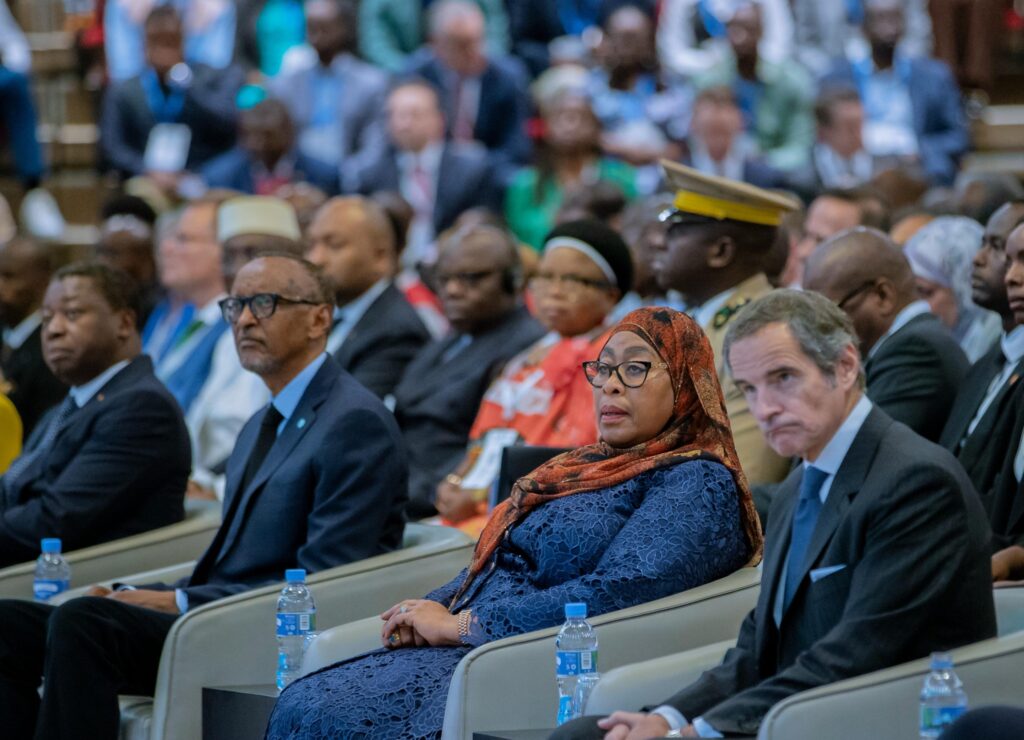
This meeting builds upon an ongoing domestic policy shift in Dar es Salaam, where the government has initiated updates to its national nuclear technologies policies to incorporate nuclear-generated electricity into the National Grid, backed by Tanzania’s strategic reserves of raw uranium.
The summit, themed Powering Africa’s Future: Turning Nuclear Energy Ambition into Investable Reality, arrives at a historic turning point following the World Bank’s recent reversal of its long-standing ban on financing nuclear energy projects.
Continental policymakers at NEISA 2026 are capitalizing on this shifting international sentiment to formulate a unified Nuclear Energy Financing Reference Framework.
By addressing the historical barriers of risk allocation and high upfront costs, the summit seeks to create regional cooperation workstreams that pool demand, making major atomic projects bankable for international private investors.
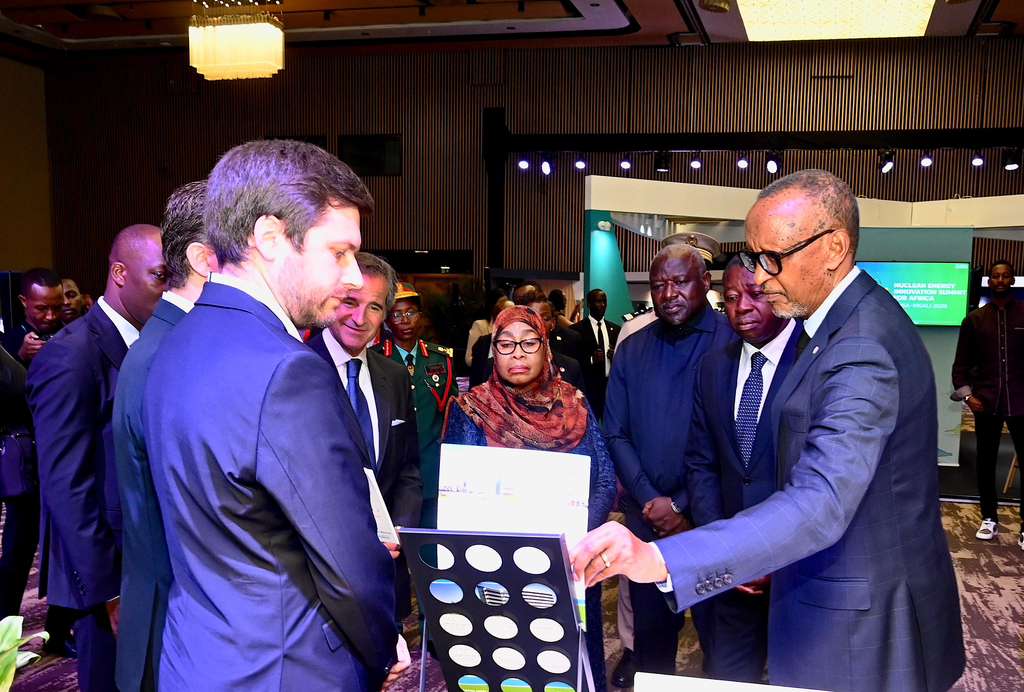
President Samia concluded her engagements by emphasizing that Tanzania’s exploration of atomic energy is rooted in international transparency and regional solidarity.
She asserted that by combining East Africa’s mineral resources, such as uranium, with harmonized safety regulations and joint regional training centres, the continent can successfully build a self-sustaining, safe, and sophisticated nuclear value chain capable of powering generations to come.