

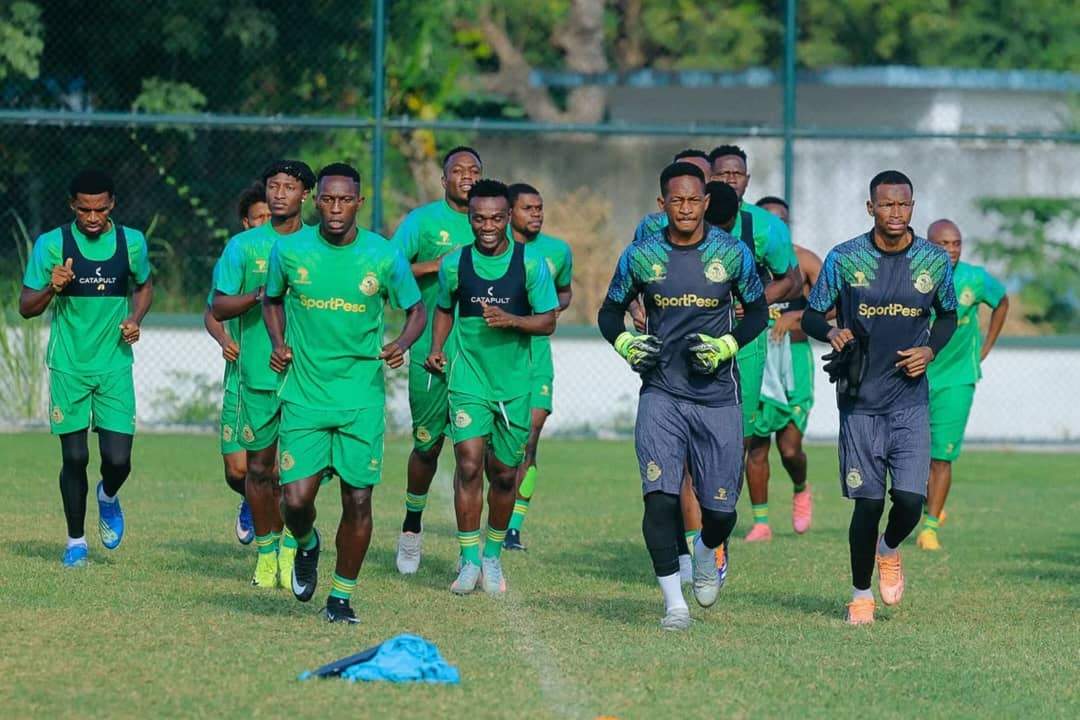
The Sh100 million fine imposed on Young Africans (Yanga) by the Tanzania Premier League Board (TPLB) has developed into more than a routine disciplinary case, instead opening up a wider conversation about governance standards, regulatory enforcement, and the future direction of professional football in Tanzania.
While the sanction stems from a relatively unusual breach the use of a house outside the stadium instead of the official dressing room its implications stretch far beyond the incident itself, touching on issues of compliance, club administration, and the authority of league structures.
A punishment that goes beyond the pitch
The decision, announced on 3 July 2026, came after Yanga were found to have breached Article 17:20 of the NBC Premier League regulations during their 3-0 victory over JKT Tanzania at Major General Isamuhyo Stadium.
Although the club’s performance on the pitch remains unaffected, the financial and reputational consequences are significant.
The fine alone places Yanga under scrutiny not for their footballing ability, but for their operational conduct on match days.
In addition, senior club officials president Hersi Said and chief executive Andre Mtine have been referred to the TFF Ethics Committee, introducing a parallel disciplinary process that could extend the controversy further.
Repeat offence raises the stakes
A key factor in the severity of the punishment is the fact that this is not the first time Yanga have been sanctioned for the same violation.
In May 2026, the club were fined TSh30 million after a similar breach during a high-profile league match against Simba SC, where players and technical staff again used an alternative facility outside the designated dressing room.
The recurrence of the offence has led league authorities to escalate the penalty significantly, signalling a tougher stance on repeat violations.
The increase from Sh30 million to Sh100 million reflects what officials appear to view as a failure to correct previous misconduct despite earlier sanctions.
Why dressing-room complianc
e matters
At first glance, the issue has surprised some supporters, who view the punishment as disproportionate to the nature of the offence.
However, league regulations governing match-day operations are designed around structure, safety, and integrity.
Official dressing rooms are not simply symbolic spaces.
They are central to match organisation, providing controlled access for referees, medical teams, anti-doping officials, and security personnel.
Any deviation from these designated areas risks disrupting established procedures.
TPLB maintains that strict adherence is essential to ensure fairness and consistency across all clubs, regardless of size or status.
Ethics referral adds a new dimension
While the financial penalty has dominated headlines, the referral of two senior officials to the TFF Ethics Committee could prove even more consequential.
The committee will examine allegations that club leaders made public statements deemed inappropriate by league authorities and repeatedly challenged regulations concerning dressing-room usage.
If misconduct is proven, potential sanctions could extend beyond fines to include suspensions or other administrative restrictions, depending on the findings.
This development introduces uncertainty not only for the individuals involved, but also for the club’s broader leadership structure at a crucial stage of the season.
Financial and administrative pressure on Yanga
Although Yanga remain one of Tanzania’s most financially stable and successful clubs, repeated fines of this scale inevitably create pressure at an administrative level.
Beyond the immediate financial cost, such sanctions can influence budgeting decisions, club planning, and internal compliance procedures.
More importantly, they place the spotlight on governance systems within top-tier clubs and how effectively regulations are understood and implemented.
The situation also raises questions about internal communication between club management, technical staff, and match-day coordinators particularly in ensuring that league requirements are consistently followed.
Impact on the wider Tanzanian game
The implications of the ruling extend well beyond Yanga.
For the NBC Premier League, the case represents a clear demonstration of regulatory enforcement.
By imposing a significant fine and escalating the matter to the ethics level, the league has reinforced the principle that compliance failures will be met with increasing severity.
This could encourage other clubs to reassess their own match-day procedures more carefully, particularly in areas relating to logistics, stadium use, and communication with officials.
At the same time, the controversy has sparked a broader debate among supporters and stakeholders over proportionality whether the punishment reflects the seriousness of the offence or represents an overly strict interpretation of regulations.
A league at a turning point
As Tanzanian football continues to grow in visibility, commercial value, and competitiveness, governance standards are coming under greater scrutiny.
Incidents such as this highlight the tension between tradition, operational realities, and the push for stricter professionalism.
For league administrators, the challenge lies in maintaining consistency and authority while also ensuring that disciplinary actions are widely understood and accepted by clubs and supporters alike.
For clubs, it is a reminder that success on the pitch must now be matched by equally strong compliance off it.