

Dar es Salaam. The government has announced wide-ranging policy and legal reforms aimed at easing access to credit for young entrepreneurs by addressing long-standing challenges linked to collateral requirements and loan guarantees.
Prime Minister, Dr Mwigulu Nchemba, said the reforms are designed to remove structural barriers that have continued to limit youth participation in formal financial systems.
He said the State is working to strengthen the loan guarantee framework while introducing the use of movable assets as acceptable collateral.
He made the remarks on Sunday, July 5, 2026, while representing President Dr Samia Suluhu Hassan at the finals of the Vijana Uchumi Challenge 2026 and awards ceremony held at the Julius Nyerere International Convention Centre in Dar es Salaam.
Dr Mwigulu said access to finance remains constrained not only by limited capital among young people, but also by stringent collateral requirements imposed by financial institutions.

He noted that the Bank of Tanzania already operates a credit guarantee window for small, medium and large enterprises.
He said the facility is being upgraded and will be transformed into a dedicated institution responsible for coordinating credit guarantee services nationwide.
He further said the programme currently holds more than Sh280 billion allocated for guarantees, while development partners have expressed interest in contributing over $150 million to strengthen the initiative.
“These resources are intended to support small, medium and large enterprises to access credit guarantees and expand their productive activities,” he said.
Dr Mwigulu added that the Government will table legislation in Parliament to formally allow the use of movable collateral in lending arrangements.
He said the reform will broaden financial inclusion, particularly among young entrepreneurs who often lack immovable assets such as land or buildings.
“We want to formalise the use of movable collateral. For example, a farmer or livestock keeper using warehouse receipts should be able to use them to access input loans without waiting to sell their produce,” he said.
He stressed that the reforms are part of a broader economic transformation agenda that seeks to expand access to finance, stimulate entrepreneurship and strengthen domestic production capacity.
The Prime Minister also cited other recent legal reforms, including the removal of restrictions that previously prevented Tanzanians from serving as main contractors in large-scale projects.
He said the change is intended to increase local participation in major development initiatives.
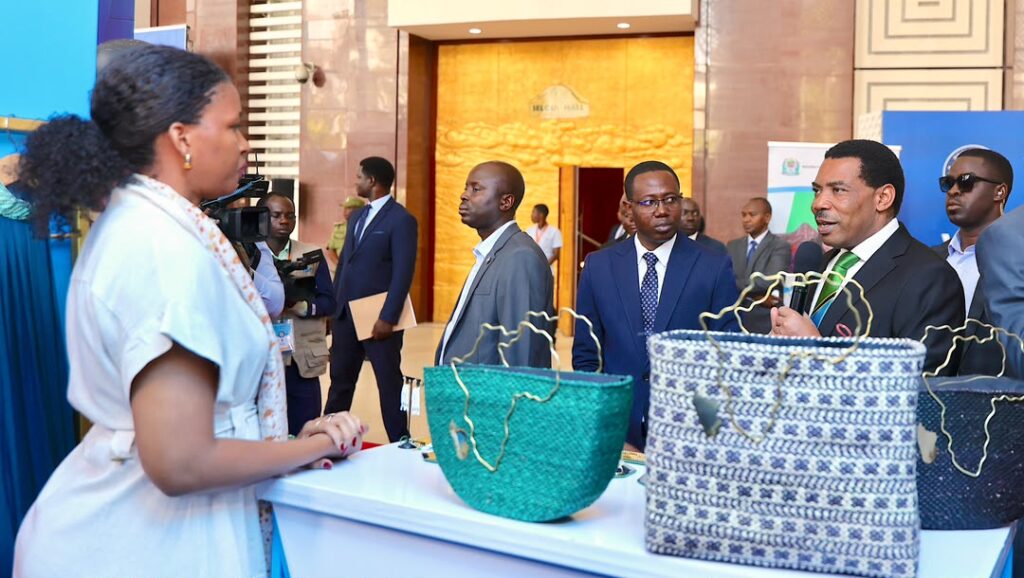
Speaking at the same event, Minister of State in the President’s Office responsible for Youth Development, Dr Joel Nanauka, said the government will continue linking young innovators with support systems to ensure their ideas are transformed into viable enterprises.
He said many young people possess strong and practical ideas but require guidance, information, networks and structured support to scale their innovations.
“The office recognises that young people have many useful ideas, but they often need access to opportunity, mentorship, professional networks and empowerment to turn those ideas into impactful ventures,” he said.
Dr Nanauka outlined the selection process of the Vijana Uchumi Challenge 2026, noting that 7,862 innovative ideas were submitted from both Mainland Tanzania and Zanzibar.
After multiple stages of review, 100 participants were selected for specialised capacity-building training.
He said the process was further narrowed down to 30 participants and later to 10 finalists, from whom the top three winners were eventually identified.
In the final results, Jofrey Sanga emerged as the overall winner, receiving Sh50 million.

Jacob Lugwisha secured second place with Sh30 million, while Robert Malonga finished third and received Sh20 million.
The event was presented as part of ongoing national efforts to strengthen youth entrepreneurship, expand access to finance, and promote inclusive economic growth through innovation-driven initiatives.