
Kibaha. The government has called on public institutions to move away from routine approaches and embrace results-oriented leadership, innovation, accountability and stronger collaboration with the private sector to accelerate the implementation of Dira 2050.
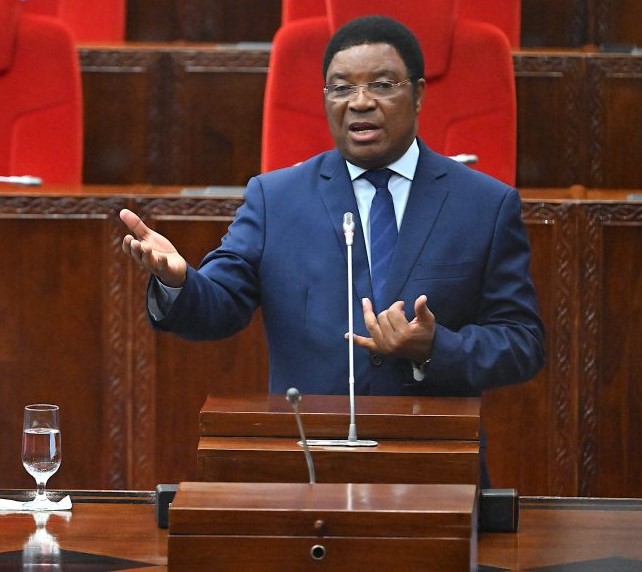
The call was made on Tuesday evening July 22, 2026 by the Minister of State in the President’s Office (Planning and Investment), Prof Kitila Mkumbo, while officially opening the Executive Induction Training Programme for Chief Executive Officers (CEOs) of public entities held at the Mwalimu Julius Nyerere Leadership School in Kibaha, Coast Region.
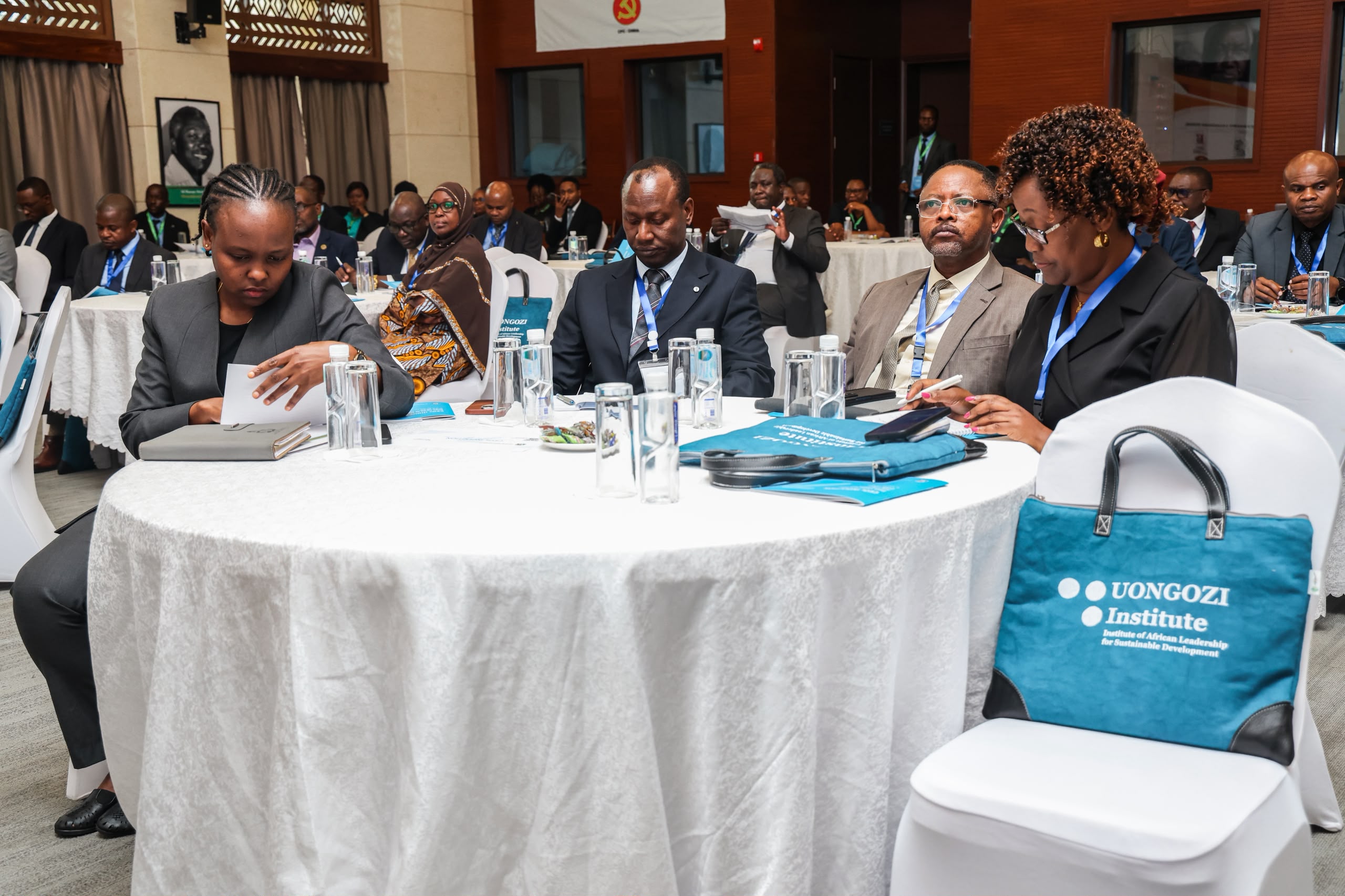
The 4-day training programme, organised by the Office of the Treasury Registrar (OTR) in collaboration with the UONGOZI Institute, is being conducted under the theme: “From Vision to Action: Aligning Public Institution Performance with Vision 2050.”
Prof Mkumbo said Tanzania has set an ambitious target of attaining upper middle-income economy and growing its Gross Domestic Product (GDP) from the current $85 billion to $1 trillion by 2050 through the implementation of Dira 2050.
He said the success of Dira 2050 would not depend solely on the quality of policies and plans developed, but on the ability of leaders of public institutions to translate the national aspirations into tangible results that improve the lives of citizens.
“The responsibility placed on you is enormous. We need leaders with vision, accountability, innovation and integrity who can translate Dira 2050 into measurable outcomes,” Prof Mkumbo said.
He said the current global environment is changing rapidly due to technological advancement, increased competition for investment, climate change and shifts in global markets, requiring public institutions to transform and become part of the solution to development challenges.
Prof Mkumbo stressed that the government would no longer measure institutional success by the number of meetings held or reports produced, but by actual results achieved through improved service delivery, increased productivity, investment growth, job creation and enhanced government revenues.
He directed CEOs to ensure that their institutions’ strategic plans, annual plans, budgets, performance contracts and key performance indicators (KPIs) are fully aligned with Dira 2050 so that every institution has a measurable contribution towards achieving national development goals.
He said Dira 2050 has identified transformative sectors expected to drive economic growth, including agriculture, manufacturing, tourism, construction, mining, the blue economy, sports and creative industries, financial services and other service sectors, with public institutions playing a critical role in enabling growth in these areas.
Prof Mkumbo emphasised that achieving Dira 2050 requires strong collaboration among the Government, private sector, citizens and development partners.
He described the private sector as a key engine for investment, innovation, production and job creation, urging public institutions to move beyond being merely regulators and instead become enablers of investment by creating a conducive business environment and attracting capital.
“We must create an enabling environment that allows the private sector to play a full and active role in the implementation of Dira 2050,” he said, while cautioning public institutions against creating unnecessary barriers to investment or hindering investors.
He further urged CEOs to take ownership of institutional transformation, saying Tanzanians expect to see tangible results through their leadership.
“You have been entrusted with leading reforms within public institutions. Work with commitment, integrity and innovation so that the institutions you lead become catalysts for achieving Dira 2050,” he said.
For his part, the Permanent Secretary for Investment, Dr Fred Msemwa, said Chief Executive Officers have a responsibility to ensure that the institutions they lead serve as catalysts for attracting investment, enhancing the country’s economic competitiveness, and improving service delivery to citizens.
He emphasised that visionary leadership, accountability, and the prudent management of public resources are fundamental pillars for the successful implementation of Dira 2050 and the acceleration of the country’s sustainable development.
On the other hand, the Permanent Secretary in the President’s Office – Public Service Management, Mr Juma Mkomi, said the four-day induction programme forms part of the implementation of the government’s human resource development and leadership policies in the Public Service, with the objective of equipping CEOs to discharge their responsibilities more effectively.
He said the Government expects the knowledge and skills acquired during the programme to be reflected in the participants’ day-to-day leadership, thereby strengthening the performance of the institutions they lead and making a meaningful contribution to the successful implementation of Dira 2050.
“Our expectation is that the knowledge you gain from this programme will translate directly into your day-to-day work and ultimately contribute to the achievement of the goals and aspirations of Dira 2050,” Mr Mkomi emphasised.
He concluded by urging the participants to identify the human resource support they require to enable them to serve as catalysts for the implementation of Dira 2050.
Speaking earlier, the Treasury Registrar, Mr Nehemiah Mchechu, said this year’s training theme reflects the government’s commitment to ensuring that Dira 2050 does not remain a long-term aspiration on paper, but is translated into measurable outcomes through improved performance of public institutions.
“We will not achieve the Tanzania we aspire for through policies alone. We need institutions led by capable leaders who can translate national aspirations into measurable results across all sectors,” Mr Mchechu said.
He said this was the reason the OTR, in collaboration with UONGOZI Institute, continues to invest in leadership development through induction programmes aimed at equipping CEOs of public institutions with the knowledge and skills required to deliver on Government expectations.
Mr Mchechu said since the programme was launched in 2024, more than 187 CEOs have benefited from the training, with about 57 executives participating in this year’s programme.
He said the training provides leaders with a deeper understanding of Government expectations, good governance principles, accountability, public investment management, efficient use of resources and performance-based leadership.
The Treasury Registrar said the investment in leadership development was already yielding positive results, with government dividend and other contribution collections increasing from Sh637 billion in the 2020/21 financial year to Sh1.327 trillion in 2025/26, representing a 108 per cent increase.
“These results demonstrate that investing in leadership is investing in the country’s economy. The stronger our leaders become, the more productive our institutions will be and the greater their contribution to government revenue,” he said.
Mr Mchechu said that as Tanzania implements Dira 2050, the OTR has identified five strategic areas that will guide reforms within public institutions.
The areas include strengthening good governance; developing leadership and human capital; enhancing performance management based on indicators and evidence; facilitating access to resources through Public-Private Partnerships (PPPs), capital markets and investment funds; and increasing the productivity, profitability and value of Government investments.
He added that achieving these reforms also requires stronger partnerships between public institutions and the private sector to promote investment, technology adoption, innovation, economic competitiveness and employment creation.
Meanwhile, the CEO of the Uongozi Institute, Mr Kadari Singo, said the successful implementation of Dira 2050 will depend largely on the existence of a strong and effective leadership system.
He underscored the need to establish systems for identifying and developing leadership talent, ensuring leaders are placed to positions that match their capabilities, defining clear boundaries of authority and responsibility, and strengthening accountability at all levels of leadership.
“These are fundamental issues that must be prioritised and fully integrated into the implementation of Dira 2050,” he said.
During the four-day programme, participants will receive training on leadership health and well-being, aligning institutional strategic plans with Dira 2050, strategic leadership, conflict management and government investment management.
The list also includes good governance, risk management, environmental, social and governance (ESG) principles, public finance, auditing, and the development of individual implementation commitments to support the delivery of Vision 2050.