
Moshi. The helicopter crash on Mount Kilimanjaro on December 24, 2025, has prompted renewed attention to the role, performance and risks of air rescue operations on Africa’s highest mountain.
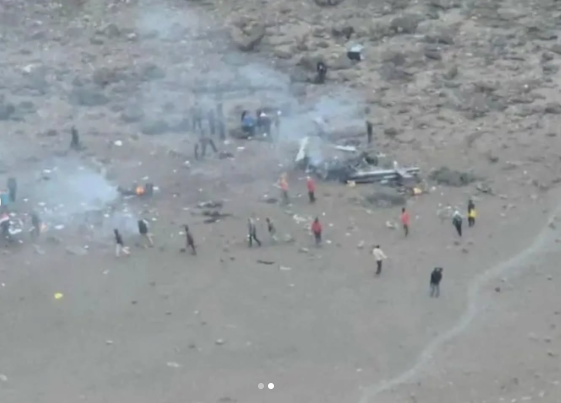
In a statement released after the incident, the Tanzania National Parks Authority (TANAPA) confirmed that a KilimediaAir Airbus AS350 B3 helicopter went down at around 5:30pm East African time between Kibo Peak and the Barafu area, a high-altitude zone frequently used for summit attempts and emergency evacuations.
Five people lost their lives in the incident: two Czech tourists, David Plos and Ana Plosova, both aged 30; a Tanzanian tour guide, Innocent Mbaga; a Tanzanian medical doctor, Jimmy Daniel; and the pilot, Constantine Mazonde, a Zimbabwean national.
The cause of the accident has not yet been established.
TANAPA said it was working closely with relevant national authorities and aviation safety experts to determine the circumstances surrounding the crash, noting that a fact-finding mission had been deployed to the site.
The investigation, according to the authority, will follow established international aviation safety standards and is expected to inform future operational decisions on the mountain.
Beyond the immediate facts of the incident, the crash has brought into focus the broader context in which helicopter rescue services operate on Mount Kilimanjaro.
With more than 50,000 climbers attempting the mountain each year, emergency evacuation has become a critical component of the overall safety framework, particularly as access to the summit routes has expanded and the profile of climbers has diversified.
Helicopter rescues were formally introduced on Kilimanjaro around 2016, marking a significant shift from earlier evacuation methods that relied on teams of porters carrying casualties on stretchers.
While effective in some circumstances, those ground-based evacuations could take more than 12 hours, often in difficult terrain and deteriorating weather conditions.
The introduction of high-altitude helicopters reduced evacuation times to under an hour, significantly improving outcomes for climbers suffering from altitude-related conditions such as high-altitude pulmonary oedema (HAPE) and high-altitude cerebral oedema (HACE).
The aircraft involved in the December 24 crash, the Airbus AS350 B3, is widely used for high-altitude operations globally.
Designed for performance in thin air, the model is recognised for its reliability and has been deployed in some of the world’s most challenging mountain environments, including the Himalayas.
Its presence on Kilimanjaro has long been regarded as a reflection of evolving safety standards rather than an exceptional measure.
Rare incidents
Aviation incidents on Mount Kilimanjaro remain rare.
The previous major helicopter accident on the mountain occurred in November 2008, when four people died.
The long interval between such events underscores the generally strong safety record of air rescue operations, even as they are conducted in an environment that presents inherent and unavoidable risks.
Those risks are particularly pronounced in areas such as Barafu, which sits at an altitude of approximately 4,673 metres above sea level.
At this height, reduced air density affects engine performance and rotor lift, demanding precise handling and careful judgement from pilots.
Weather conditions can change rapidly near the Kibo summit, with high winds, cloud cover and temperature fluctuations posing continuous operational challenges.
Similar conditions are encountered on other high-altitude mountains worldwide where helicopters play a central role in emergency response.
In such settings, investigations following rare accidents have typically led to refinements in operating procedures, improvements in weather assessment, and enhanced coordination between aviation and rescue authorities.
In this regard, the ongoing inquiry by TANAPA, working alongside the Tanzania Civil Aviation Authority (TCAA), is expected to contribute to a deeper understanding of high-altitude aviation operations in Tanzania.
While establishing the cause of the crash remains the priority, the findings are also likely to support further strengthening of safety systems on Kilimanjaro and, where relevant, on other mountainous terrain within the country.
For Tanzania’s tourism sector, air rescue remains a key enabler rather than a point of concern.
Helicopter services have become an integral part of Kilimanjaro’s risk management framework, supporting the country’s reputation as a destination that invests in climber safety and professional rescue capacity.