
Dar es Salaam. Tanzania’s investment landscape underwent a notable transformation in the third quarter of 2025, with manufacturing emerging as the dominant force behind economic expansion, following the operationalisation of the Tanzania Investment and Special Economic Zones Authority (TISEZA).
According to the Quarterly Investment Bulletin covering July to September 2025, released by TISEZA, the newly consolidated authority has presided over a period of robust industrial activity after the enactment of the TISEZA Act No. 6 of 2025.
The legislation merged investment promotion and special economic zone administration into a single institution, creating what officials describe as a more efficient and predictable investment environment.
The reporting period marked the formal debut of TISEZA as a one-stop investment facilitation authority.
TISEZA Director General, Gilead Teri, described the quarter as a historic turning point for Tanzania’s industrial development, noting that the new framework has streamlined the development, regulation and management of Special Economic Zones while significantly improving investor support services.
“During the three-month period, the authority conducted more than 1,556 aftercare engagements with investors and provided 2,695 consultation services, reflecting heightened interaction between government and the private sector, the report says.
It adds that TISEZA registered a total of 201 investment projects with a combined capital value of $2,538.56 million.
These projects are projected to generate 20,808 new jobs across various sectors of the economy, underscoring the role of private investment as a key driver of employment creation.
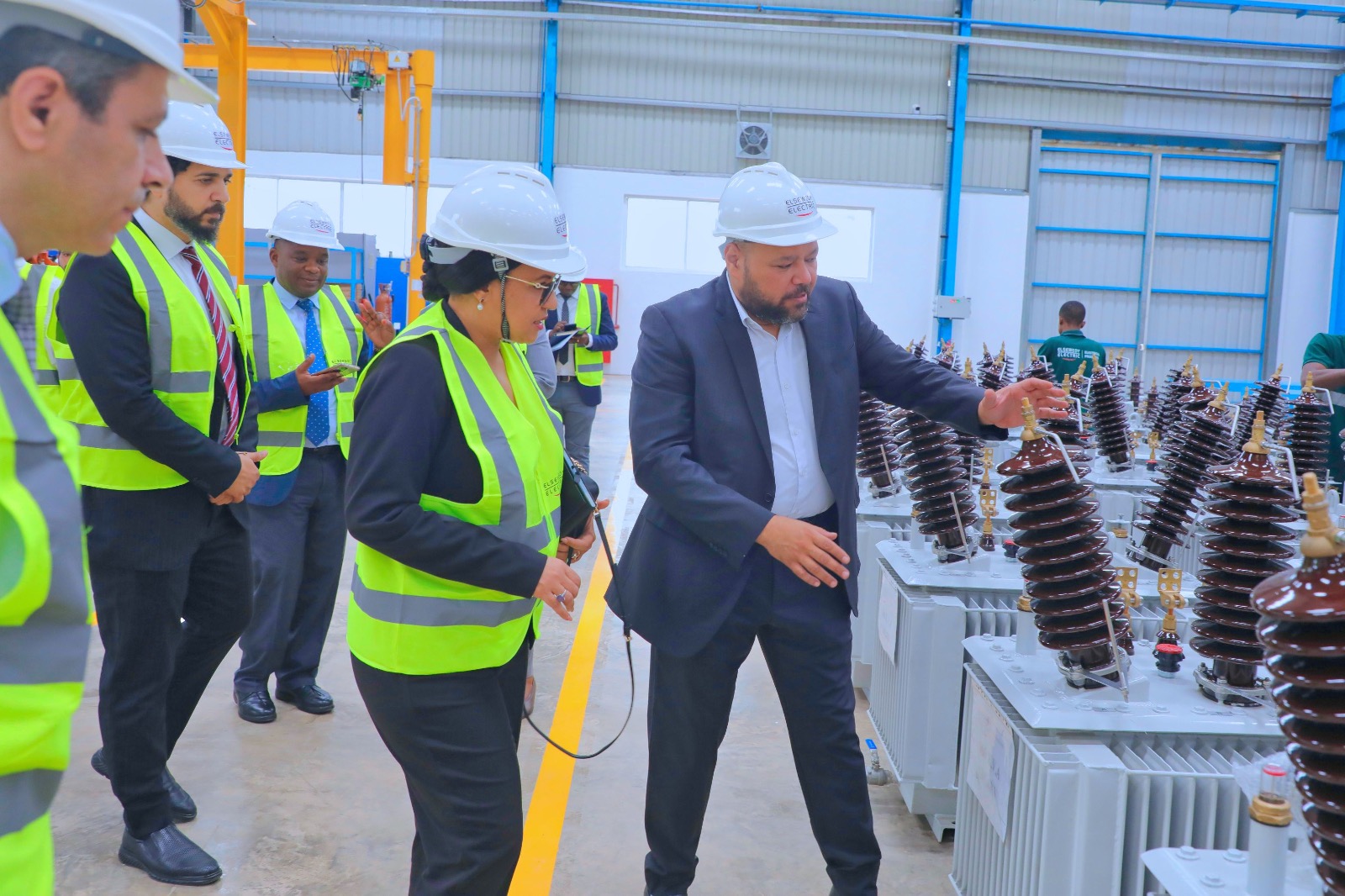
Manufacturing emerged as the clear leader among the registered projects, accounting for 85 initiatives with a total capital investment of $1,245.62 million.
The manufacturing projects alone are expected to create 10,079 jobs, cementing the sector’s position as the backbone of Tanzania’s industrialisation agenda.
“Commercial building developments followed, with 30 projects valued at $351.73 million, reflecting continued demand for real estate linked to business and urban growth,” the report reads in part.
The transportation sector also featured prominently, registering 29 projects with a combined capital value of $210.46 million.
Despite ranking behind manufacturing and commercial buildings in capital terms, transportation projects recorded the second-highest employment impact, with 3,310 jobs anticipated.
Economic infrastructure projects attracted $259.90 million in investment, making the sector the third-largest by capital value and highlighting its strategic importance in supporting long-term industrial and logistical development.
Geographically, Dar es Salaam retained its status as the country’s principal investment destination, hosting 79 projects valued at $833.54 million.
However, the bulletin points to growing regional diversification, with Mwanza Region attracting investments worth $198.52 million.
Coast Region also stood out in terms of employment prospects, with registered projects expected to create 3,478 jobs, signalling the gradual spread of industrial activity beyond traditional urban centres.
Performance under the Export Processing Zones and Special Economic Zones schemes showed particularly strong growth when compared with the same period in the previous year.
The number of registered EPZ and SEZ projects increased from three to eight, representing a 167 percent rise.
Capital investment under these schemes surged from $28.66 million to $97.83 million, an increase of 241 percent.
Turnover recorded within the EPZ and SEZ framework rose sharply, climbing from $41.9 million to $127.53 million, translating into a growth rate of 1,398 percent.
Employment creation under these schemes also expanded significantly, with the number of jobs rising by 299 percent to reach 2,607 positions.
TISEZA attributes this strong performance largely to the aggressive promotion and operationalisation of five new Special Economic Zones.
These include the Nala SEZ, Kwala SEZ, Buzwagi SEZ, the Bagamoyo Eco Maritime City Phase I, and the Benjamin William Mkapa SEZ, all of which have attracted increased investor interest during the quarter.
In terms of investment composition, Foreign Direct Investment remained the dominant source of capital, although domestic participation continued to demonstrate resilience.
During the first quarter of the 2025/26 financial year, FDI amounted to $1,581.56 million, compared with $2,790.64 million recorded in the same period of the previous financial year.
Domestic investment reached $920.13 million, down from $1,207.04 million in the comparable quarter of 2024/25, but still reflecting sustained local investor engagement.
The United Arab Emirates, China, India, Singapore and France emerged as the leading sources of foreign capital under the General Investment Scheme.
In the EPZ and SEZ segment, China played a particularly significant role, contributing $88 million in capital investment, making it the largest single foreign contributor within the specialised zones.
At the same time, the bulletin highlights a gradual rise in local ownership of investment projects.
TISEZA registered 74 locally owned projects during the quarter, up from 70 in the corresponding period of the previous year.
The authority links this trend to what it describes as a more predictable and investor-friendly environment fostered under the administration of President Dr Samia Suluhu Hassan.
Beyond new project registrations, the quarter also witnessed notable activity in mergers, acquisitions and business expansions.
Fourteen firms were acquired during the reporting period, with a combined transaction value of $220.51 million.
In addition, nine expansion and rehabilitation projects were registered, representing further investment of $99.18 million and expected to create 904 new jobs.
Looking ahead, the report concludes that Tanzania is increasingly positioning itself as a potential manufacturing hub for the African continent.
During the quarter, TISEZA undertook nine outbound global investment missions and hosted 49 inbound investor delegations, signalling an aggressive external engagement strategy.
The authority projects that the momentum observed in manufacturing, infrastructure and special economic zones is likely to continue throughout the 2025/26 financial year, reinforcing the country’s broader industrialisation and economic diversification goals.