
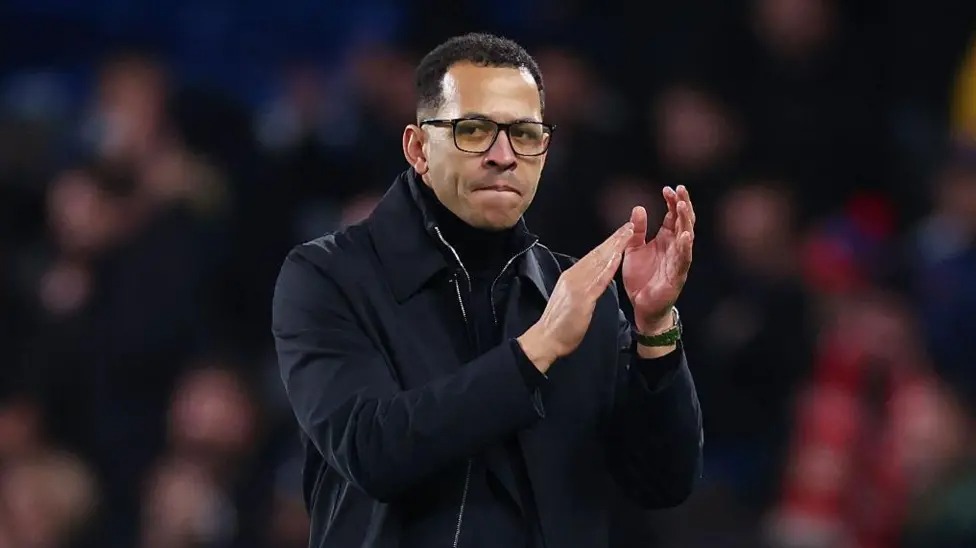
Liam Rosenior’s time as Chelsea manager has ended abruptly just a few months after his appointment, despite having signed a long-term contract in January.
His spell in charge lasted only 23 matches, producing 11 wins, 10 defeats and 2 draws.
What was expected to be a long-term project quickly turned into a short and difficult period for both the coach and the club.
Rosenior arrived at Stamford Bridge with a growing reputation for attractive and modern attacking football, built on his success with Strasbourg in France, where he guided the club into European competition.
His appointment was seen as a bold move by Chelsea, reflecting the club’s continued shift towards younger, progressive managers.
However, the reality in England proved far more challenging. From the beginning, Rosenior faced pressure due to his lack of Premier League experience.
While he tried to adapt quickly, there were early signs that not all players were fully convinced by his methods or authority.
Initially, he attempted to maintain stability by leaning on existing tactical structures before gradually introducing his own ideas.
But as results became inconsistent, this transition created confusion within the squad and affected performances on the pitch.
Chelsea’s form began to decline noticeably as the season progressed.
The most damaging period came when the team suffered five consecutive defeats without scoring a single goal, a record unwanted streak that highlighted deeper attacking problems and a loss of confidence among players.
During this run, the team struggled in both defence and attack, with key matches exposing weaknesses in organisation and tactical balance.
Heavy defeats in major competitions further increased pressure on Rosenior and raised serious questions about the direction of the team.
Some of his tactical decisions were also heavily scrutinised.
The team was often described as playing too openly against stronger opponents, leaving gaps that were easily exploited.
In addition, frequent changes in player roles disrupted stability, with some individuals being used in unfamiliar positions.
A shift to a single defensive midfielder was also criticised, as it left too much responsibility on players like Moisés Caicedo, who was required to cover large areas of the pitch.
This affected the team’s structure and made them vulnerable in transitions.
As results worsened, reports suggested that Rosenior began to lose influence within the dressing room.
Communication between players and coaching staff reportedly became less effective, and leadership discussions lost their impact compared to earlier in the season.
There were also claims of information leaks around important matches, which added to the sense of instability inside the club.
In some instances, coaching staff were reportedly not fully respected by certain players, further weakening authority within the group.
Despite these issues, Rosenior was still regarded by many players as a polite and respectful individual.
He maintained a positive personal relationship with parts of the squad, but this was not enough to overcome the growing sporting difficulties.
Injuries to key players such as Reece James, Cole Palmer and Trevoh Chalobah made the situation even more complicated.
Their absence reduced Chelsea’s quality and limited tactical options during a critical period of the season.
The final decision to part ways came after a disappointing defeat to Brighton, which is believed to have convinced Chelsea’s hierarchy that immediate change was necessary.
Club officials felt that performances were not improving and that results were unlikely to recover under the current setup.
Chelsea concluded that a new manager would be required to stabilise the team and improve their chances of achieving European qualification and success in domestic competitions.
The decision was also influenced by the need to restore confidence within the squad.
Unlike previous managerial changes, Rosenior’s departure reflected weaker ties with the club’s hierarchy, suggesting a lack of strong internal support as results deteriorated.
This difference in relationship played a role in how quickly the decision was made.
Attention now turns to potential replacements, with several high-profile names being linked to the role.
Candidates reportedly include Marco Silva, Xabi Alonso, Edin Terzić, Cesc Fàbregas and Andoni Iraola, among others.
However, there is uncertainty over whether top coaches will commit to Chelsea given the club’s recent instability and frequent changes in management.
Some are also believed to have concerns about working within the club’s current recruitment structure.
Financial constraints may also influence Chelsea’s decisions moving forward, following significant losses reported by the club.
This could limit spending in the transfer market and affect the profile of players available to the next manager.
For Chelsea, the situation once again highlights the ongoing challenge of finding long-term stability.
Despite investing heavily and repeatedly changing managers, the club continues to search for a consistent direction both on and off the pitch.
Rosenior’s brief tenure will be remembered as a period of promise that quickly faded, shaped by poor results, tactical uncertainty and growing internal pressure.
Chelsea now face yet another rebuilding phase as they look for a manager capable of delivering both immediate results and long-term success.