
Dodoma. Tanzania has recorded improved food security following a rise in crop production during the 2024/2025 farming season.
The gains come as the government increases investment in irrigation, farm inputs and youth programmes aimed at modernising agriculture.
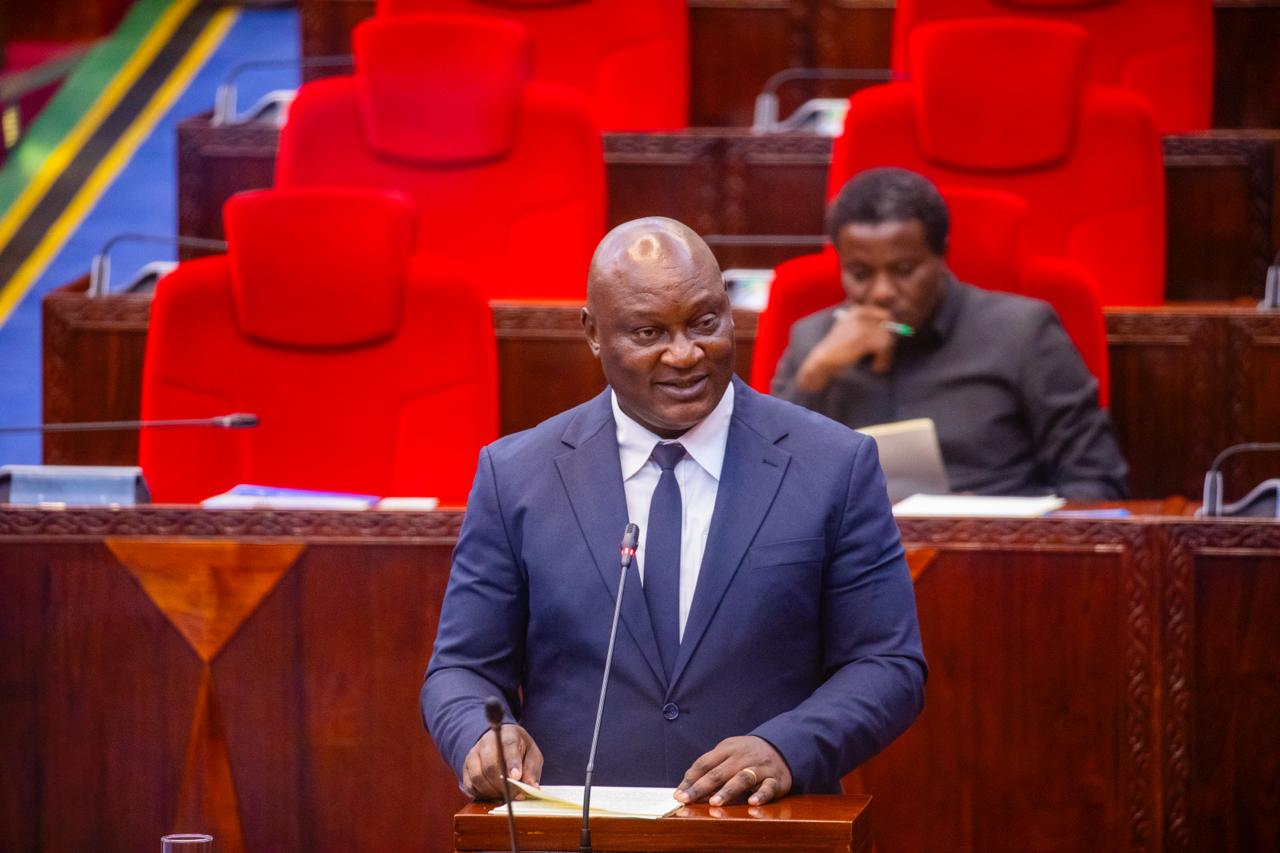
Presenting the Ministry of Agriculture’s budget estimates for the 2026/2027 financial year in Parliament on April 28, 2026, the minister for Agriculture, Daniel Chongolo, said food production reached 23,783,128 tonnes in the 2024/2025 season.
This compares with 22,803,316 tonnes recorded in the 2023/2024 season, representing an increase of 4.3 percent.
He said the growth has enabled the country to achieve food self-sufficiency of 130 percent.
The country recorded a surplus of 5,504,074 tonnes of food.
According to the minister, cereal production reached 14,924,582 tonnes, while non-cereal crops recorded output of 8,858,546 tonnes during the same period.
Mr Chongolo said the government will continue strengthening food production through investments in improved seeds, fertilisers, irrigation and extension services.
These measures aim to ensure stable food supplies and increase agriculture’s contribution to the national economy.
Irrigation expansion drives productivity
The minister said the government has continued to prioritise irrigation development as part of efforts to increase productivity and address climate change challenges.
He told Parliament that a total of 780 irrigation projects are currently being implemented across the country.
Of these, 28 projects with the capacity to irrigate 23,528 hectares have already been completed.
Another 118 projects capable of irrigating 232,658 hectares are at various stages of implementation.
In addition, feasibility studies and detailed designs for 189 irrigation projects have been completed, while 445 projects remain under preparation.
Mr Chongolo said the investments are expected to boost crop production, improve farmers’ incomes and reduce reliance on rain-fed agriculture.
He added that strengthening irrigation remains essential to ensuring reliable and productive farming systems nationwide.
Rising budget signals sector priority
The government has significantly increased funding to the agriculture sector over recent years, reflecting its central role in economic growth and job creation.
Mr Chongolo said the agriculture budget rose from Sh294 billion in the 2021/2022 financial year to Sh1.19 trillion in 2025/2026.
He noted that food crop production increased from 17,148,290 tonnes in 2021/2022 to 23,783,128 tonnes in 2024/2025, representing growth of 38.69 percent.
Production of cash crops also rose sharply. Output increased from 973,436 tonnes in 2021/2022 to 1,596,311.18 tonnes in 2024/2025, an increase of 63.99 percent.
The value of agricultural exports also expanded significantly during the same period.
Export earnings rose from $2.1 billion in 2021/2022 to 3.73 billion US dollars in 2024/2025.
Mr Chongolo said the government will continue investing in farm subsidies, irrigation schemes, crop markets and youth programmes to sustain the sector’s growth.
Youth programme placed at centre of reforms
A major component of the 2026/2027 agriculture budget is the Building a Better Tomorrow (BBT) programme.
The initiative aims to attract youth and women into modern farming and agribusiness.
The Ministry of Agriculture has outlined six priority areas under the new budget.
These include increasing productivity, creating decent employment, strengthening food and nutrition security and improving access to capital and markets.
Other priorities include promoting cooperative development and expanding the use of information and communication technology in agriculture.
To support these priorities, the ministry has developed 30 implementation strategies.
However, the allocation for the 2026/2027 financial year stands at about Sh1.1 trillion, slightly lower than the Sh1.2 trillion allocated in 2025/2026.
Under the BBT programme, the government plans to expand irrigation for smallholder farmers and improve access to credit through targeted financing schemes.
Youth and women will also be supported to produce seedlings, add value to crops and deliver extension services.
Mr Chongolo said the programme will be rolled out in 20 councils that have each allocated at least 200 acres of land. Regions participating include Dodoma, Singida, Tabora, Njombe, Mbeya, Iringa, Pwani, Mara, Katavi, Rukwa, Kagera and Geita.
In addition, 2,000 youth selected by local authorities will receive agribusiness training at agricultural colleges and training centres.
Focus on improved seeds and research
The government is also strengthening agricultural research to support productivity and innovation.
Through the Tanzania Agricultural Research Institute, authorities plan to develop and register 73 improved seed varieties for strategic crops.
These include cereals, legumes, roots, fruits and oil crops.
Mr Chongolo said Tanzania’s annual demand for improved seeds stands at 127,650 tonnes.
Domestic production is projected to increase from 47,702.45 tonnes in 2025/2026 to 105,000 tonnes in 2026/2027.
The Agricultural Seed Agency is expected to produce 27,219 tonnes through contract farming across 12,470 hectares.
He warned farmers against purchasing inputs from unregistered dealers and said strict legal action would be taken against traders selling fake seeds and fertilisers.
Efforts to expand storage and fertiliser production
The government is also investing in improved storage systems to reduce post-harvest losses.
Mr Chongolo said the country aims to build capacity to store up to three million tonnes of food through modern storage facilities and improved post-harvest management.
In addition, the Tanzania Fertiliser Company plans to establish an agricultural lime plant with an annual production capacity of between 250,000 and 500,000 tonnes.
The plant is expected to improve soil quality and support increased agricultural productivity.
Export growth linked to economic diplomacy
Mr Chongolo said government efforts to strengthen economic diplomacy have opened new markets for agricultural products across Asia, Europe, the Americas and Africa.
He noted that expanding markets has helped drive growth in export earnings and increased farmers’ incomes.
The government also plans to improve crop quality and strengthen value addition to enhance competitiveness in international markets.
These efforts aim to increase foreign exchange earnings and support broader economic growth.
Parliamentary committee raises funding concerns
Despite the progress, the Parliamentary Standing Committee on Industry, Trade, Agriculture and Livestock has raised concerns over delays in the release of development funds.
Presenting the committee’s observations, its chairperson, Deodatus Mwanyika, said only Sh6 billion of the Sh16 billion approved for BBT projects had been released by February 2026.
This represents 37.5 percent of the allocated amount.
Overall development expenditure disbursement stood at 55.39 percent, a level the committee warned could slow project implementation.
Mr Mwanyika urged the government to increase reliance on domestic revenue sources instead of external financing, which he described as unreliable.
Sector outlook remains positive
Mr Chongolo said the government remains committed to strengthening agriculture as a driver of economic growth and employment.
He said continued investment in irrigation, improved seeds, fertilisers and youth training will help increase productivity and ensure long-term food security.
The minister added that expanding markets, improving storage systems and promoting modern farming practices will further support the sector’s transformation.