

For years it seemed distant. Then it became months away. Now, with just 24 days remaining before the kick-off of the 2026 FIFA World Cup, excitement is reaching fever pitch across the globe.
For the first time in history, the tournament will be jointly hosted by three nations the US, Canada and Mexico.
It will also be the biggest World Cup ever, featuring 48 teams, 104 matches and 16 host cities between June 11 and July 19.
Beyond the star players, state-of-the-art stadiums and the billions expected to tune in worldwide, there are several fascinating storylines that make this tournament unlike any before it.
Here are ten reasons why the 2026 World Cup promises to be one of the most memorable editions in football history.
A technological showcase
The 2026 World Cup is expected to be one of the most technologically advanced sporting events ever staged.
Fans will witness cutting-edge stadiums equipped with climate-control systems, specially designed playing surfaces adapted to local conditions and innovative digital broadcasting technologies.
Several venues feature retractable roofs, while others have been designed to minimise the impact of extreme weather conditions.
In many ways, the tournament will be as much a display of modern engineering and technology as it is a football competition.
A truly global tournament
For decades, World Cups have been hosted by a single nation or, occasionally, two countries.
FIFA has now broken new ground by awarding the event to three hosts.
The United States will stage matches in 11 cities, while Mexico will host games in three cities and Canada in two.
For FIFA, the message is clear: football has become a truly global product.
The joint-hosting model is also expected to increase commercial opportunities, television audiences and overall revenues.
Mexico set to make history
If one nation is destined to enter the history books in 2026, it is Mexico.
The country previously hosted the World Cup in 1970, when Brazil and Pelé conquered the world, and again in 1986, when Diego Maradona produced some of the most iconic moments in football history.
In 2026, Mexico will become the first nation ever to host or co-host the World Cup on three occasions.
The historic Estadio Azteca is expected to stage the opening match, adding another remarkable chapter to its legendary football legacy.
The biggest World Cup ever
For the first time since 1998, FIFA has significantly expanded the tournament format, increasing the number of participating teams from 32 to 48.
The decision has divided opinion. Supporters believe it will create more opportunities for emerging football nations, while critics fear it could dilute the quality of some matches.
For FIFA, however, the expansion represents an opportunity to spread the game further across the globe and allow more countries to experience the World Cup dream.
The tournament will feature a record-breaking 104 matches, compared to the previous total of 64.
A new group-stage format
The 48 teams will be divided into 12 groups of four.
The top two teams from each group will automatically qualify for the knockout stage, alongside the eight best third-placed teams.
This creates a new Round of 32 before the traditional last-16 stage.
The format is expected to increase competition throughout the group phase, as even teams finishing third will still have a realistic chance of progressing.
The tournament will also last 39 days, compared to the 32-day format used in recent editions.
Africa’s growing ambitions
Africa heads into the tournament with renewed confidence after securing ten qualification places.
Morocco’s historic run to the semi-finals in Qatar 2022 demonstrated that African nations can compete with the world’s elite, and many believe the continent can go even further in 2026.
Senegal, Egypt, Tunisia, South Africa, Ghana and Ivory Coast are all expected to provide strong competition.
One of Africa’s most inspiring stories is Cape Verde, which has qualified for the World Cup for the first time in its history.
Meanwhile, DR Congo returns to the global stage for the first time since 1974, highlighting the growing competitiveness of African football.
New nations on the world stage
The expanded format has opened the door for countries that had long fallen short of World Cup qualification.
Alongside Cape Verde, football fans will witness Jordan, Uzbekistan and Curaçao making their World Cup debuts.
For neutrals, this presents a rare opportunity to watch fresh faces and potentially witness some of the tournament’s biggest surprises.
Football’s commercial powerhouse
Although football is already the world’s most popular sport, it has traditionally faced stiff competition from American football, basketball and baseball in the United States.
The 2026 World Cup is widely seen as an opportunity to elevate the sport’s profile even further across North America.
Modern venues, advanced technology, global media coverage and unprecedented commercial investment are expected to make this one of the most lucrative World Cups ever staged.
Among the headline venues are MetLife Stadium, which will host the final, alongside other iconic arenas such as SoFi Stadium, Mercedes-Benz Stadium and AT&T Stadium.
Argentina’s title defence
Defending champions Argentina will arrive in North America carrying the burden of protecting the crown they won in Qatar in 2022.
With Lionel Messi approaching the twilight of his career, many believe the tournament could mark the beginning of a new generation of global superstars.
Argentina will not be alone in chasing glory. France, Brazil, England, Spain, Portugal and Germany all enter the competition with realistic ambitions of lifting football’s most prestigious trophy.
The big names missing out
One of the biggest shocks on the road to 2026 has been Italy’s failure to qualify.
The four-time world champions have now missed three consecutive World Cups, a remarkable decline for one of football’s traditional powerhouses.
Italy’s absence remains one of the most painful stories in international football.
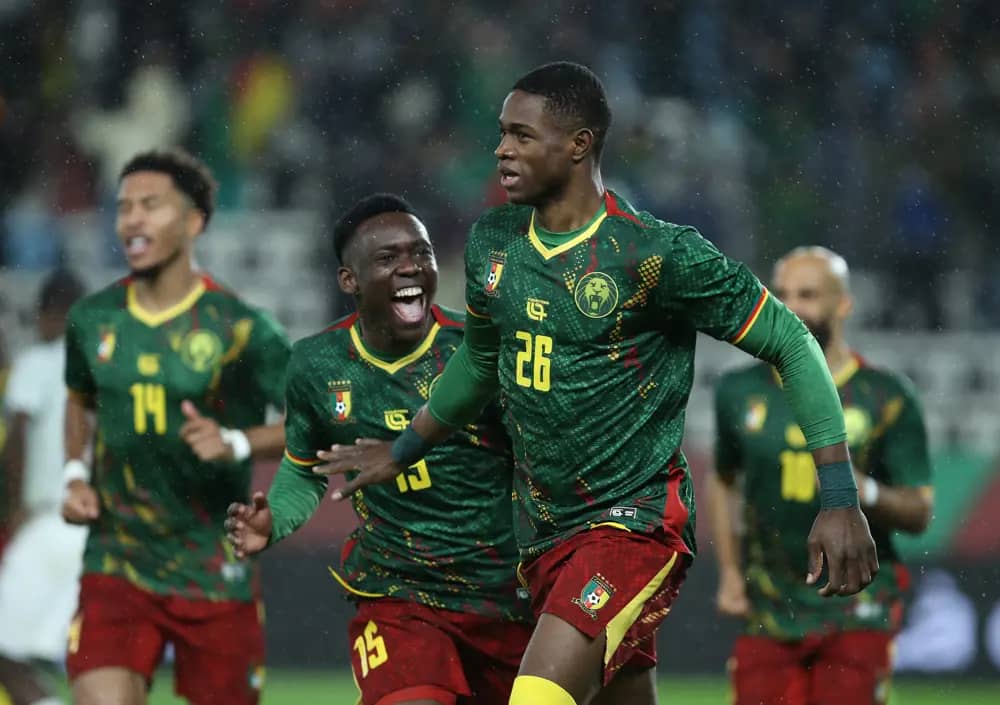
They will not be alone on the sidelines. Other notable nations to miss out include Chile, Nigeria, Cameroon, Poland and Costa Rica.
As the countdown to kick-off continues, everything points towards a World Cup unlike any that has come before.
From new nations and a revolutionary format to record-breaking commercial opportunities and world-class infrastructure, the 2026 FIFA World Cup promises to redefine the scale of international football.
For players, it is a chance to achieve immortality. For fans, it is another month of passion, joy, heartbreak and unforgettable memories waiting to be written.