
The 2026 FIFA World Cup is drawing ever closer, with 48 nations preparing to compete for football’s most prestigious prize.
Yet despite the expanded format, more matches and greater competition than ever before, the tournament’s history suggests that the number of nations genuinely capable of lifting the trophy remains remarkably small.
In the 96 years since the World Cup was first staged in 1930, only eight countries have ever won the title.
These statistics demonstrate that World Cup success has never been a matter of luck, but rather the result of a combination of history, squad quality, experience at major tournaments and the circumstances surrounding each team.
An analysis of previous champions reveals several characteristics shared by nearly every World Cup winner. Applying these historical criteria quickly narrows the field, leaving only five nations that appear to have the strongest chance of succeeding in 2026.
Europe or South America
The first historical indicator is geography.
Across all 22 previous World Cup tournaments, no nation from outside Europe or South America has ever won the competition.
Furthermore, only 13 countries have ever reached a World Cup final.
Of these, 10 are European nations and three come from South America. This highlights the long-standing dominance of these two continents in world football.
As a result, countries from Africa, Asia, North America and Oceania appear to face a significant challenge in breaking this trend.
Even the hosts of the 2026 tournament the United States, Canada and Mexico find themselves excluded from the list of leading contenders based on historical precedent.
Morocco, which captivated the football world by reaching the semi-finals in 2022, arguably appears best placed to challenge this dominance.
Their achievements at youth level and at the Olympic Games point to significant progress, yet many observers believe a World Cup triumph may still come too soon for this generation.
The test of quality
Another crucial factor is a nation’s standing before the tournament begins.
Elo Ratings, widely used to measure the strength of international teams, show that no country has ever won the World Cup while ranked outside the world’s top 17 when the competition commenced.
The closest example came in 1950 when Uruguay stunned the footballing world by winning the title in Brazil while ranked 17th.
To this day, that success remains one of the greatest surprises in football history.
More often than not, World Cup winners have entered the tournament among the top four-ranked teams in the world.
This demonstrates that the World Cup is rarely a stage where ordinary teams suddenly emerge and conquer all before them.
Based on this criterion, nations such as Paraguay, Austria, Scotland, Sweden, the Czech Republic and Bosnia and Herzegovina are effectively ruled out of title contention despite possessing squads capable of making an impact in the earlier rounds.
Ballon d’Or winners matter
For European nations, history offers another fascinating trend.
No European country has ever won the World Cup without having produced more than one Ballon d’Or winner throughout its history.
The logic behind this statistic is straightforward.
Nations that consistently produce the world’s finest footballers tend to have a greater capacity to win major international honours.
France leads the way, having produced six different Ballon d’Or winners.
Germany and Italy have five each, while England boasts four.
Spain, the Netherlands and Portugal have produced three winners apiece.
Consequently, some countries blessed with considerable talent but lacking a strong tradition of Ballon d’Or winners appear to lose ground in the race for the title.
A home-grown manager is an advantage
Another intriguing statistic concerns managers.
No nation has ever won the World Cup under a foreign coach.
While some analysts argue that this trend reflects the tendency of major footballing nations to trust their own coaches, the record has endured for almost a century.
This year, Brazil are managed by Italian coach Carlo Ancelotti, while England are under the guidance of German manager Thomas Tuchel.
Portugal are coached by Spaniard Roberto Martínez, while Uruguay, Colombia and Ecuador are also led by foreign managers.
According to historical patterns, this may weaken the prospects of those nations despite the considerable quality within their squads.
The five leading contenders
After applying all the historical criteria, only five teams remain among the strongest candidates to win the 2026 World Cup.
Defending champions Argentina continue to rank among the favourites thanks to their winning culture, tournament experience and the quality of their current generation.
France appear to be one of the most complete teams in the competition.
With stars such as Kylian Mbappé and exceptional squad depth, many regard Les Bleus as the leading contenders for the trophy.
Germany should never be underestimated.
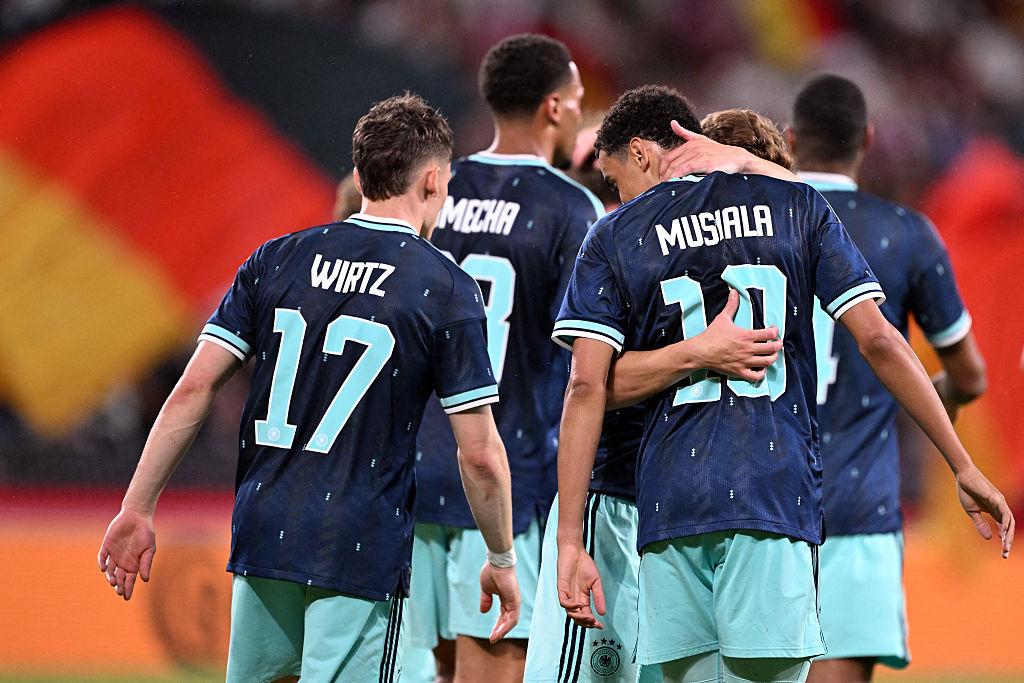
The four-time world champions have repeatedly demonstrated an ability to succeed across different eras and have built a reputation for thriving on the biggest stage.
Spain enter the tournament as one of the most exciting and technically gifted teams in world football.
Their blend of youthful talent and international experience makes them serious title contenders.
The final team on the list is the Netherlands.
Although they have never won the World Cup, they have reached the final on three occasions and have often come agonisingly close to glory.
The current generation appears capable of writing a new chapter in Dutch football history.
Will history prevail or be broken?
The biggest question remains whether the 2026 World Cup will continue to follow historical trends or produce a new revolution in world football.
For almost a century, the World Cup has repeatedly demonstrated that history and statistics often carry more weight than supporters’ hopes and expectations.
Yet every generation is presented with an opportunity to create a new narrative.
If history continues to repeat itself, the 2026 World Cup winner is likely to come from Argentina, France, Germany, Spain or the Netherlands.
However, should football deliver one of its greatest shocks, the world may witness a new nation writing a chapter unlike any seen since 1930.