
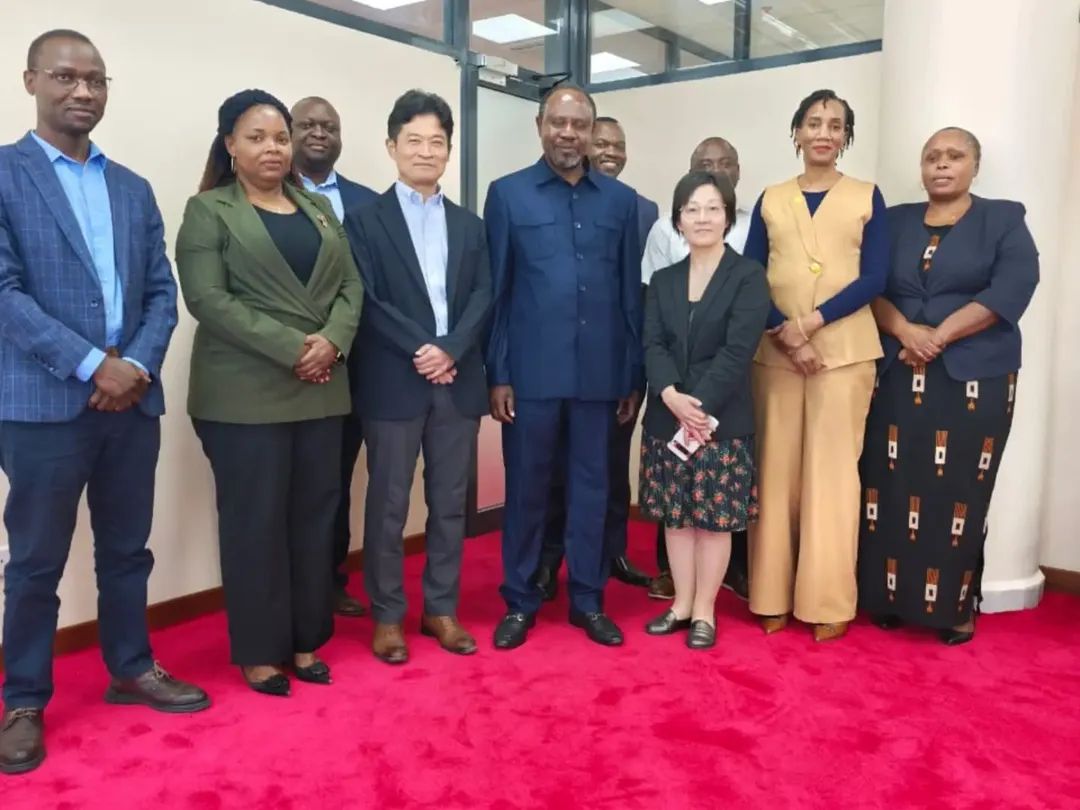
Dodoma. The Tanzanian government and the Japan International Cooperation Agency (JICA) have formalised an agreement to expand bilateral cooperation in the mining sector.
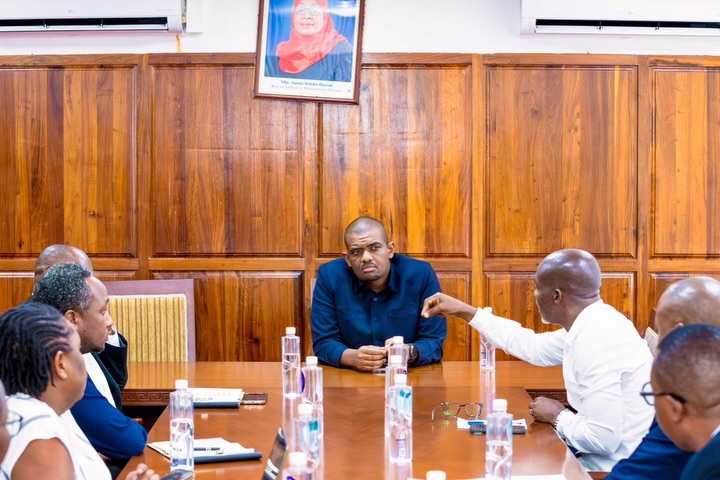
The announcement followed a high-level ministerial meeting in Dodoma on June 25, 2026.
Under the new framework, the Government of Japan will provide targeted funding via JICA.
This capital will directly support advanced geological research into critical and strategic minerals.
The expanded initiative builds upon a long-term developmental partnership between the two nations.
A central element of this collaboration is the Kizuna Project.
This project focuses strictly on human resource development and technical capacity building.
To date, the Kizuna Project has trained more than 30 Tanzanian mining professionals.
These experts underwent rigorous technical programs in Japan.
The training has directly enhanced operational efficiency within the Ministry of Minerals and its subsidiary regulatory bodies.
Addressing the delegation, Msafiri Mbibo, the Deputy Permanent Secretary for the Ministry of Minerals, lauded the impact of the initiative.
He noted that the newly acquired skills have significantly boosted institutional output.
He reaffirmed Tanzania’s commitment to deepening ties with Japan for mutual economic gain.
Dr Katsuyika Kuge, the JICA Chief Representative in Tanzania, commended the host nation for its transparent and effective governance of the mining industry.
He confirmed that JICA will now widen its research lens to address growing global resource demands.
The expanded exploration framework targets several high-value commodities.
These include copper, graphite, beryllium, and Heavy Rare Earth Elements (Heavy REE).
These materials remain indispensable to global technology supply chains and modern electronics.
JICA has established immediate strategic priorities for the incoming field research.
Initial exploration and mapping operations will focus explicitly on graphite and beryllium deposits.
Graphite serves as a cornerstone material for manufacturing lithium-ion battery anodes in electric vehicles.
Beryllium provides essential thermal conductivity for aerospace engineering, defence electronics, and telecommunications infrastructure.
The ministry of Minerals stated that the joint research will position Tanzania as a key participant in the global green energy transition.
Field operations under the newly expanded agreement are scheduled to commence in the upcoming financial quarter.