
Dar es Salaam. Tanzania has unveiled two major clean energy initiatives aimed at expanding electricity access to remote island communities and establishing a state-of-the-art natural gas distribution network in the country’s administrative capital.
In a significant move toward universal electrification, the ministry of Energy has allocated Sh273.6 million to implement a solar power distribution project across seven islands in the Musoma District.
The targeted areas include Nyasaungu, Muroba, Kagongo, Nyamasanje, Rukuba, and Iriga.
This initiative forms part of the broader national directive championed by President Samia Suluhu Hassan to ensure that every citizen gains access to reliable electricity regardless of geographic location.
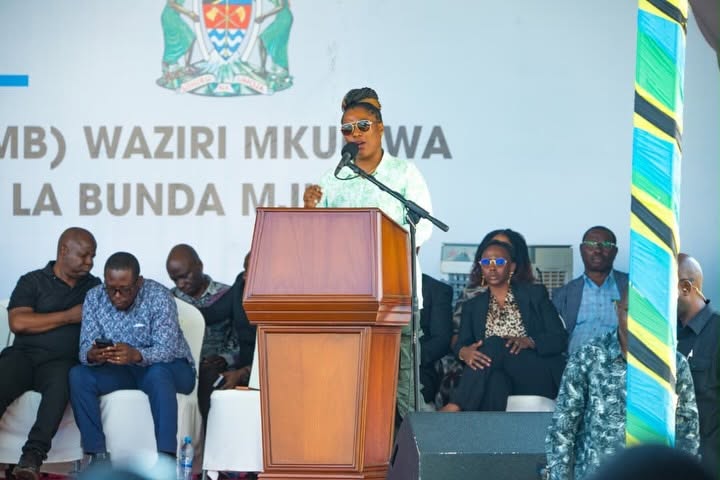
The Deputy Minister for Energy, Salome Makamba, announced the strategic funding during a working tour led by Prime Minister Mwigulu Nchemba to address public grievances within the Musoma Rural constituency.
Explaining the current electrification milestones, Ms Makamba noted that the government has achieved substantial progress, successfully extending the national grid to every village within the constituency.
The administration is now pivoting its focus toward connecting the remaining sub-villages that lack access.
Out of the 374 sub-villages in the district, approximately 100 have yet to be connected to the grid, while grid extension projects are actively underway in more than 50 other sub-villages.
The government has formally acknowledged a request from the local Member of Parliament to accelerate the process, aiming for complete coverage across all outstanding sub-villages by 2027.
This timeline aligns with the overarching national master plan to achieve comprehensive nationwide sub-village electrification by the year 2030.
Beyond domestic connection targets, the Ministry of Energy is actively reinforcing power infrastructure to stimulate economic productivity, particularly to support artisanal and small-scale miners operating within Musoma Rural.
To ensure that communities adjacent to existing infrastructure benefit immediately, Ms Makamba issued a strict directive to the Tanesco District Manager, ordering the immediate connection of all households situated near active transmission lines.
Concurrently, the state is heavily promoting clean cooking solutions by providing a subsidy exceeding 50 percent on liquefied petroleum gas stoves to make sustainable energy affordable for rural households.
Simultaneously, the government is advancing plans to transform Mtumba Government City in Dodoma into a flagship urban model for clean energy integration through an extensive natural gas distribution network.
The planned infrastructure will supply natural gas directly to ministerial buildings, foreign embassies, government institutions, commercial properties, hotels, restaurants, and residential zones within the administrative city.
Nuru Helambili, a geologist from the Ministry of Energy, disclosed the project details while engaging with the public at the Ministry’s pavilion during the 50th Dar es Salaam International Trade Fair, popularly known as Sabasaba.
The infrastructure blueprint features a central gas receiving terminal that will receive compressed natural gas transported via specialized vehicles from the mother station located at Mlimani City in Dar es Salaam.
The scope of the project encompasses the construction of a gas pressure reduction station, an interconnected local distribution network, and a dedicated natural gas refuelling station for compressed natural gas vehicles.
For the 2026/2027 financial year, the government will conclude the mandatory environmental and social impact assessments before initiating the procurement process for construction contractors.
The Tanzania Petroleum Development Corporation has allocated Sh14.40 billion to finance these foundational implementation phases.