
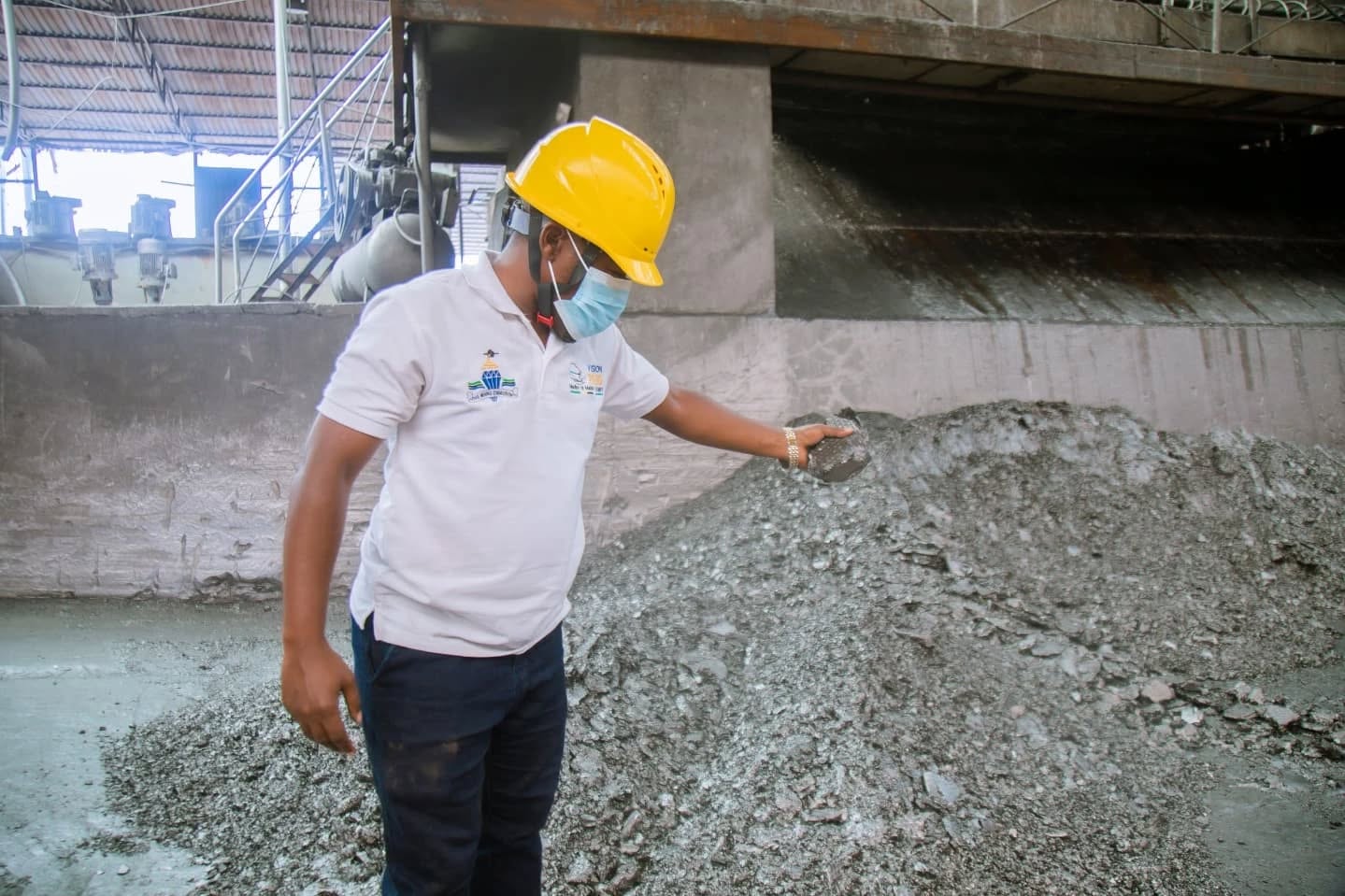
Handeni, Tanga. Tanzania has entered a new phase in its industrialisation drive with the commissioning of two graphite processing plants in Handeni District, Tanga Region, placing the country among Africa’s front-runners in the supply of a mineral critical for the global energy transition.
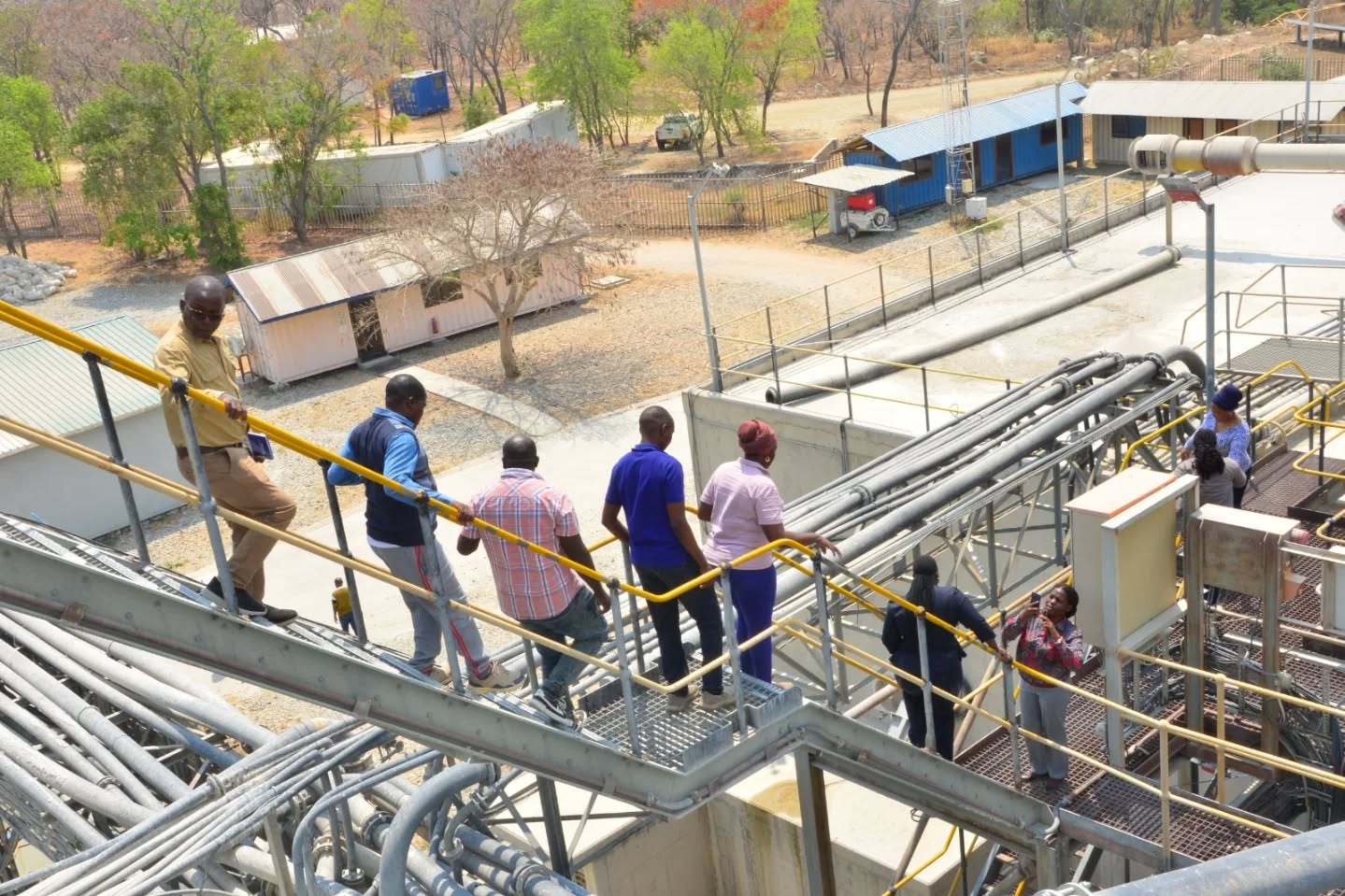
The facilities, operated by Godmwanga Gems Ltd and located in Kwedikabu and Kwamsisi villages, are the first in Tanzania to process graphite ore into high-purity material for industrial use.
The plants are wholly owned by Tanzanian entrepreneur Godlisten Mwanga, making them a rare example of large-scale, locally owned value addition in the country’s mining sector.
With a combined refining capacity producing graphite of up to 95 percent purity, the plants meet international standards for industries such as electric vehicle batteries, renewable energy storage, lubricants, and high-tech equipment.
Their establishment makes Tanzania the third African nation to host industrial-scale graphite processing facilities, following Madagascar and Mozambique.
Positioning in the global green economy
Plant B Manager, Mr Henry Joseph, told the Ministry of Minerals’ communications unit on September 8, 2025, that the plants are already reshaping the socio-economic landscape of Handeni.
“This investment strengthens Tanzania’s role in the global green economy while providing jobs and improving infrastructure in health, education, and transport within the district,” he said.
According to the company, more than 600 formal jobs have been created, with the majority taken by residents of nearby communities.
Hundreds more benefit indirectly through supply chain opportunities, ranging from spare parts manufacturing and transport services to catering and small-scale retail.
Training programmes in occupational safety and technical skills have been rolled out, preparing a new generation of skilled workers in a district previously known more for subsistence farming than industrial activity.
For workers like Subira Hassan and Hellen David, both employed at the Kwamsisi plant, the jobs have provided financial stability and improved living standards.
“The company has changed our lives and brought development to our villages,” they said.
Local leaders also highlight the company’s corporate social responsibility initiatives, which have seen the construction and rehabilitation of schools, health centres, and feeder roads.
Industrial policy and mineral value addition
The commissioning of the Godmwanga plants is consistent with the government’s policy of shifting from raw mineral exports to domestic processing and value addition.
Tanzania is endowed with significant graphite reserves, particularly in Tanga, Lindi and Ruangwa, but until recently the mineral was exported in raw form, denying the country higher returns from the global market.
The government’s 2024 Foreign Policy and the 2021 Mining Act amendments emphasise local beneficiation and partnerships that retain value in the domestic economy.
Godmwanga’s entry into processing is therefore seen as a practical demonstration of how private investment can align with state policy, delivering both industrialisation and community development.
Regional comparisons
Across the continent, Madagascar and Mozambique have positioned themselves as major graphite exporters.
Madagascar, with deposits dating back to colonial times, remains a key supplier to Europe and Asia, while Mozambique’s Balama mine, operated by an Australian company, is among the largest in the world.
Unlike these countries, Tanzania is entering the industry at a time when global demand is projected to accelerate sharply due to the energy transition.
A May 2025 report by the International Energy Agency (IEA) estimated that total graphite demand stood at 4.8 million tonnes in 2024, with clean energy technologies alone consuming 1.5 million tonnes.
The IEA projects total demand to reach 8.2 million tonnes by 2030, with the bulk driven by electric mobility and energy storage.
By leveraging local ownership and processing capacity, Tanzania aims to avoid the pitfalls of over-reliance on raw exports while positioning itself as a reliable partner in international supply chains.
Global markets and foreign exchange earnings
Godmwanga Gems has already secured buyers in the United States, China and South Korea, placing Tanzania directly in competition with established exporters.
The inflow of foreign exchange strengthens the country’s balance of payments while enabling the government to collect more revenue through royalties and taxes.
Officials at the Ministry of Minerals say projects like Godmwanga’s are vital in diversifying export earnings beyond gold, which has long dominated Tanzania’s mineral sector.
Graphite, classified by the European Union and the United States as a “critical mineral,” is expected to remain in high demand for decades, making it a strategic addition to the country’s export basket.
Local transformation in Handeni
Beyond global markets, the impact of the plants is most visible in Handeni itself.
Once associated with underdevelopment and poor infrastructure, Kwamsisi and Kwedikabu are emerging as industrial villages.
New businesses, from shops to transport services, are mushrooming as disposable incomes rise.
The company has also rehabilitated feeder roads to facilitate the movement of raw materials and finished products, indirectly improving access for surrounding communities.
For women and youth, in particular, the investment has created both direct employment and opportunities for entrepreneurship in the supply chain.
Local contractors have been engaged in providing services ranging from construction to catering, building a new layer of small-scale enterprises that feed into the industrial economy.
A model for industrialisation
Analysts note that Godmwanga Gems provides a model for how Tanzania’s mineral resources can be harnessed to support industrialisation.
Instead of exporting unprocessed ore, the company’s decision to refine graphite locally creates industrial capacity, skills, and infrastructure that extend far beyond mining.
This approach resonates with the country’s National Development Vision 2025, which identifies industrialisation as a central pillar of long-term growth, and the forthcoming Vision 2050, which continues to emphasise value addition, green growth and domestic capacity building.
Challenges and opportunities
Despite these gains, challenges remain. Processing capacity is still modest compared to Mozambique’s Balama project, which produces hundreds of thousands of tonnes annually.
Tanzania will need to attract further investment to scale up production and compete globally. Infrastructure bottlenecks, particularly in transport and energy, also need addressing if the plants are to operate at maximum efficiency.
Nonetheless, government officials argue that the model of 100 percent Tanzanian ownership, combined with community participation, makes Godmwanga’s project a unique case in Africa.
“This is more than a mining operation; it is an industrialisation project that demonstrates how minerals can anchor a green economy,” said one official.