
Dodoma. The Tanzanian government has unveiled a Sh62.33 trillion national budget for the 2026/27 financial year, signalling an intensified push towards domestic revenue mobilisation and reduced reliance on external financial assistance, even as fiscal pressures continue to shape the country’s development agenda.
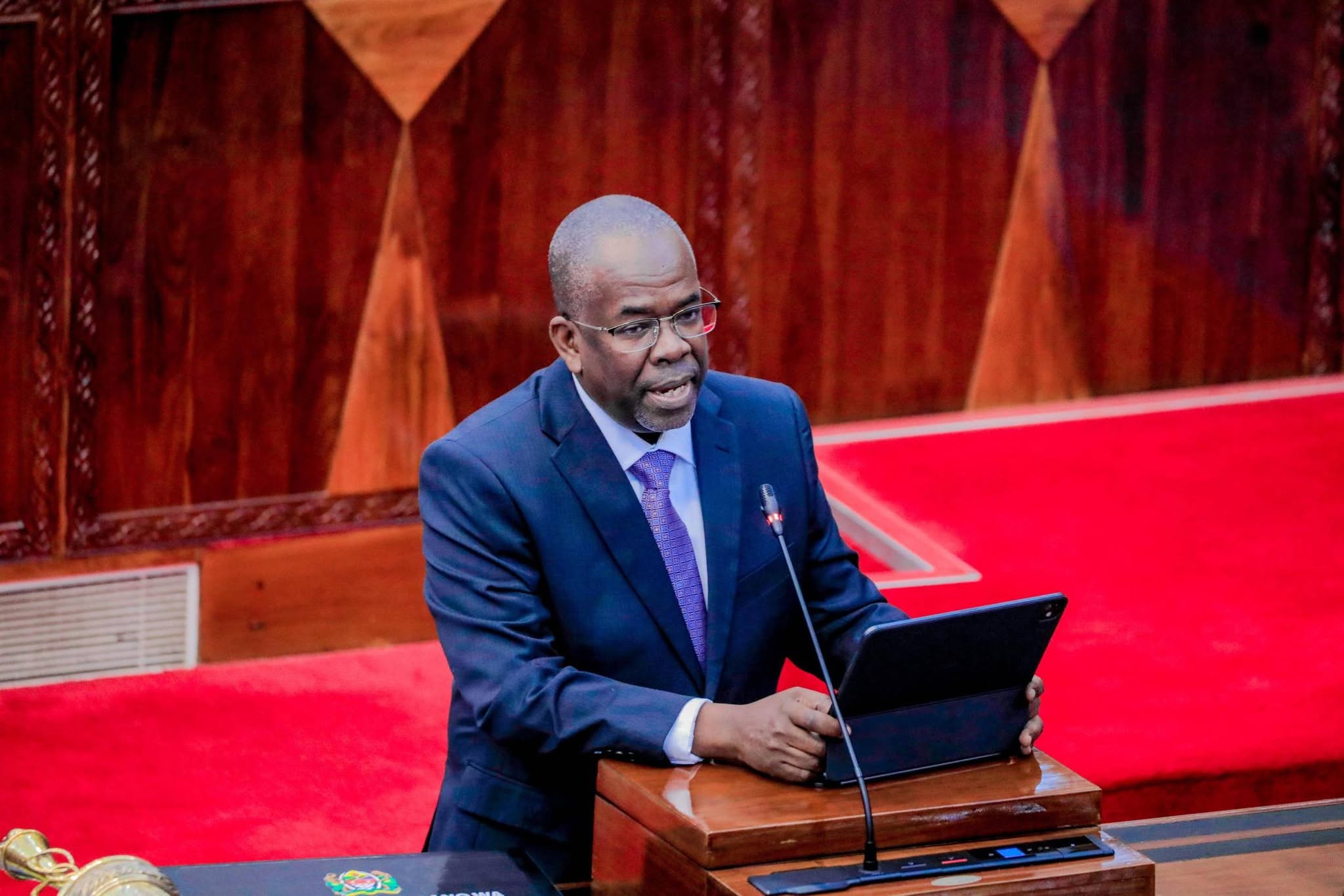
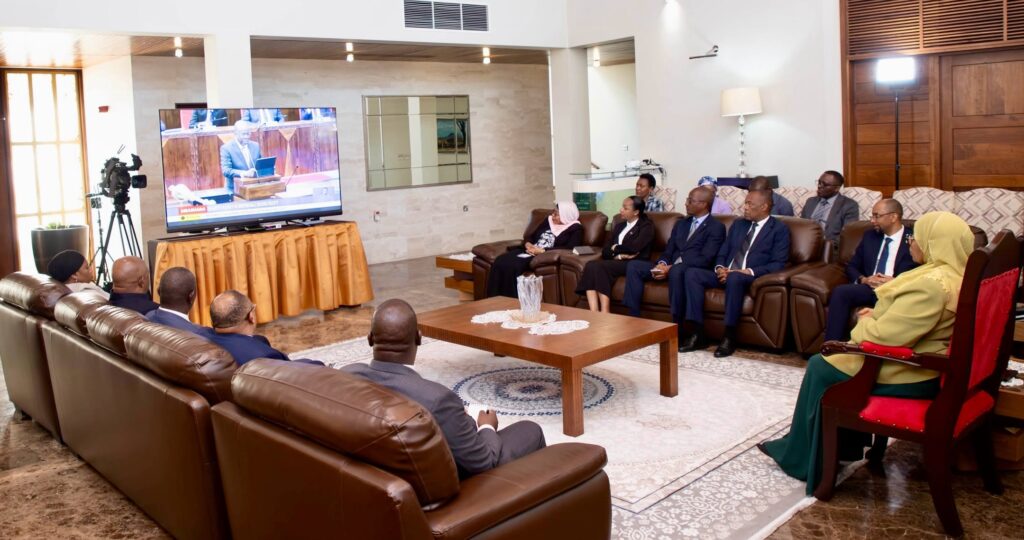
Tabling the estimates in Parliament on June 11, 2026, the Minister for Finance, Amb Khamis Mussa Omar, said the proposed budget represents a 10.3 percent increase compared to the 2025/26 financial year, underscoring what he described as a continued expansion of public investment alongside efforts to stabilise macroeconomic fundamentals.
Amb Omar told lawmakers that the government expects to raise a total of Sh46.79 trillion in revenue, with tax collections forming the backbone of the fiscal framework.
“Tax revenue forms the bulk of this collection at Sh36.99 trillion. Other revenue streams will bring in Sh9.24 trillion. This includes Sh1.97 trillion from Local Government Authority own sources. Grants from development partners are projected at Sh563.1 billion,” he said.
The minister noted that the structure of the budget reflects a deliberate policy shift aimed at strengthening fiscal sovereignty, with domestic resources expected to finance 74.2 per cent of total expenditure.
He added that grants from development partners are projected to decline by 39.1 percent, attributing the reduction to evolving policy directions among international partners.
“This drop stems directly from shifting policy landscapes among international partners,” he said, while expressing appreciation for long-standing support from development allies.
Despite the anticipated reduction in external grants, Amb Omar emphasised that the government remains committed to maintaining strategic partnerships while simultaneously urging greater domestic participation in financing national development priorities.
He called on citizens to actively engage in productive economic activities and comply with tax obligations, framing domestic contribution as a central pillar of the country’s development trajectory.
“The citizens bear the primary responsibility for national development. We urge Tanzanians to engage fully in economic activities and pay taxes voluntarily,” he said.
On the expenditure side, the government has proposed a total allocation of Sh54.50 trillion for recurrent and development spending, excluding principal debt repayments.
The spending framework reflects a continued balancing act between sustaining public services, meeting debt obligations, and expanding investment in infrastructure and social sectors.
Employee-related costs, including salaries and pensions, are projected at Sh10.13 trillion, highlighting the significant weight of public sector obligations within the national budget structure.
Goods and services are allocated Sh5.22 trillion, intended to support the operational capacity of government institutions across sectors.
Interest payments on public debt are expected to absorb Sh6.86 trillion, underscoring the continued fiscal pressure posed by borrowing accumulated over previous financial years.
Subsidies are set at Sh25.32 trillion, representing one of the largest components of recurrent expenditure, while pension benefits and transfers account for Sh1.01 trillion.
In addition, Sh2.33 trillion has been earmarked for non-financial assets, signalling continued investment in infrastructure and capital development projects.
Other expenditure obligations amount to Sh3.63 trillion.
Taken together, the revenue and expenditure projections result in a budget deficit of Sh7.71 trillion.
According to the minister, this gap will be financed through a combination of domestic and external borrowing, in line with the government’s Medium-Term Debt Management Strategy.
“The state will manage this deficit through domestic and external borrowing. These operations will follow the established Medium-Term Debt Management Strategy,” Amb Omar said.
Total borrowing planned for the 2026/27 financial year stands at Sh15.54 trillion.
Of this, domestic borrowing is projected at Sh6.56 trillion, reflecting continued reliance on the local financial market to support budgetary needs.
External financing will contribute a combined Sh8.98 trillion, comprising Sh6.55 trillion in concessional loans and Sh2.43 trillion in commercial borrowing.
The mix indicates a cautious approach to external debt, balancing lower-cost concessional funding with market-based instruments where necessary.
At the same time, the government has allocated Sh7.84 trillion for amortisation of maturing debt, a reflection of the rising profile of debt servicing obligations within the fiscal framework.
Analysts have often noted that such repayments are increasingly shaping the structure of annual budgets across emerging economies, where infrastructure-led borrowing cycles have expanded in recent years.
The 2026/27 budget therefore emerges as both an expansionary and consolidative fiscal statement, seeking to sustain development expenditure while tightening domestic revenue collection and managing debt exposure.
As parliamentary debate on the estimates is expected to start on Monday June 15, 2026, attention will focus on the feasibility of revenue projections, the sustainability of borrowing plans, and the effectiveness of measures aimed at broadening the tax base in an economy still characterised by a large informal sector.
The budget now moves into committee scrutiny, where ministries and departments will defend their allocations before final approval, setting the tone for the country’s fiscal direction in the year ahead.