
Dar es Salaam. Tanzania’s macroeconomic landscape has demonstrated exceptional resilience and accelerating momentum, with new official data revealing that the nation’s Gross Domestic Product (GDP) expanded significantly to reach Sh234.104 trillion in 2025, evaluated at constant 2019 prices.
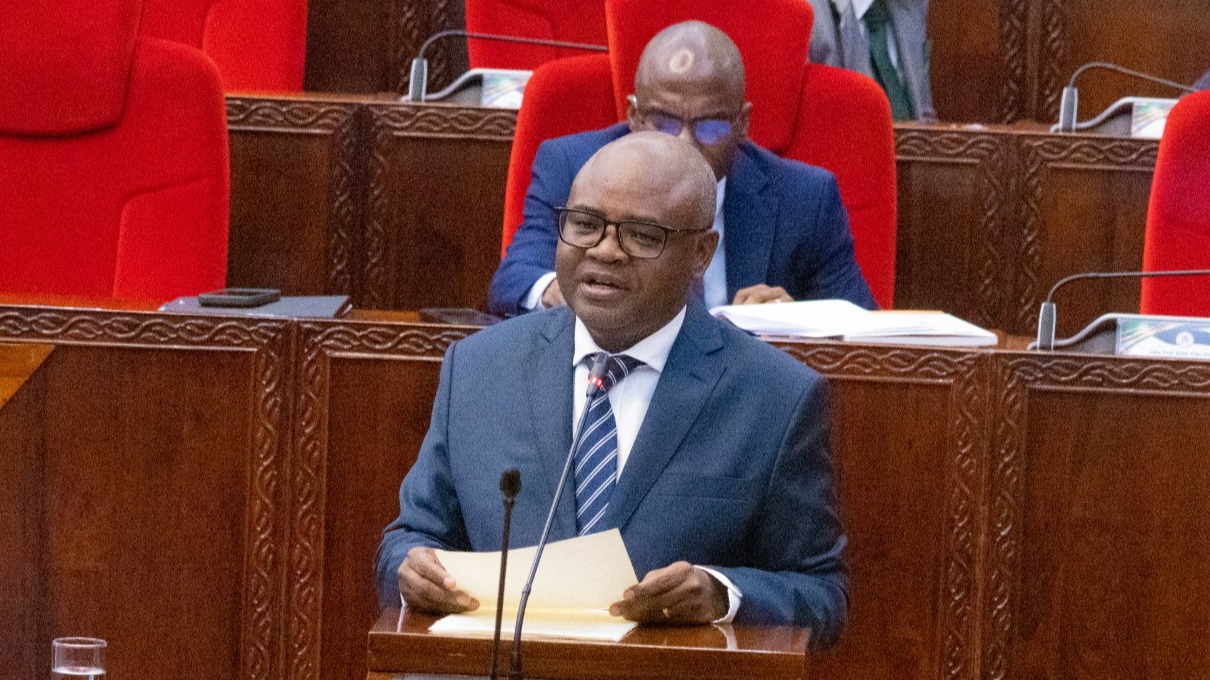
Presenting the State of the Economy speech in Parliament on June 11, 2026 the minister of State in the President’s Office [Planning and Investment] Prof, Kitila Mkumbo said this substantial increase from the Sh211.975 trillion recorded in 2024 represents a robust trajectory for the East African nation, positioning its economy at an equivalent value of $91.81 billion, compared to $81.2 billion in the preceding year.
This upward macroeconomic trend has translated directly into improved individual wealth metrics across the country.
The average GDP per capita in Tanzania witnessed a notable rise of 7.4 percent, reaching Sh3,544,124, which equates to roughly $1,390 per person in 2025.
This marks a solid improvement from the per capita average of Sh3,299,637, or $1,264, logged during 2024, highlighting a tangible expansion in the standard of living and economic productivity.
An analysis of sectoral contributions reveals that the traditional pillars of the Tanzanian economy continue to hold substantial weight.
The agricultural sector remained the primary foundation of economic activity, generating 24.3 percent of the total GDP.
The construction industry followed as the second-largest contributor, accounting for 11.9 percent, closely shadowed by mining and quarrying at 10.3 percent.
The commercial landscape also remained vibrant, with wholesale and retail trade, alongside vehicle repairs, bringing in 8.6 percent, while the transport and storage sector secured an 8.3 percent share of the macroeconomic aggregate.
While agriculture and construction sustained the baseline volume, a cohort of highly dynamic sectors drove the overarching growth narrative of 2025. Financial and insurance activities recorded the most spectacular expansion, leading all sectors with a growth rate of 15.7 percent.
The electricity and gas supply sector followed with an impressive 11.8 per cent expansion, reflecting ongoing infrastructure developments.
Mining and quarrying demonstrated dual strength by growing at 9.4 per cent, while the information and communication sector expanded by 8.8 percent.
Additionally, the arts and entertainment sector flourished with an 8.5 percent increase, and the logistics engine of transport and storage moved forward at an 8.0 percent pace.
Domestic price pressures experienced a mild uptick over the course of the year.
The annual inflation rate averaged 3.3 percent in 2025, representing a slight rise from the 3.1 percent observed in 2024.
Economists attribute this marginal increase primarily to escalating domestic food prices.
Crucially, however, the inflation rate remained well within the government’s medium-term targeted threshold of 3.0 to 5.0 percent.
Furthermore, Tanzania’s fiscal discipline ensured compliance with regional economic convergence benchmarks, remaining comfortably underneath the East African Community ceiling of 8.0 percent and aligning tightly with the Southern African Development Community target range of 3.0 to 7.0 percent.
Parallel to domestic expansion, Tanzania’s integration into global capital networks has reached new heights.
According to the UN Conference on Trade and Development World Investment Report 2025, Foreign Direct Investment inflows into the country surged to $1.72 billion.
This signifies an extraordinary 28.3 per cent increase compared to the $1.34 billion secured previously, reflecting heightened international investor confidence in the policy environment led by the current administration.
The distribution of foreign capital underscores a targeted interest in both extractive resources and modern services.
The mining and quarrying sector captured the largest slice of global capital, pulling in $442.2 million.
The financial and insurance services sector followed robustly, attracting $401.3 million from international markets.
Industrial development also saw gains, with manufacturing pulling in $223.1 million, while digital infrastructure benefited from a $152.1 million injection into information and communication.
Together, these four sectors comprised a dominant 73.6 percent share of total inward FDI.
Concurrently, there has been a dramatic diversification of investor interest towards foundational economic activities.
Strategic sectors comprising agriculture, construction, transport, and storage collectively drew 19.4 percent of total FDI, a substantial jump from the minor 5.8 percent market share these sectors managed to attract previously.
This comprehensive inflow of external capital highlights Tanzania’s rising stature on the continent, with global data validating its position as the eleventh largest recipient of Foreign Direct Investment in Africa, cementing its reputation as one of the continent’s premier economic frontiers.