

Arusha. Tanzania’s National Supply Chain Management Policy has been identified as a critical instrument for implementing the National Development Vision 2050 by promoting industrialisation through greater use of locally produced goods, services and raw materials.
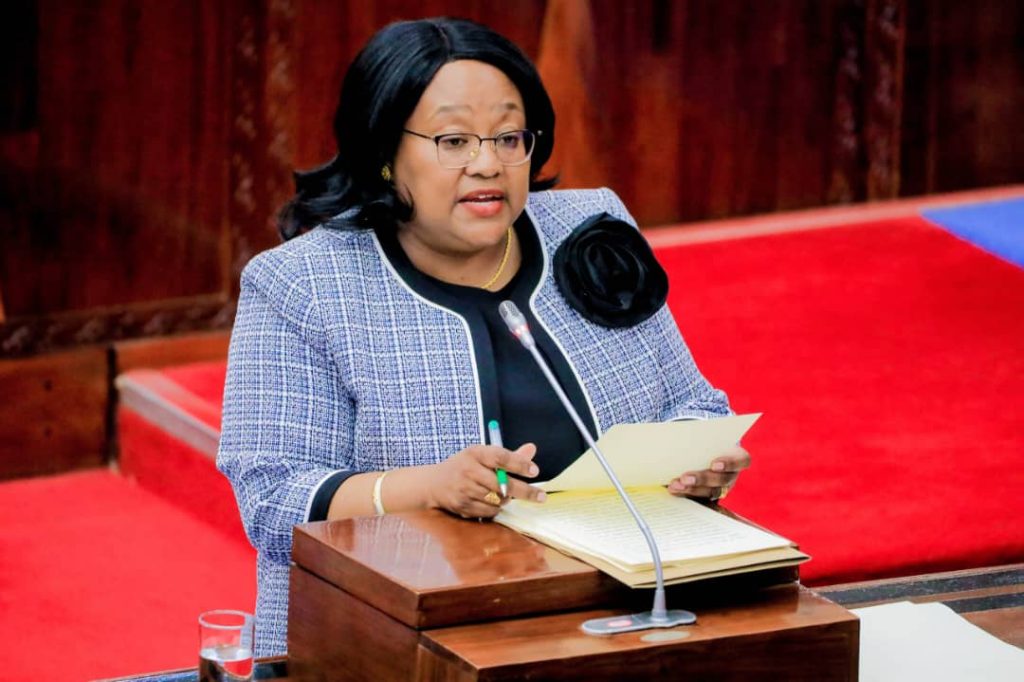
The Acting Commissioner for the Public Procurement Policy Department, Alex Haraba, made the remarks while presenting a paper during the 10th Public Procurement Conference 2026 at the Arusha International Conference Centre (AICC).
Haraba said the policy is designed to expand the use of locally manufactured products by widening market opportunities for domestic producers and service providers.
He said the initiative would strengthen the competitiveness of the private sector, create employment, increase government revenue, attract investment and stimulate the growth of local industries.
“The objective of the policy is to establish a comprehensive framework for effective supply chain management and implementation.
It aims to improve service delivery and the efficient use of resources, strengthen the market for locally produced goods, services and raw materials, and increase the participation of the private sector and special social groups,” Haraba said.
He explained that the policy also seeks to ensure the timely acquisition of goods and services that meet public procurement objectives, improve the management of government cargo clearance and disposal, strengthen systems for receiving and returning goods, services and construction works, and enhance the storage, preservation, utilisation, distribution and disposal of government assets and supplies.
According to Haraba, the policy incorporates cross-cutting issues, including environmental conservation, climate change mitigation and adaptation, and the promotion of good governance throughout supply chain operations.
He said the policy would deliver significant improvements in the inspection, receipt and return of goods by ensuring that products, services and construction works meet required quality standards.
This, he noted, would reduce losses arising from substandard supplies, improve the efficiency of public resource utilisation and enhance the quality of services delivered to citizens.
Haraba said the policy was developed to address longstanding weaknesses in supply chain management.
Before its introduction, public procurement and supply chain activities were carried out without an integrated policy framework linking the various stages of the supply chain.
He noted that key challenges included difficulties in procuring goods and services that met public procurement objectives, weak systems for government cargo clearance and disposal, deficiencies in receiving and returning goods, inadequate management of government assets, and inefficient distribution and disposal of goods and equipment.
Other challenges included limited integration of environmental protection, climate change considerations and good governance principles into supply chain activities.
Haraba said the full implementation of the National Supply Chain Management Policy is expected to strengthen supply chain governance, increase the use of locally produced goods, services and raw materials, improve the productivity and competitiveness of domestic industries, expand private sector participation, create more jobs and raise government revenue while ensuring more efficient use of public resources.
He noted that prior to 2025, procurement activities were implemented without a comprehensive policy framework integrating all aspects of the supply chain.
The government subsequently formulated the National Supply Chain Management Policy to address that gap and support broader economic transformation under the National Development Vision 2050.