
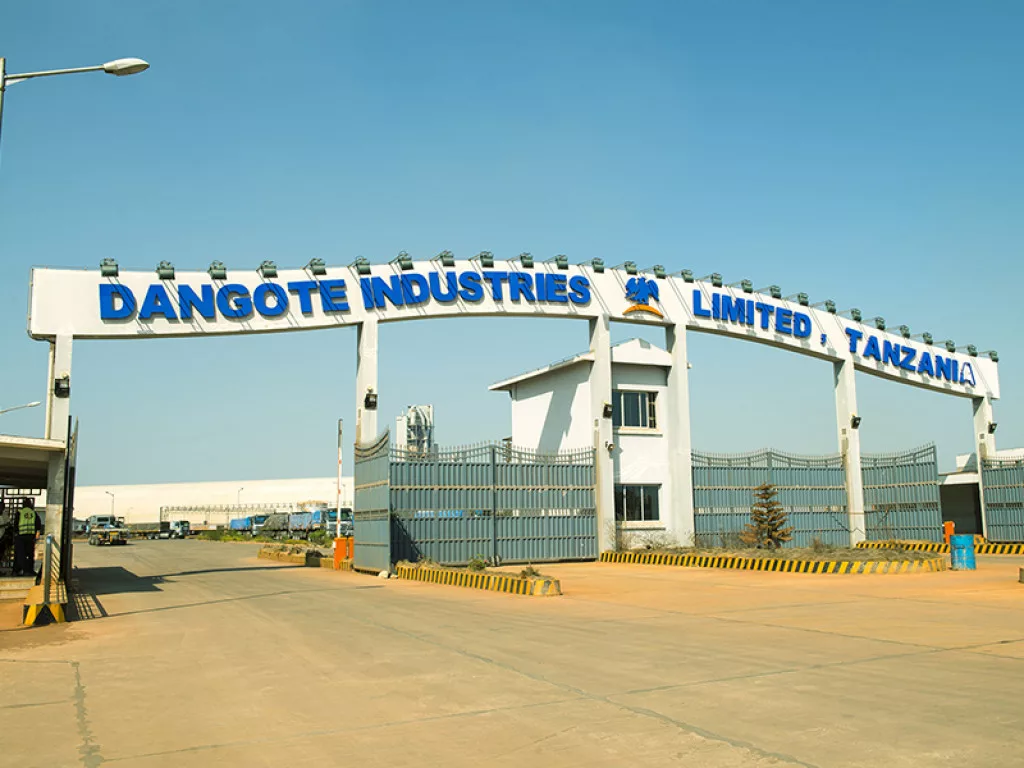
Dar es Salaam. Dangote Cement Limited has applied for a licence to generate electricity for its cement manufacturing operations in Mtwara, with the Energy and Water Utilities Regulatory Authority (EWURA) inviting the public to submit comments before a decision is made.
In a public notice issued under Section 19 of the EWURA Act, Cap 414, the regulator said it had received an application from Dangote Cement Limited seeking a licence to generate electricity at its production facility in Mtwara Region.
EWURA has called on stakeholders and members of the public to submit written comments or objections regarding the application within 21 days from the date of publication of the notice.
The authority said any person wishing to inspect the licence application may do so by submitting a written request.
According to the notice, the proposed power generation facility is located at Kilometre 23 along the Mtwara-Lindi Road, Plot A, Plot No. 1, in Hiari Village, Mtwara District, Mtwara Region.
The application states that the plant will comprise two electricity generation units powered by natural gas or coal, with a combined installed capacity of 50 megawatts.
The electricity generated will be used exclusively for internal operations at the cement manufacturing plant.
The licence being sought is for electricity generation only and would be valid for five years if approved by the regulator.
The notice identifies the shareholders of the applicant as Dangote Cement PLC, Dangote Industries Limited and Alhaji Aliko Dangote, all with registered addresses in Lagos, Nigeria.
The public notice was issued by the EWURA Director General on August 3, 2026, as part of the statutory licensing process, which requires public participation before the authority reaches a final determination.
If approved, the captive power project would strengthen the cement producer’s energy security by enabling it to generate electricity for its own industrial operations, reducing dependence on external power supplies while supporting uninterrupted production at one of Tanzania’s largest cement manufacturing plants.