
Dar es Salaam. President Samia Suluhu Hassan has described modern transport infrastructure as a key pillar in Tanzania’s efforts to achieve the goals of the National Development Vision 2050.
She said efficient and integrated transport was critical to building a competitive economy and ensuring inclusive development.
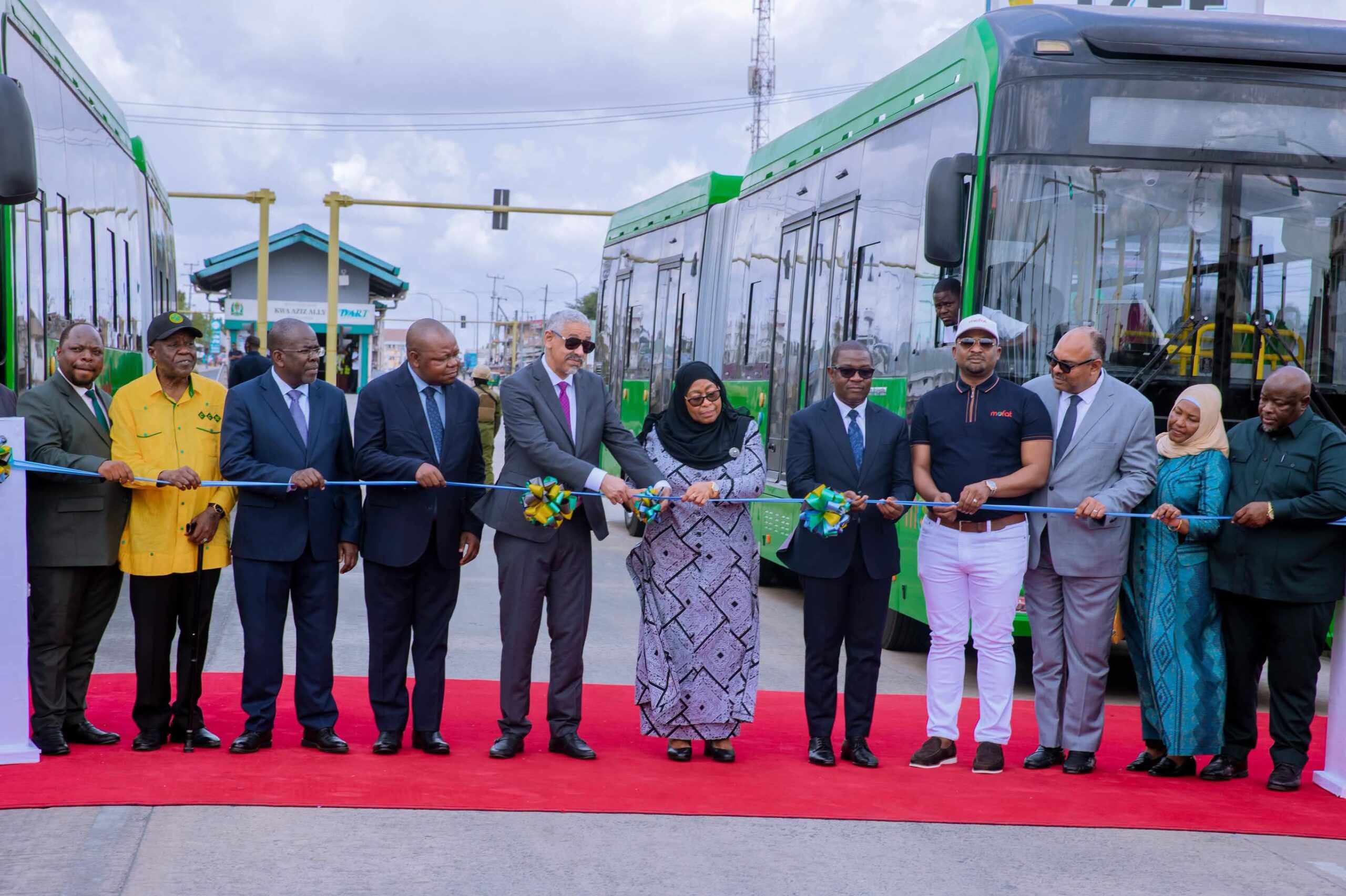
President Samia made the remarks yesterday, Friday, August 7, 2026, while inaugurating the second phase of the Bus Rapid Transit (BRT II) infrastructure project in Dar es Salaam.
She said Vision 2050 identifies integrated transport as an important driver of national development.
The President said investment in BRT infrastructure was therefore not only about improving public transport. It was also an economic investment.
“Besides providing services to citizens, this investment has a direct role in implementing the national direction of increasing productivity, attracting investment and expanding employment opportunities,” she said.
President Samia said the construction of dedicated BRT routes, together with the use of gas-powered buses, was consistent with the Government’s efforts to establish a modern transport system.
The system is intended to move people, goods and services more quickly and reliably.
She said reliable transport was particularly important for Dar es Salaam.
The city is the country’s largest commercial centre and a major gateway for trade, investment and regional commerce.
Rapid population growth and expanding economic activity have increased demand for efficient urban transport.
For years, traffic congestion has been one of the major challenges facing Dar es Salaam. Long commuting times have affected workers, businesses and the movement of goods across the city.
The BRT system was introduced as part of efforts to address these challenges. It provides dedicated lanes and stations designed to improve the speed and reliability of public transport.
The first phase of the system established a major corridor between Kimara and Kivukoni, with connections to other parts of the city.
Subsequent phases have been designed to extend the network and bring more residents within reach of rapid public transport.
BRT II has now strengthened the connection between Mbagala and the city centre.
The route passes through Kilwa, Chang’ombe, Sokoine and Kawawa roads.
It provides an important transport link between densely populated areas in the south of Dar es Salaam and the central business district.
According to President Samia, the impact is already reflected in travel times and passenger numbers.
She said completion of BRT II had reduced the journey between Mbagala and the city centre from an average of one-and-a-half hours to about 30 minutes.
Daily passenger numbers have also increased sharply.
President Samia said the number of passengers using the service had risen from about 30,000 to 90,921 a day.
“The increase of more than three times in the number of passengers tells us that citizens have embraced this service. It has also helped reduce congestion in the Mbagala corridor and Dar es Salaam generally,” she said.
The increase in ridership points to the growing demand for reliable public transport in the city.
It also highlights the relationship between transport infrastructure and urban productivity.
When commuting times are reduced, workers can spend less time travelling and more time at their workplaces or businesses.
Faster movement also improves access to markets, public services and other economic opportunities.
The government views such investments as part of a broader strategy to strengthen infrastructure and support economic transformation.
President Samia said the government would continue mobilising resources from different sources to finance development projects.
These sources include domestic revenue, capital markets, public-private partnerships and cooperation with domestic and international financial institutions.
She said the approach would enable Tanzania to finance major infrastructure projects while expanding the country’s capacity to support long-term economic growth.
The President also called on citizens to protect public infrastructure.
She said infrastructure projects were implemented using substantial public resources.
Damage to the facilities therefore created additional repair costs and could delay the implementation of other development projects.
She particularly urged young people to take responsibility for protecting the infrastructure.
President Samia said the facilities should be viewed as part of the foundation for development today and for future generations.
BRT expansion
The Government is also planning further expansion of the BRT network as Dar es Salaam and its surrounding areas continue to grow.
President Samia said the third phase would extend the network towards Mkuranga.
Other planned routes include Bunju–Bagamoyo and Gongo la Mboto–Kisarawe.
The planned expansion is intended to improve connectivity between the city and rapidly developing areas outside the existing BRT corridors.
It is also expected to strengthen the integration of public transport across the wider metropolitan area.
The expansion reflects the Government’s broader approach to urban planning.
Dar es Salaam’s transport needs have grown alongside its population, commercial activity and physical expansion.
An expanded rapid transport network can help address congestion while improving access to employment, education, markets and essential services.
The government has increasingly placed infrastructure at the centre of its development strategy.
Roads, railways, ports, airports and urban transport systems are being developed to support movement within Tanzania and strengthen connections with regional and international markets.
The BRT system forms part of this wider transport network.
Its importance extends beyond passenger movement.
Efficient urban transport can reduce the economic cost of congestion and support businesses that depend on the movement of workers, customers and services.
For Tanzania, the investment also comes as the country seeks to implement Vision 2050, which sets out a long-term ambition for a more competitive, productive and inclusive economy.
President Samia said modern infrastructure would remain central to that ambition.
She said the government would continue implementing integrated transport projects that improve productivity, attract investment and create employment.
The BRT expansion is therefore being positioned not simply as an urban transport project, but as part of the infrastructure foundation required to support Tanzania’s long-term economic transformation.
As Dar es Salaam continues to expand, the effectiveness of the city’s transport system will remain closely linked to its ability to accommodate economic growth.
The completion of BRT II marks another step in that effort, while the planned expansion towards Mkuranga, Bagamoyo and Kisarawe points to a wider transport network designed to serve a growing metropolitan economy.