

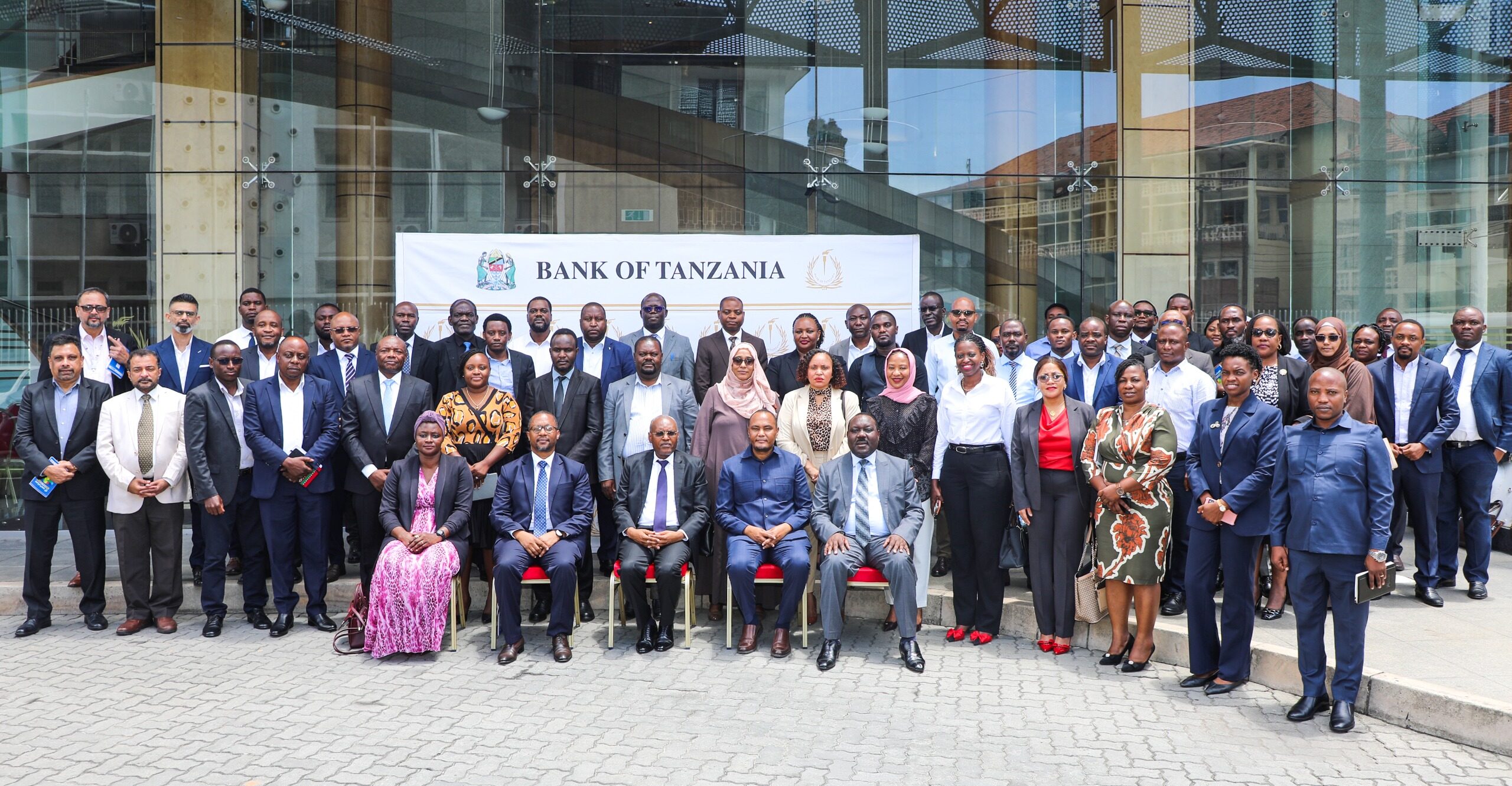
Dar es Salaam. The Bank of Tanzania (BoT) has engaged key financial sector stakeholders in consultations on a proposed plan to establish a national credit guarantee company aimed at expanding access to finance and strengthening the role of the private sector in economic development.
The planned entity, to be known as Tanzania Credit Guarantee PLC, is expected to oversee the issuance and management of credit guarantees, a move authorities say will improve efficiency in the administration of guarantee schemes and support broader economic policy goals.
The consultative meeting was held on March 12, 2026, at the central bank’s headquarters in Dar es Salaam and was chaired by the BoT Deputy Governor for Economic and Financial Policies, Yamungu Kayandabila.
Participants included representatives from several financial sector institutions and regulatory bodies, including the Capital Markets and Securities Authority (CMSA), the Tanzania Insurance Regulatory Authority (TIRA), insurance companies, collective investment schemes, pension funds and the Tanzania Private Sector Foundation (TPSF).
Officials said the initiative seeks to align financial sector mechanisms with the ambitions of Tanzania Development Vision 2050, a long-term national strategy aimed at strengthening the country’s economy and expanding private sector participation in development activities.
According to the central bank, the establishment of the new company will also help separate the BoT’s regulatory responsibilities from operational roles related to credit guarantee provision.
Authorities believe such a separation will reduce potential conflicts of interest while enhancing operational efficiency and governance within the guarantee framework.
In addition, the proposed company is expected to encourage innovation in financial guarantee services and improve the capacity of institutions involved to respond more quickly to evolving market demands.
Currently, the Bank of Tanzania manages two credit guarantee schemes designed to support businesses and expand financing opportunities in key sectors of the economy.
These include the Export Credit Guarantee Scheme (ECGS) and the SME Credit Guarantee Scheme (SME-CGS), both established by the government to support lending to businesses that may have viable projects but lack sufficient collateral to secure loans from banks and other financial institutions.
Under these arrangements, the government provides guarantees to financial institutions to encourage them to extend credit to borrowers undertaking productive ventures.
The schemes are intended to create a more supportive environment for the development and expansion of economic projects across the country.
Authorities say such mechanisms play a crucial role in facilitating access to finance for exporters and small and medium-sized enterprises, sectors widely regarded as important drivers of employment creation and economic diversification.
Through the guarantee schemes, the government aims to stimulate investment, promote export activity, and contribute to the growth of the national economy by enabling businesses to access the capital required to expand operations.
Officials noted that the creation of Tanzania Credit Guarantee PLC would allow these initiatives to operate under a specialised institutional framework capable of mobilising broader participation from financial sector stakeholders.
By bringing together regulators, investors and private sector institutions, policymakers expect the new structure to enhance the sustainability and reach of credit guarantee programmes while supporting the country’s broader development objectives.
The consultations are part of ongoing efforts by the Bank of Tanzania and other stakeholders to strengthen financial sector infrastructure and ensure that financing mechanisms effectively support Tanzania’s long-term economic transformation agenda.