
Dodoma. The ministry of Transport has requested Parliament to approve Sh2.87 trillion for the 2026/27 financial year, with the bulk of the funds earmarked for development projects dominated by the Standard Gauge Railway (SGR), ports and aviation infrastructure.
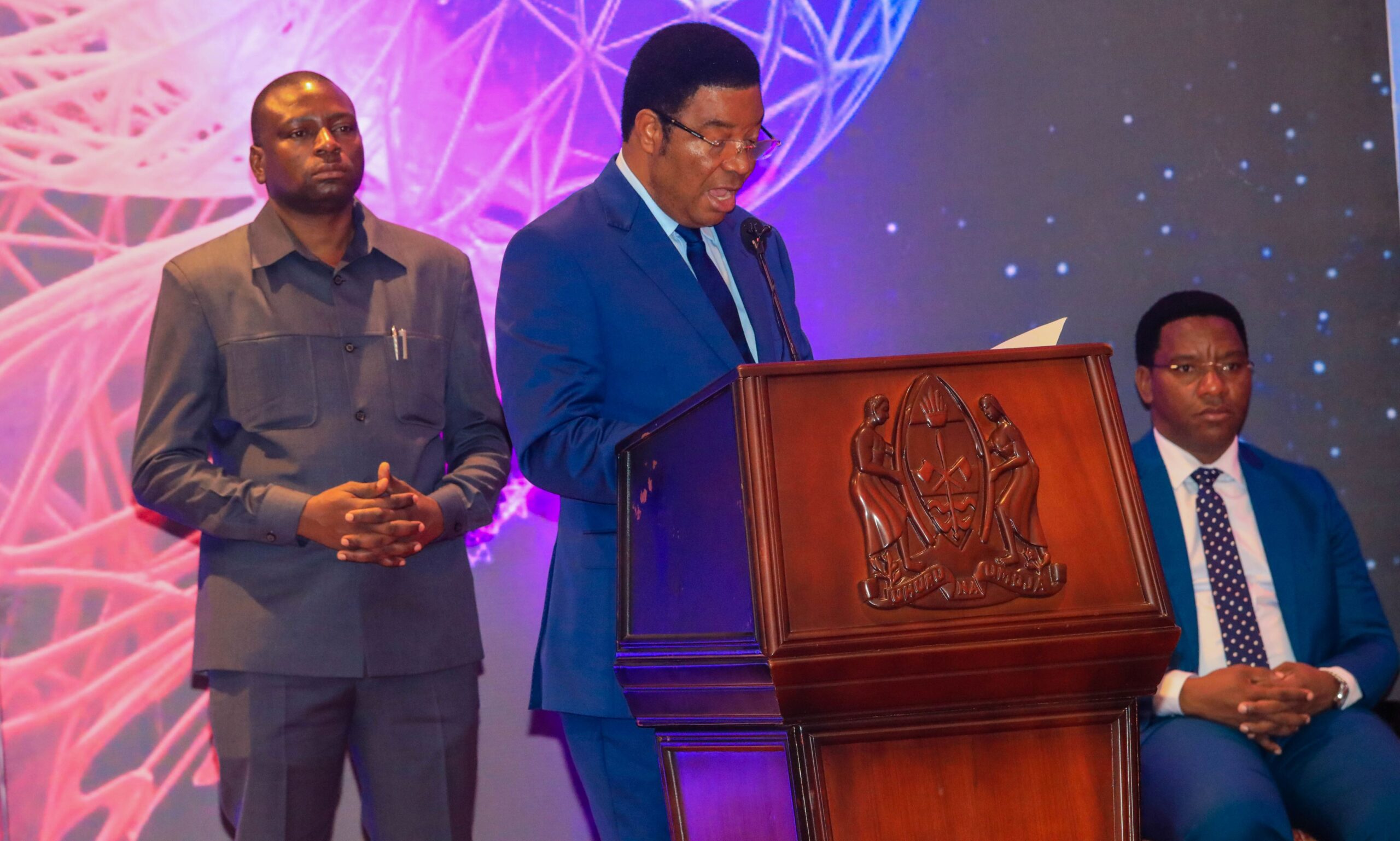
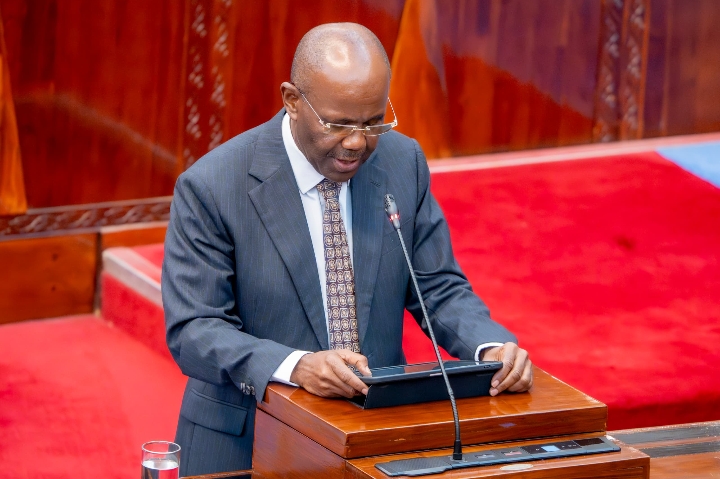
Presenting the ministry’s budget speech in Parliament on Wednesday, May 13, 2026 the minister for Transport, Prof Makame Mbarawa, said the government planned to spend Sh2.746 trillion on development expenditure and Sh126.04 billion on recurrent expenditure.
The recurrent budget accounts for 4.38 percent of the ministry’s total allocation, while development spending represents 95.62 percent of the proposed budget.
According to the minister, Sh100.135 billion of the recurrent expenditure will cover salaries, while Sh25.906 billion will cater for other charges for the ministry and institutions receiving government subsidies.
Prof Mbarawa told Parliament that Sh2.452 trillion of the development budget would come from domestic sources, while Sh294.184 billion would be financed externally.
He said the ministry’s priorities for 2026/27 would include continued construction and operation of the SGR network, rehabilitation of metre gauge railway lines and the TAZARA railway, expansion of port infrastructure, strengthening of aviation services and continued shipbuilding and rehabilitation projects.
The minister also said the government would continue improving meteorological services, transport safety and sectoral training institutions.
The proposed budget comes after the ministry was allocated Sh2.746 trillion in the current 2025/26 financial year.
Out of that amount, Sh125.438 billion was for recurrent expenditure while Sh2.621 trillion was allocated to development projects.
Prof Mbarawa said by March 2026, the ministry had received Sh1.374 trillion, equivalent to 66.75 percent of the funds expected during the period.
He said the transport sector remained one of the country’s leading economic drivers.
According to Prof Mbarawa, the sector grew by 4.2 percent in 2024 and contributed 7.5 percent to the national gross domestic product, making it the fifth-largest contributor among 17 major sectors of the economy.
He added that between the 2020/21 and 2024/25 financial years, port customs duties accounted for an average of 40 percent of all revenue collected by the Tanzania Revenue Authority.
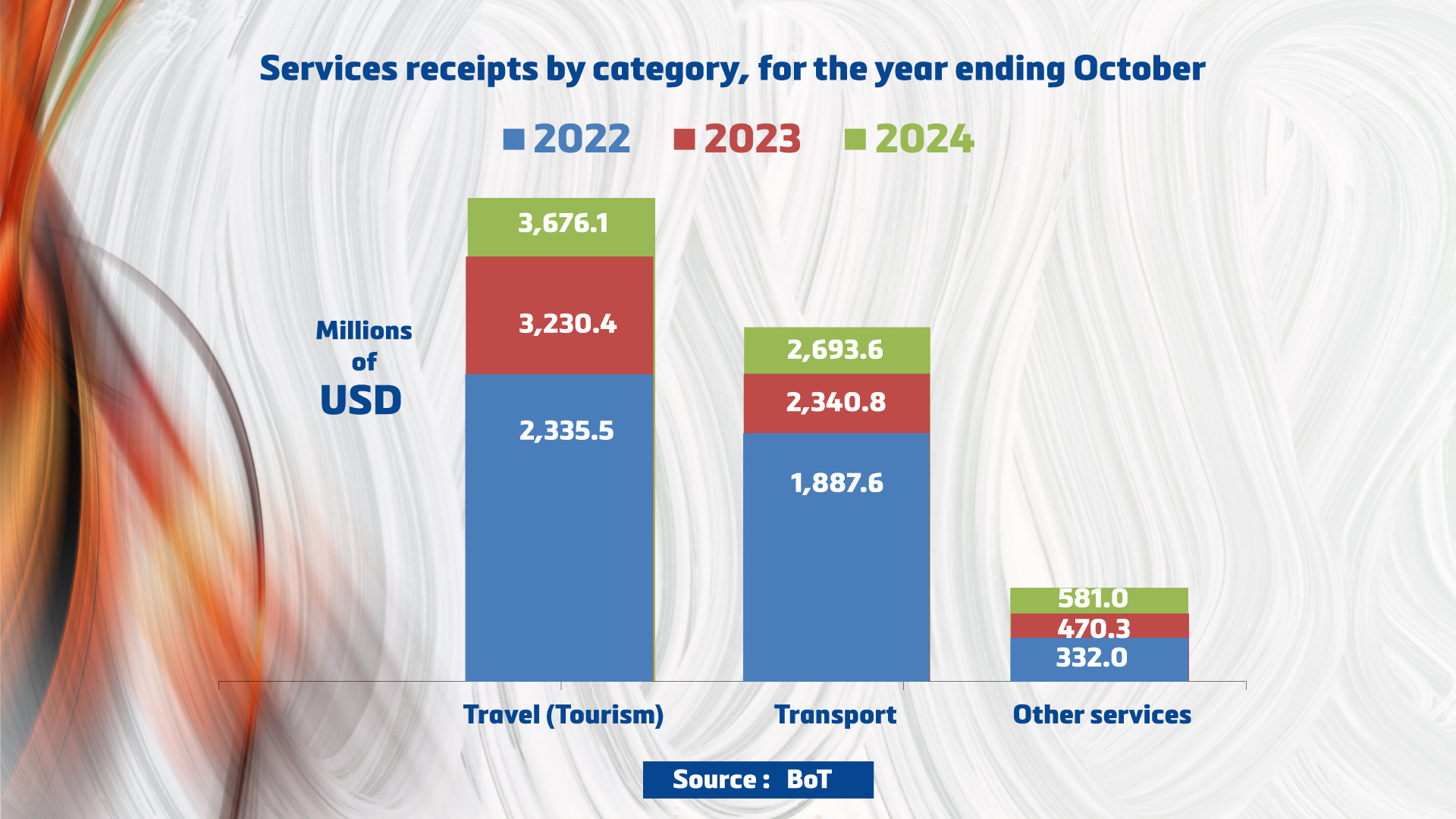
The sector also generated $2.79 billion in foreign exchange earnings in 2025 from transport, logistics and port services, up from $2.35 billion in 2024.
Prof Mbarawa said the sector had created 198,480 jobs through infrastructure development and transport services.
A significant portion of the development budget will continue financing the SGR project.
Rail
The minister said the first phase of the SGR project covers 1,219 kilometres from Dar es Salaam to Mwanza, while the second phase covers 1,590 kilometres linking Tabora, Kigoma and Musongati in Burundi.
Upon completion, Tanzania will have a total SGR network stretching 2,809 kilometres.
He said construction of the Mwanza-Isaka section had reached 68.77 percent by March 2026, while the Makutupora-Tabora and Tabora-Isaka sections were progressing after the government secured a concessional loan worth $1.277 billion, equivalent to about Sh3.32 trillion.
Prof Mbarawa said the government would also continue with rehabilitation of the metre gauge railway network through the Railway Fund.
Works on the Kaliua-Mpanda section had reached 32.72 percent by March 2026.
Ports
In the ports sector, the government plans to continue implementation of the Dar es Salaam Maritime Gateway Project and preparations for the long-awaited Bagamoyo Port project.
Prof Mbarawa said dredging equipment for Bagamoyo Port had already been procured and works were expected to start officially during the 2026/27 financial year.
The minister also highlighted ongoing construction of the Single Receiving Terminal for petroleum products at Dar es Salaam Port.
The project involves construction of 15 storage tanks with a combined capacity of 378,000 cubic metres and had reached 42 percent completion by March 2026.
He said the government would continue expanding the Kurasini logistics area to reduce congestion at Dar es Salaam Port and improve cargo handling efficiency.
Aviation
The ministry also outlined major aviation projects planned for the coming financial year.
These include strengthening Air Tanzania Company Limited, construction of an aviation training college, and rehabilitation and expansion of airports in Mwanza, Arusha, Mtwara, Serengeti, Kagera and Kilimanjaro.
Other regional airports targeted for improvements include Moshi, Lindi, Njombe, Musoma and Singida.
Prof Mbarawa also announced that a feasibility study for a commuter rail system in Dar es Salaam would be undertaken during the 2026/27 financial year.
The ministry further plans to establish a modern railway training centre and continue improving transport training institutions including the National Institute of Transport and the Dar es Salaam Maritime Institute