
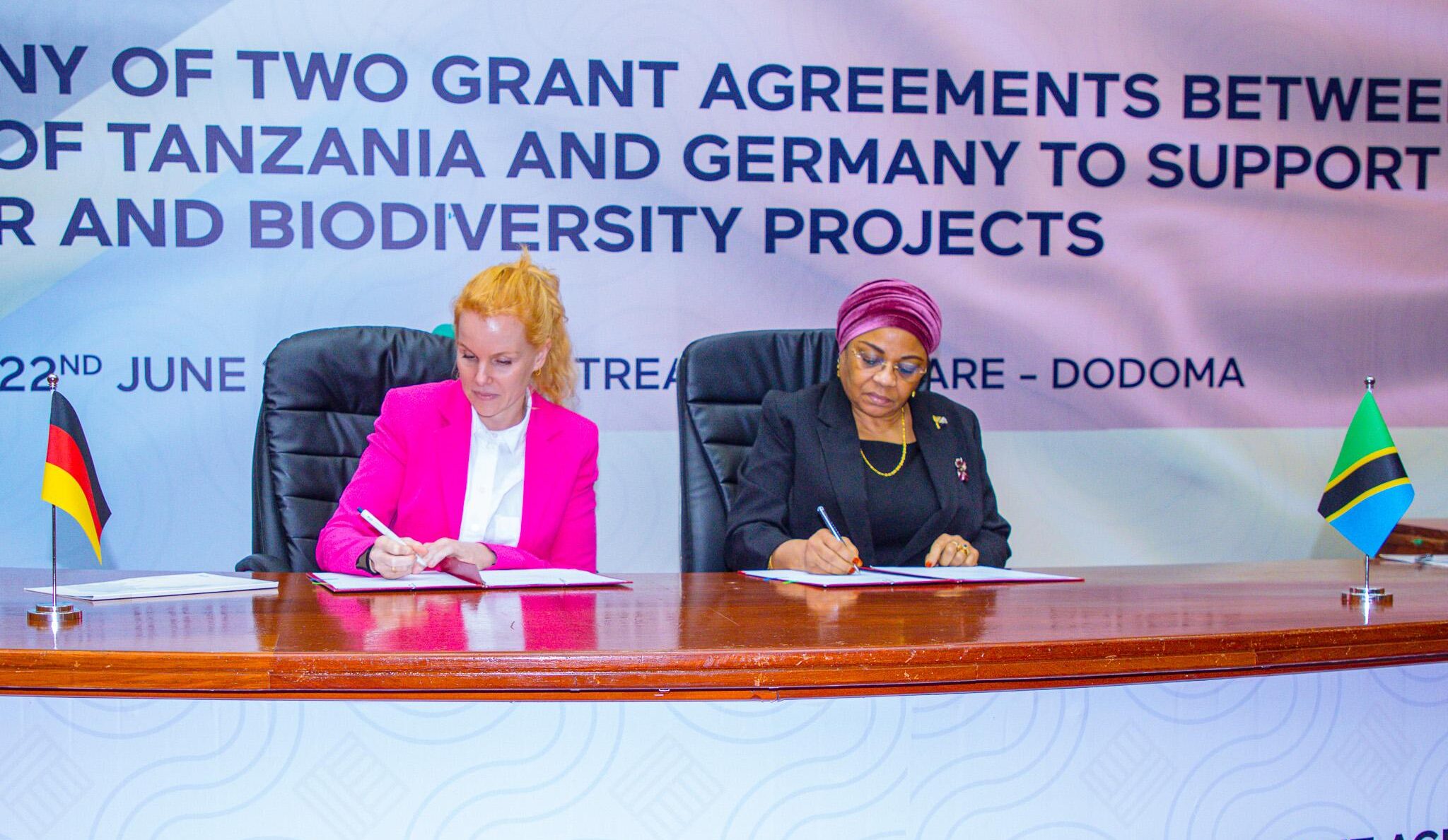
Dodoma. The Tanzanian government has officially signed a grant agreement worth €20 million, equivalent to Sh60.7 billion, with the Federal Republic of Germany to finance the Water Supply and Sanitation Improvement Project within the Songwe Region.
The project targets expanding urban areas of Tunduma and Vwawa-Mlowo.
The signing ceremony took place at the Kambarage Hall within Treasury Square in Dodoma on June 22, 2026.
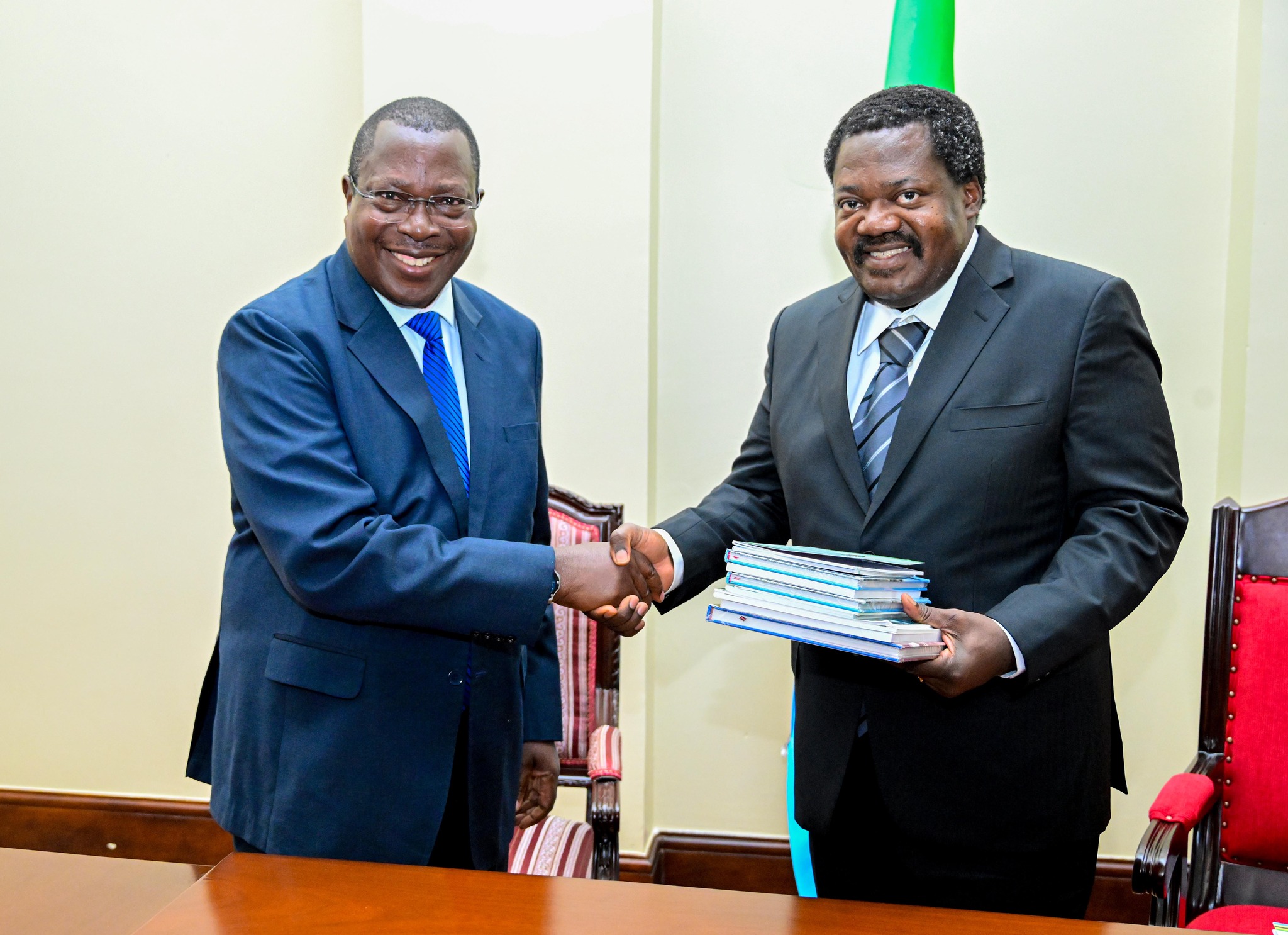
The Permanent Secretary of the Ministry of Finance and Paymaster General, Dr Natu El-maamry Mwamba, executed the contract on behalf of the government while the country director for the German Development Bank, Ms Vanessa Eidt, signed for the government of Germany.
This agreement reinforces a long-standing bilateral relationship focused on tangible socio-economic development.
Speaking immediately after the signing ceremony, Dr Mwamba explained the profound scope of the initiative.
“The project intends to secure the sustainable improvement of clean water availability,” Dr Mwamba noted.
She added that it will also advance modern sanitation systems and strengthen water resource management for thousands of residents across the fast-growing towns.
Rapid urbanization requires robust infrastructure and that this grant addresses that exact need.
The strategic deployment of these resources will cover several critical development pillars, according to government officials.
It will fund the construction of modern water distribution networks and facilitate new consumer connections.
A dedicated wastewater treatment plant will be built. Furthermore, the funding will secure specialized exhauster vehicles alongside advanced sanitation infrastructure inside public institutions.
Selected local schools will receive brand-new, hygienic toilet facilities to safeguard public health.
Dr Mwamba expressed profound gratitude to the Federal Republic of Germany for their timely intervention.
She observed that Germany remains a consistently reliable development partner for Tanzania. German financial cooperation spans multiple critical sectors.
These include health, water supply, natural resource conservation, public financial management, and gender equality.
Each area directly advances sustainable nationwide economic growth.
The timing of the project aligns smoothly with national planning frameworks.
The current National Development Vision 2025 and the Third Five-Year Development Plan are concluding this June.
The new National Development Vision 2050 is commencing concurrently alongside the Fourth Five-Year Development Plan.
Under the leadership of President Dr Samia Suluhu Hassan, Tanzania remains fully committed to expanding these vital diplomatic and economic ties.
The Permanent Secretary of the Ministry of Water, Mwajuma Waziri, emphasized the critical environmental context of the project.
She said climate change threatens modern resources and rapid urban growth accelerates this pressure.
“The project introduces climate-resilient water resource management frameworks to mitigate these exact challenges. Reliable water security will directly elevate civilian welfare and catalyze long-term regional trade,” she said.
Representing the German delegation, the Deputy Ambassador to Tanzania, Mr Manuel Muller, and the KfW Director, Ms Vanessa Eidt, highlighted the immense scale of German commitment. Germany manages an active portfolio exceeding €400 million in development aid across Tanzania.
The water sector represents their largest financial investment, followed closely by biodiversity conservation, they said.
Both officials expressed absolute confidence in achieving shared goals of inclusive, sustainable growth alongside the Tanzanian government.