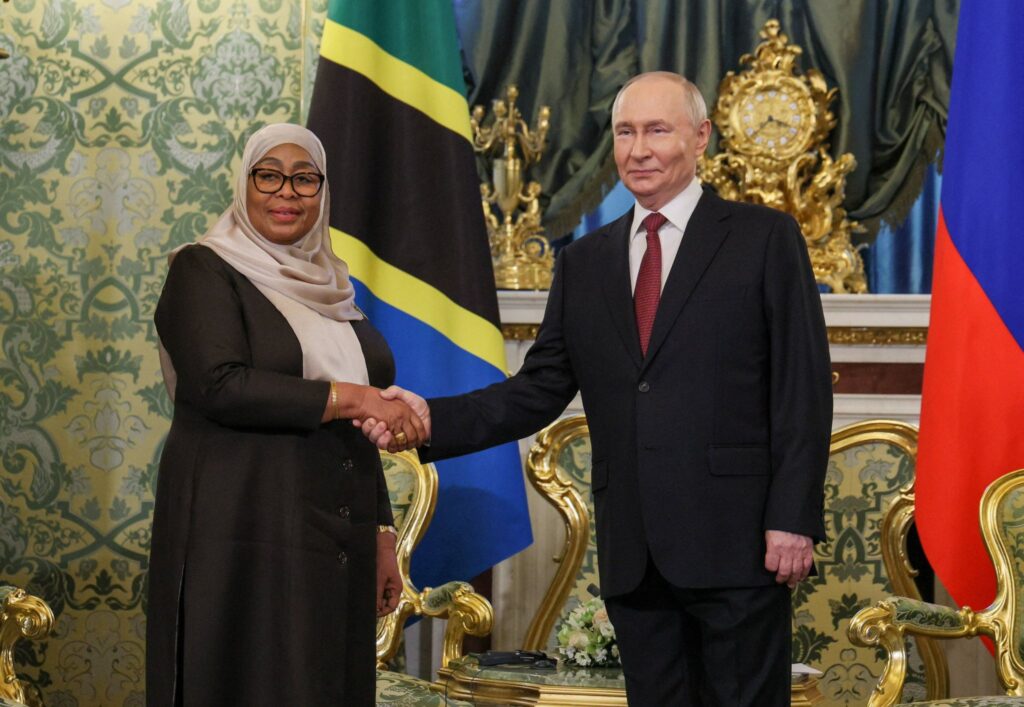

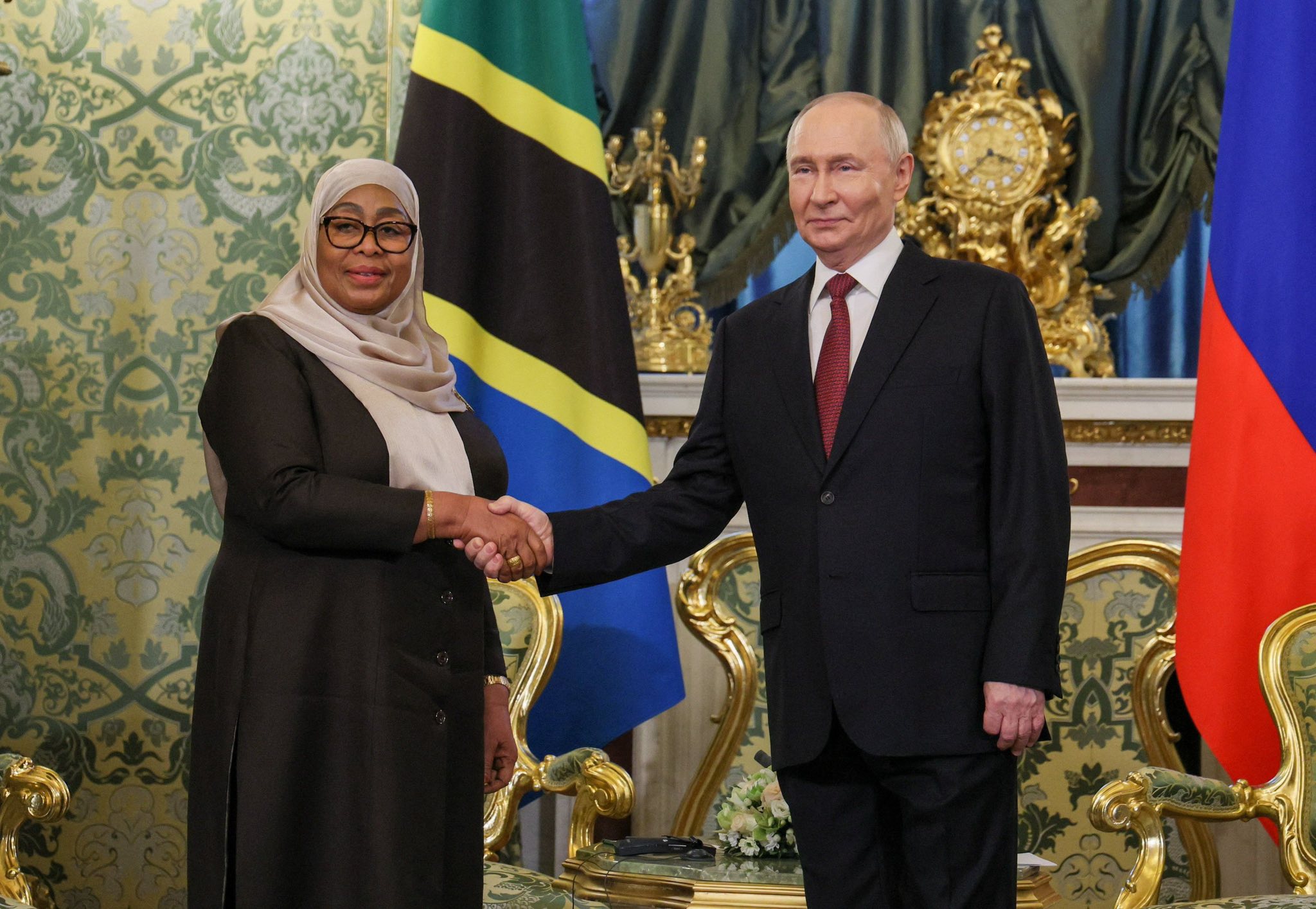
Moscow. Russia has pledged to expand economic opportunities for Tanzania and deepen bilateral cooperation as President Samia Suluhu Hassan and Russian President Vladimir Putin held high-level talks in the Kremlin aimed at strengthening trade, investment and strategic relations between the two countries.
President Putin said Russia would continue supporting initiatives that promote mutual economic growth and development.
He noted that Russian investors currently have 70 projects in Tanzania worth a combined $434.22 million, creating more than 3,000 jobs.
He added that additional investment opportunities in Tanzania would be promoted during the St Petersburg International Economic Forum, scheduled to begin later this week.
President Putin said Russia had been closely following Tanzania’s ongoing economic and governance reforms and was encouraged by the country’s development trajectory.
“Our discussions have been productive and beneficial for both nations,” he said, reaffirming Moscow’s commitment to expanding cooperation with Tanzania across a range of sectors.
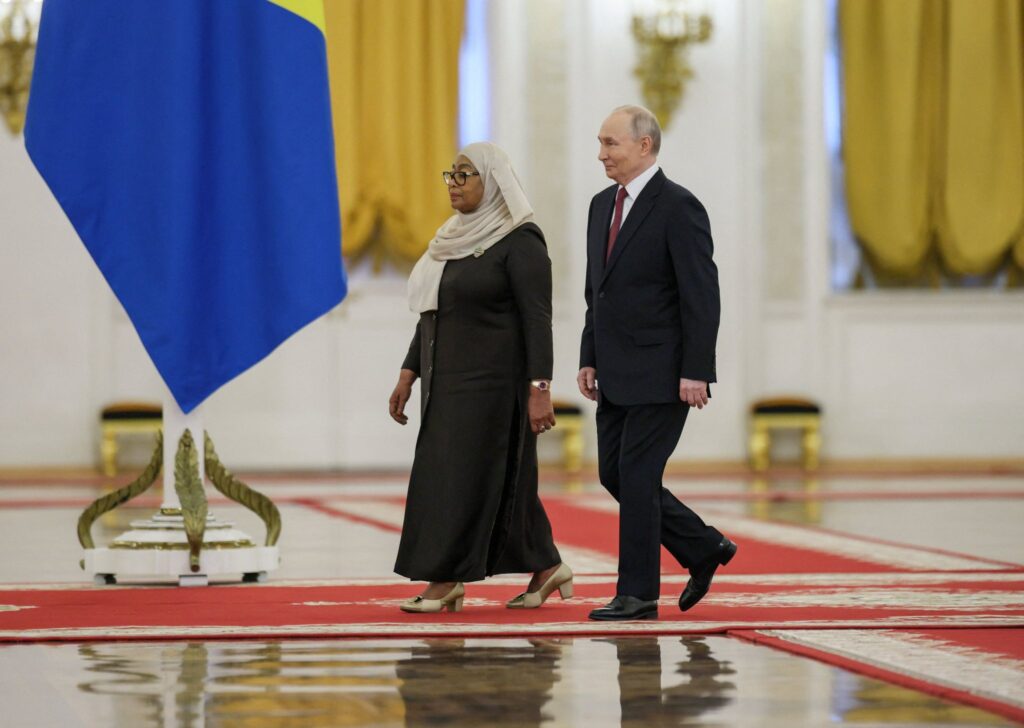
The talks marked a significant milestone in relations between the two countries and reflected a shared determination to build a stronger economic partnership amid shifting global economic and geopolitical dynamics.
A key focus of the discussions was bilateral trade, which currently stands at about $307.5 million annually.
The two leaders agreed to pursue measures aimed at doubling trade volumes by 2030 through enhanced institutional cooperation and greater private-sector participation.
President Samia said her visit carried special historical significance, both personally and for Tanzania, noting that more than half a century had passed since the last state visit by a Tanzanian leader to Russia.
“This visit has special historical importance for me and for my country. More than 50 years have passed since Tanzania’s last state visit to Russia. It is therefore a historic journey to discuss bilateral cooperation and sustainable development for our people,” she said.
The President also recalled Russia’s support during Tanzania’s struggle for independence and congratulated President Putin on the 81st anniversary of the victory in the Second World War, commemorated on May 9.
The leaders also reviewed opportunities in tourism, transport, energy, mining, agriculture and infrastructure development.
To improve connectivity and facilitate trade and tourism, they finalised arrangements for Air Tanzania to launch direct flights linking Dar es Salaam and Zanzibar with Moscow before the end of 2026.
The route is expected to boost tourist arrivals from Russia, one of Tanzania’s growing tourism source markets.
Infrastructure and energy cooperation featured prominently in the discussions.
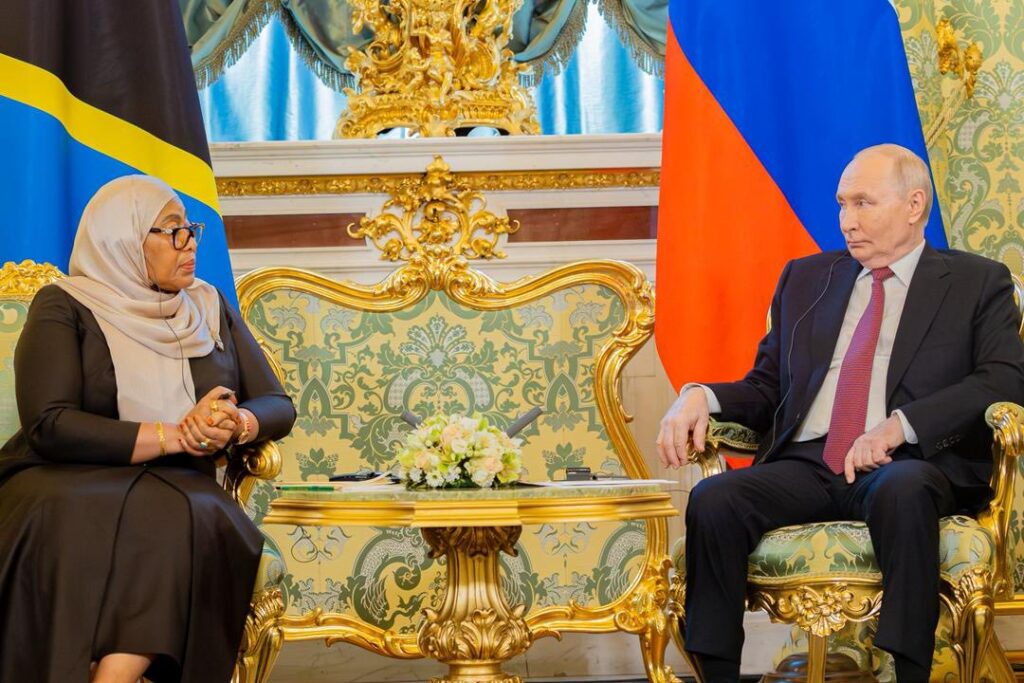
The two sides explored opportunities for Russian participation in port development projects aimed at strengthening Tanzania’s role as a regional gateway for neighbouring landlocked countries.
They also discussed collaboration in natural gas development and civil nuclear energy technology, while examining prospects for expanding agricultural trade.
Tanzania is seeking greater access for its agricultural products to Russian markets while increasing imports of industrial inputs, including fertilisers.
The leaders further reviewed several long-standing projects, including a proposed uranium mining venture that has remained dormant for more than a decade.
Russian investors expressed renewed interest in advancing the project.
President Samia’s visit comes as Tanzania prepares to implement its Development Vision 2050, which prioritises industrialisation, infrastructure modernisation and technology transfer.
According to both leaders, their discussions also covered regional and international issues of mutual interest.
Tanzanian officials maintained that the country remains committed to its long-standing foreign policy of non-alignment, pursuing economic partnerships based on national interests while remaining outside major geopolitical rivalries.